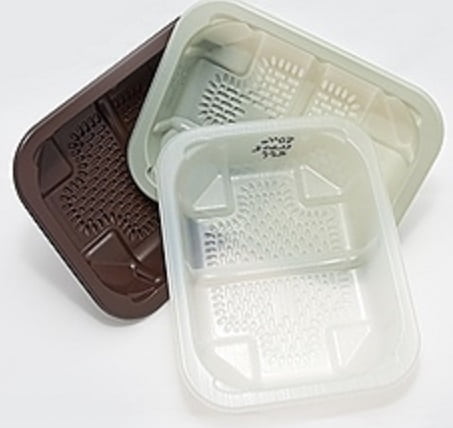
rPP food-contact – Wis Kunststoffe Celebrates Exciting FDA Food-Contact Approval for Innovative rPP Material, Marking a Significant Breakthrough in Sustainable Plastic Development 14-10-2025
rPP food-contact
Wis Kunststoffe Wins FDA Food-Contact Approval for rPP
October 14, 2025
Key takeaway: German plastics recycler Wis Kunststoffe has obtained U.S. Food and Drug Administration (FDA) approval for its recycled polypropylene (rPP) to be used in food-contact applications. This is a major milestone for circular plastics and opens new paths for food-grade recycled polymers globally. sustainableplastics.com+2plastech.biz+2
Why this matters
-
Food-contact approval from the FDA is a stringent regulatory hurdle. It validates that a recycled polymer can safely be used where it touches food, under specified conditions.
-
For recyclers and brand owners, it means confidence to adopt recycled content in packaging or products that touch food. rPP food-contact
-
For sustainability and circular economy goals, it helps close the loop on plastic waste — making “waste → food-safe product” a realistic pathway.
In short, this is a watershed moment for rPP food-contact technology and its adoption.
What exactly was approved
Scope of the FDA approval
According to public disclosures, the FDA granted Wis Kunststoffe a “Letter of No Objection” (or favorable opinion) for the use of their recycling process and final rPP material in food-contact articles under Conditions E through G (i.e. certain temperature, use case, and cycling conditions) for all food types. eplastics.pl+4cfsanappsexternal.fda.gov+4k-online.de+4
This is consistent with how FDA handles approvals of post-consumer recycled plastics. cfsanappsexternal.fda.gov
In FDA’s internal database of recycled plastics submissions, Wis Kunststoffe is listed under “Polypropylene (PP) – Articles in contact with all food types under Conditions of Use E through G,” provided the feedstock is sourced from PP cups and meets compliance requirements. cfsanappsexternal.fda.gov
What the approval does not cover (or caveats)
-
It is tied to the specific recycling process submitted, including feedstock control, decontamination, and quality assurance steps. Any deviation must be re-evaluated. rPP food-contact
-
Some higher or more extreme use conditions (beyond E–G) might not be covered.
-
The feedstock is limited: the recycled PP must come from PP cups (post-consumer) and comply with applicable safety limits. cfsanappsexternal.fda.gov+2k-online.de+2
-
It does not inherently grant European EFSA or EU regulatory clearance — that must follow local/regional paths.
Nonetheless, Wis claims this makes it the first European recycler to achieve FDA approval of rPP for “all types of food” (within those conditions) — an important marketing and technical milestone. rPP food-contact sustainableplastics.com+3eplastics.pl+3plastech.biz+3
How Wis achieved this: the technological & process factors
Collaboration & engineering
Wis collaborated with KraussMaffei Extrusion to develop a bespoke recycling line, tested at the InnovationCenter in Laatzen, Germany. plastech.biz+2Facebook+2 Their twin-screw extruder configuration and gentle processing are central to preserving polymer integrity and minimizing degradation. plastech.biz+2eplastics.pl+2
They emphasize that this process is scalable and can integrate into existing production lines — a big plus for adoption. plastech.biz+1
Quality, traceability, and certifications
Wis already holds ISCC PLUS mass-balance certification for sustainable sourcing and traceability of their recyclates. plastech.biz+2eplastics.pl+2 That helps downstream customers track ESG and regulatory compliance. rPP food-contact
They also highlight that their rPP is heat-resistant, odor-optimized, and colorable — features demanded by packaging, cosmetics, automotive, and other industries. plastech.biz+2eplastics.pl+2
Supporting innovations
At trade shows (e.g. K 2025), Wis plans live demonstrations of a cleaning compound Schneckenputzer (used to clean screws and barrels in injection molding) made from recyclate, to minimize downtime and cross-contamination. plastech.biz+1 They also plan a “Walk of Waste” installation to visualize the transformation from post-consumer waste to finished recycling output. eplastics.pl+2plastech.biz+2
Broader context: rPP in the regulatory & industry landscape
FDA recycled plastics program
The FDA’s program for post-consumer recycled plastics (PCR) requires submission of a full process review. If it’s judged acceptable, the agency issues a “No Objection” or favorable opinion. cfsanappsexternal.fda.gov Such approvals are critical — without them, materials can’t be used in direct food contact in the U.S. rPP food-contact
Wis’s approval joins a growing list of recent approvals. cfsanappsexternal.fda.gov+1 In fact, in 2025 the FDA has approved multiple recycled polymer processes (PET, HDPE, PP) for food-contact use. cfsanappsexternal.fda.gov
Rival/peer developments: NextLooPP
Just recently, a global collaborative project NextLooPP (led by Nextek) secured FDA approval to use 100 % recycled PP in direct food-contact across all food types, under Conditions A through H (a broader use envelope). Recycling Today+3Plastics Today+3sustainableplastics.com+3
This showcases how the bar is rising for food-grade recycling, and competition is intensifying. Plastics Today+2sustainableplastics.com+2
Wis’s approval is more limited in use conditions (E–G) but still significant as a European leader.
Regulatory trends & EU perspective
In Europe, the European Food Safety Authority (EFSA) and EU plastics regulation (e.g. PPWR 2030) are pushing for higher recycled content in packaging. Wis’s FDA clearance helps build scientific credibility and can influence EU policy alignment. plastech.biz+1
Given that EU regulatory clearance operates differently, Wis (and others) may still need to validate the process under EFSA or relevant national bodies. rPP food-contact
Implications & opportunities
For recyclers and supply chain actors
-
This proves that food-grade rPP is technically and regulatorily feasible — encouraging more investment in post-consumer polypropylene recycling.
-
It provides a benchmark: other recyclers can design processes to match or exceed Wis’s criteria.
-
Scalability and integration are critical: the ability to plug into existing lines gives downstream converters a lower barrier to adopt rPP content.
For brand owners and packaging converters
-
Brands focused on sustainability can now confidently specify recycled PP in food-contact applications (where conditions allow) — helping with ESG goals.
-
Marketing advantage: “FDA-approved recycled content” is a strong trust signal for consumers. rPP food-contact
-
Potential cost- and material-advantages arise, especially if virgin PP prices stay volatile.
For regulators and standard bodies
-
This success story can inform standardization of recycled polymer qualification, safety testing, and allowable use conditions.
-
It offers empirical data for regulators to refine rules around allowable recycled content, monitoring, and labeling.
For the circular plastics ecosystem
-
It moves the industry from theoretical to real: waste streams (e.g. PP cups) can re-enter the food-contact loop. rPP food-contact
-
Encourages innovation in sorting, decontamination, and supply chain control.
-
Amplifies the narrative: circular economy is not a distant ideal but a deployable reality.
Challenges, risks & open questions
-
Scaling vs consistency: Even if the process works at pilot scale, maintaining quality, contamination control, and traceability at industrial volumes is hard.
-
Feedstock variability: Post-consumer PP waste is heterogenous; ensuring consistent input is nontrivial.
-
Regulatory alignment across jurisdictions: FDA approval is powerful, but each market (EU, Asia, etc.) may demand local safety validation. rPP food-contact
-
Cost & competitiveness: The costs of cleaning, decontamination, and quality assurance must remain competitive versus virgin PP.
-
Consumer trust & labeling: Brands will need clear communication (e.g. “FDA-approved recycled content”), and may face scrutiny or greenwashing claims.
Conclusion
The October 2025 announcement that Wis Kunststoffe has won FDA approval for rPP food-contact is a milestone for recycled plastics, circular economy, and packaging innovation. While the approval is bounded by certain conditions (E–G, feedstock limits, and the approved process), it demonstrates that high-quality, safe, food-grade recycled polypropylene is technologically — and now regulatorily — viable. rPP food-contact
For recyclers, brand owners, regulators, and entire value chains, this signals a shift: recycled content need not be relegated to non-food uses only. The next frontier will be scaling adoption, navigating multi-jurisdiction regulatory regimes, and driving down cost while maintaining safety and purity.