How Sidel’s Aseptic PET Beverage Packaging Unlocks Unmatched Agility for Kamson
How Sidel’s Aseptic PET Beverage Packaging Unlocks Unmatched Agility for Kamson
Modern beverage producers face a sharp operational paradox: consumers want cleaner labels, fresher tastes, and healthier functional ingredients, yet retail channels demand rapid product innovation and shorter production runs. For Jiangsu-based Kamson Beverage Co., Ltd.—a key subsidiary of the Mulanka Group—solving this equation meant rethinking how sensitive drinks are sterilized and bottled.
By commissioning Sidel’s Aseptic Combi Predis technology at its manufacturing operations in China, Kamson has transformed its production floor into an agile, multi-category powerhouse. The installation arrives at a pivotal moment for the global drink industry, demonstrating how advanced aseptic PET beverage packaging enables brands to scale complex portfolios without sacrificing food safety or operational efficiency. Aseptic PET beverage packaging
The Shift Toward Flexible, Preservative-Free Production
Across Asia and global markets, consumer preferences have moved decisively away from sugary, heavily preserved sodas toward ready-to-drink (RTD) teas, plant-based beverages, protein shakes, and functional health drinks. According to 2026 industry analyses, beverages have overtaken traditional white milk as the single largest application for aseptic packaging worldwide, with China leading global incremental growth in aseptic beverage volume.
Operating two production facilities in Jiangsu Province with an annual capacity reaching 600,000 tonnes under the Mulanka Group umbrella, Kamson builds brands tailored specifically to younger demographics. Capturing this audience requires constant menu experimentation. However, traditional aseptic bottling lines often penalize frequent stock-keeping unit (SKU) changes with lengthy sterilization cycles, heavy water consumption, and costly downtime.
To overcome these bottlenecks, Kamson needed a medium-capacity solution capable of switching seamlessly between low- and high-acid formulations—including juices, coffees, teas, and protein beverages—while keeping contamination risks near zero. Aseptic PET beverage packaging
Inside Sidel’s Dry Preform Sterilization Breakthrough
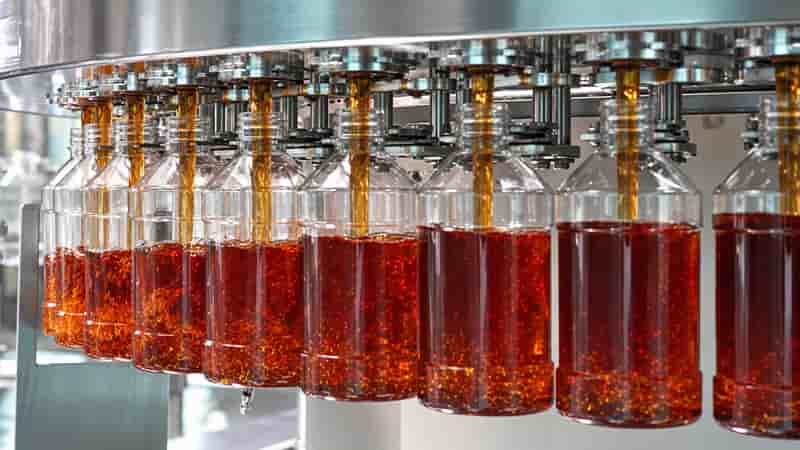
At the heart of Kamson’s upgraded facility is Sidel’s Aseptic Combi Predis system, a platform that merges dry preform sterilization, stretch blow molding, contactless filling, and capping into one continuous, enclosed process.
Unlike conventional wet aseptic systems that wash fully formed bottles with chemical baths and sterile water, Sidel’s patented approach treats the compact plastic preform before it ever enters the heating oven.
How the Dry Sterilization Process Works
-
Pre-Oven Decontamination: A precise mist of hydrogen peroxide ($H_2O_2$) is injected directly into each preform prior to heating.
-
Thermal Activation: As the preforms pass through the oven, the existing thermal energy required to soften the PET plastic simultaneously activates the hydrogen peroxide, achieving complete commercial sterility.
-
Immediate Blow Molding: Because the preforms emerge from the oven both sterile and hot, they transfer directly into the blow molder for optimal stretching quality, eliminating any need to sterilize the blow-molding wheel or its internal components.
-
Contactless Filling: Once formed, the sterile bottles move into an isolated filling zone where contactless valves dispense the beverage without touching the container neck, sharply reducing recontamination hazards.
This streamlined sequence delivers measurable environmental and financial advantages. By eliminating wet bottle rinsing, the line dramatically cuts water usage and chemical waste. Furthermore, because fewer machine zones require chemical decontamination between product runs, changeover sequences are faster and simpler for plant operators to execute. Aseptic PET beverage packaging
Engineered for Multi-Format Versatility
For contract manufacturers and brand owners alike, packaging shape and volume are critical tools for standing out on crowded retail shelves. Sidel’s locally manufactured Predis platform gives Kamson extensive freedom to customize bottle designs without overhauling core machinery.
| Technical Capability | Kamson Line Specifications | Operational Benefit |
| Bottle Volumes | 200 ml to 1,500 ml | Covers single-serve shots, standard RTD teas, and family-size juices on one line. |
| Container Geometries | Round, square, and rectangular | Supports distinctive brand silhouettes and space-efficient logistics. |
| Neck Finishes | 28 mm and 38 mm | Accommodates both standard closures and wide-mouth openings for pulpy or protein drinks. |
| Batch Strategy | Small-batch, multi-category runs | Lowers changeover costs and maximizes overall equipment utilization. |
This versatility allows Kamson’s engineering teams to transition from a 250 ml functional protein beverage to a 1-liter square juice bottle with minimal line interruption, turning SKU complexity into a competitive advantage. Aseptic PET beverage packaging
Local Manufacturing Meets Global Validation Standards
A decisive factor behind Kamson’s investment was Sidel’s localized supply chain and engineering footprint in China. Rather than importing equipment from overseas and waiting months for specialized technicians, Kamson’s entire line was designed, assembled, and rigorously pre-tested at Sidel’s manufacturing hub in Beijing.
Since localizing production of its dry preform aseptic technology in Beijing in 2019, Sidel has equipped its facility with dedicated microbiological laboratories and PET bottle performance testing centers. Every machine undergoes exhaustive validation against Sidel’s global quality benchmarks before leaving the factory floor.
That upfront rigor paid immediate dividends during commissioning in Jiangsu. Working hand-in-hand with Kamson’s technical staff, Sidel’s local service engineers brought the line online smoothly, passing strict aseptic validation on the very first attempt—a milestone that underscores both mechanical reliability and microbiological safety. Aseptic PET beverage packaging
Strategic Impact on Capacity and Future Growth
Industry coverage from November 2026 notes that while specific line speeds and financial figures remain proprietary, the operational impact at Kamson is already clear. Shorter changeovers and reduced downtime have expanded effective production capacity while preserving the extended ambient shelf life required for nationwide distribution.
Guo Zhanjun, General Manager of Jiangsu Kamson Beverage Co., Ltd., emphasized that the partnership aligns directly with the company’s long-term expansion strategy, noting that Sidel’s dry aseptic line secures superior product quality, dependable output, and stronger cost-effectiveness.
As global packaging leaders continue unveiling next-generation innovations—such as Sidel’s recently showcased Aseptic Predis X4 and laser-heating blow-molding systems—Kamson’s investment demonstrates how mid-sized and large regional beverage producers can leverage proven dry sterilization today to future-proof their operations. Aseptic PET beverage packaging
Breakthrough Recyclable Vehicle Composites Could Transform Transport
More…