Flexible Packaging – Data from Flexible Packaging Europe (FPE) for 2024 presents a mixed outlook on material costs. The FPE’s latest report on raw material and semi-finished product prices highlights moderate increases, though prices remain above late 2020 benchmarks 14-02-2025 - Archive
Flexible Packaging
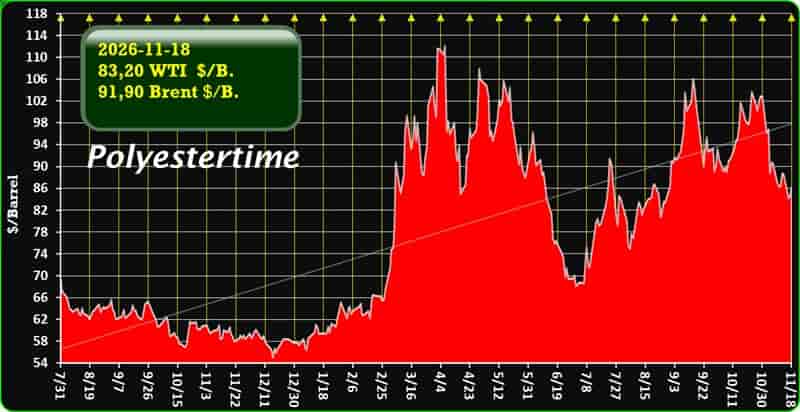
Crude Oil Prices Trend

Flexible Packaging Prices See Modest Increases
Data from Flexible Packaging Europe (FPE) for 2024 presents a mixed outlook on material costs. The FPE’s latest report on raw material and semi-finished product prices highlights moderate increases, though prices remain above late 2020 benchmarks.
Throughout 2024, prices of key materials fluctuated. The costs of 15-micron HDPE and BOPA films stayed stable, while 7-micron aluminum foil rose by 4%. Meanwhile, 60-micron single-coated glossy paper saw a 15% price surge. PET film (12-micron) increased by 9%, and LDPE rose significantly by 19%. The 20-micron BOPP film registered a minor 3% rise over the year.
“Market uncertainty persists, influenced by the US administration’s tariff policies and potential responses from European partners ahead of Germany’s elections,” noted Guido Aufdenkamp of FPE. Flexible Packaging
Despite the uncertainty, Aufdenkamp found it reassuring that most material price increases were moderate. He emphasized the importance of demand-driven growth rather than fluctuations caused by supply chain disruptions or raw material costs.
“Looking ahead, 2025 will pose challenges,” he added. “However, we remain hopeful that markets will show signs of recovery in the coming months.”
The industry continues to navigate an evolving landscape, with businesses awaiting more stable conditions to regain confidence and drive demand.
 Polyethylene Terephthalate (PET) prices fluctuated due to regional demand shifts, seasonal trends, and varying feedstock costs
Europe saw rising prices, Asia experienced a decline, and the U.S. remained stable, influenced by supply-demand dynamics, production expenses, and weather-related consumption patterns.
In Europe, PET prices surged as production costs increased and demand improved. By February 7, German PET prices rose 1.74%, driven by the replenishment of stocks in the bottle and packaging sectors. Despite winter conditions, rising temperatures bolstered beverage industry demand. Marginal feedstock price hikes saw MEG increase 0.7% and PTA climb 0.6%. Supply conditions remained stable, enabling steady operations despite input cost fluctuations. Flexible Packaging
In the U.S., PET prices held steady due to balanced supply-demand conditions and stable feedstock costs. While winter storms slightly dampened bottle consumption, steady demand from food packaging and the manufacturing sector sustained prices.
The Gulf Coast faced inventory disruptions, but MEG and PTA prices remained stable. Asian imports further supported price stability, though Chinese PET faced trade restrictions, redirecting flows to alternative Asian suppliers. Declining freight rates also eased supply chain expenses.
Conversely, PET prices in Asia declined amid weak demand and lower production costs. Chinese PET bottle-grade prices dropped 1.24% as the Lunar New Year holiday and cold weather subdued consumption. Flexible Packaging
Falling feedstock costs and a 12% decline in shipping rates further pressured prices, delaying post-holiday production recovery.
Appi Halts Pyrolysis Plant Project in Ostende
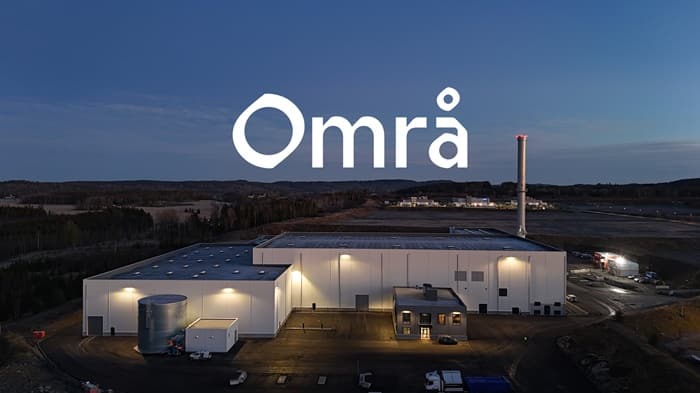
Advanced Plastic Purification International (Appi) has scrapped plans to build a pyrolysis plant in the port of Ostende, Belgium. The project had reached an advanced stage, with finalized construction plans and an ongoing environmental permitting process, according to the German plastics think tank BKV.
The plant was designed to process 500,000 tpy of plastic waste. However, the availability of low-cost virgin plastic from China weakened the project’s financial viability, leading to its cancellation. Flexible Packaging
In May 2023, the Port of Ostende announced that construction would begin in late 2024, with commissioning set for 2026. Appi had secured a long-term lease for a 15-hectare site in the port’s Plassendale “Circular Cluster” and planned to create 110 jobs. Despite this, BKV reported that Appi ceased operations in November 2023.
Belgian media revealed that the Port of Ostende has since signed a deal with another company in the same sector following Appi’s withdrawal. This new project is reportedly smaller in scale. While details remain undisclosed, the Port of Ostende confirmed that more information on the agreement will be provided later.
The collapse of Appi’s project underscores challenges facing plastic recycling initiatives, particularly competition from inexpensive virgin materials, which continue to impact the sector’s economic sustainability. Flexible Packaging

A Groundbreaking Pivot: TenCate Launches First Artificial Turf that Truly Replicates Grass Field
- Pivot® Performance Turf by TenCate was biomechanically engineered to replicate the performance and feel of natural grass for athletes.
- Pivot requires no performance infill so it uses less raw materials to install and is much easier to recycle.
- Pivot contains no detectable PFAS.
- Pivot features 16 times as many individual fibers as competitive turf systems and has a 50% longer lifespan than other synthetic turf.
- Developed by TenCate’s Center for Turf Innovation, Pivot was thoroughly tested by college and professional athletes wearing biosensors to capture movement and surface interactions — data that demonstrated Pivot is the closest surface to high-quality natural grass. Flexible Packaging
TenCate, the world’s leading manufacturer, distributor and installer of synthetic turf for sports and outdoor living applications, today announced the official launch of the world’s first turf that requires no performance infill, is able to be recycled and is biomechanically engineered to replicate the feel and playability of grass sports fields.
Pivot is the world’s first synthetic turf that requires no performance infill, is able to be recycled and is biomechanically engineered to replicate the feel and playability of grass sports fields.

ALPLA expands in Thailand with new plant, delivering sustainable plastic solutions across industries
ALPLA is expanding in the fast-growing Asia-Pacific region and opening a second location in Thailand. The modern plant in Chachoengsao, near Bangkok, combines all production technologies, a technical centre and STUDIOa, the one-stop-shop for design, on a 24,000-square-metre site. The global packaging and recycling specialist is thus increasing capacities, expanding its portfolio and offering safe, affordable and sustainable full-system solutions made of plastic to numerous industries and markets. Flexible Packaging
ALPLA is increasing its prese nce in Southeast Asia. After a year of construction, the international packaging and recycling specialist has just opened a modern plant in Thailand. In addition to production and administration, the new, 24,000-square-metre building in Chachoengsao, near Bangkok, includes a technical centre for product development and the first STUDIOa in the Asia-Pacific (APAC) region for designing new packaging solutions with customers. With its second location in Thailand, ALPLA is multiplying its production capacity in the country. Chachoengsao is replacing Prachinburi as the headquarters and expanding the portfolio to include injection moulding (IM) and one-step injection stretch-blow moulding (ISBM) technologies.
“Our involvement in Thailand more than 20 years ago represented the start of our activities in Southeast Asia and is still central to our growth today. The flagship plant in Chachoengsao covers all the needs of our customers and unlocks new opportunities in the market,” emphasizes ALPLA CEO Philipp Lehner. Flexible Packaging
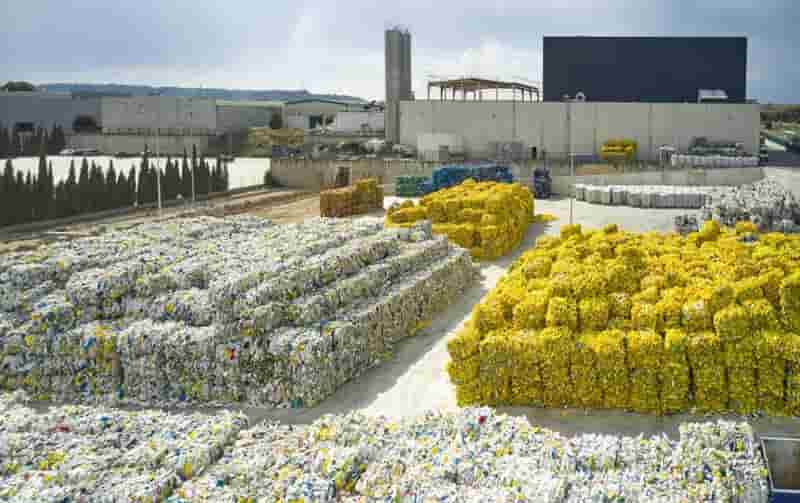
German waste plastics market remains tense in January
In January, waste plastics recyclers in German were still contending with market tensions. Although some operators reported that demand was slightly higher than expected, they stressed this uptick did not represent a lasting trend turnaround. In most cases, the orders were coming from customers who needed to restock after taking long downtimes in December and January. Players said any improvement they were seeing in January was in the very early stages and should not be given undue weight. Overall, recyclers are still struggling with difficult market conditions, as demand remains subdued and the low prices make doing business difficult.
Frequently, recyclers say their aim is to “survive 2025”, a clear sign of the uncertainty in the sector. Calls for government measures to support the industry are growing louder, as several recycling companies in Europe have had to file for insolvency and more companies are expected to go under. The industry’s troubles are mainly due to the fact that primary plastics remain cheaper than recyclate. Flexible Packaging
The challenges facing waste plastics recyclers are closely related to the general economic malaise. The construction industry – a key buyer of plastic products – continues to struggle.