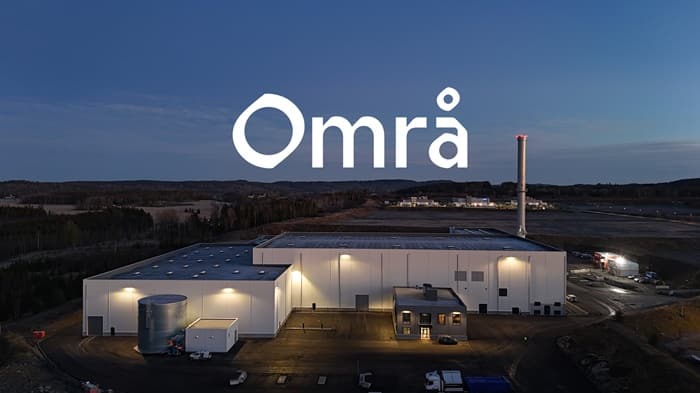
Plastics sorting – In Frauenfeld, Veolia is integrating artificial intelligence to enhance input quality and installing an additional extruder for food-grade rPET production. In Norrköping, a facility expansion and a new extruder will significantly boost high-quality granule output. These improvements are expected to raise Veolia’s food-grade rPET production by around 30% 20-02-2025 - Archive
Plastics sorting
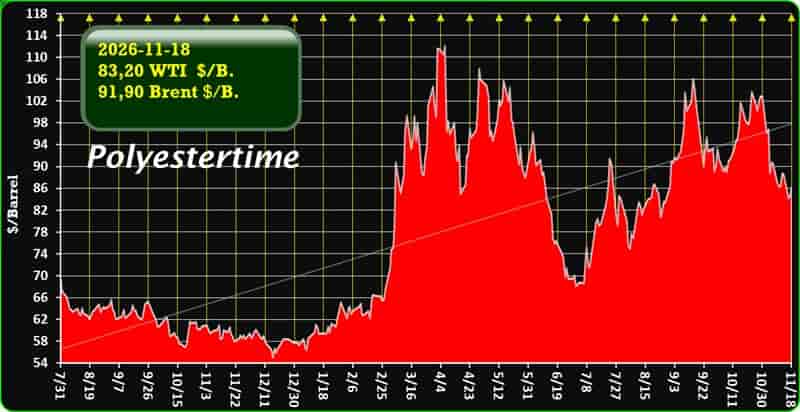
Crude Oil Prices Trend

Celanese has announced the closure of its Mylar Specialty Films plant in Luxembourg, a joint venture with Japan’s Teijin
This move aligns with the company’s strategy to eliminate high-cost operations and enhance competitiveness. Previously, Celanese shut down facilities in Uentrop, Germany, and Mechelen, Belgium.
The decision is part of a broader plan to cut costs by $75 million by 2025, mainly by reducing general, administrative, and sales expenses. The initiative aims to adjust costs to demand trends while maintaining flexibility for potential recovery.
In 2024, Celanese reported net sales of $10.3 billion, a 6% drop from the previous year. This decline resulted from a 4% price decrease, a 1% reduction in volume, and minor currency fluctuations. Plastics sorting
Global demand remained weak across key sectors like automotive, paints, coatings, construction, and industrial applications.
The company responded by implementing cost-cutting measures, ending 2024 with a consolidated operating loss of $697 million, an adjusted EBIT of $1.6 billion, and an operating EBITDA of $2.4 billion.
The Engineered Materials segment saw sales fall to $5.6 billion from $6.1 billion (-9%), driven by a 5% volume drop and a 3% price decline. An economic slowdown in automotive and industrial markets worsened in the second half of 2024.
Despite challenges, Celanese expanded its electric vehicle business, increasing project acquisitions by 30%. CEO Scott Richardson emphasized cost reduction, supply chain flexibility, and cash flow improvements to drive growth and reduce debt.

Kaneka Green Planet Beads Facility Microplastic Free Certified
Kaneka Belgium NV announces that its Kaneka Biodegradable Polymer Green Planet™ Expanded Beads—type L40N—are officially excluded from the definition of synthetic polymer microparticles under EU Commission Regulation 2023/2055.
The recognition underscores the company’s commitment to offering sustainable and environmentally friendly solutions. Plastics sorting
A 100% Biomass-Derived Biopolymer
Kaneka Green Planet™ is a fully biodegradable biopolymer made entirely from biomass. Unlike traditional petroleum-based plastics, it decomposes naturally in various environments.
When exposed to soil or seawater, the material breaks down into carbon dioxide (CO2) and water, leaving no synthetic residues behind. This innovation reflects Kaneka’s dedication to reducing plastic pollution and promoting sustainable materials.
Advanced Technology for Diverse Applications
Kaneka developed Green Planet™ Expanded Beads by combining its long-standing Eperan™ particle foam technology with its biodegradable polymer expertise.
The innovative material is lightweight and shock-absorbing, making it ideal for various applications. Plastics sorting
Companies use it for cushioning in home electric appliances, fresh food transportation containers, and components in the automotive and transport industries.

SK Chemicals to Launch Waste Plastic Recycling Innovation Hub in Korea
• Advancing Depolymerization Commercialization with Integrated Recycling Solutions
• Establishing a Complete Resource Circulation System with Diverse Industries
SK chemicals, a pioneer in mass-producing chemically recycled materials, is developing a comprehensive plastic recycling solution center in Korea. The facility will integrate circular raw material production, research, and manufacturing.
On February 18 (KST), the company announced the establishment of the Recycle Innovation Center (RIC) at its Ulsan plant, which specializes in eco-friendly chemical materials. SK chemicals plans to invest in pilot facilities for waste plastic depolymerization to produce recycled BHET (r-BHET), linking them with existing copolyester production units. Plastics sorting
This marks the company’s first depolymerization-based recycling center in Korea. The pilot facility, set to begin operations in 2026 with a 50-ton annual capacity, will process diverse waste plastics, including textiles, films, and automotive components, overcoming recycling challenges posed by material blends.
The RIC will consolidate all stages of recycling, from depolymerization to mass production, enabling flexible industry-specific solutions. This initiative aligns with SK chemicals’ Closed Loop strategy, which transforms landfill-bound waste plastics into high-quality recycled materials, supporting electronics, beverage, and automotive industries.
CEO Ahn Jae-hyun emphasized, “Integrating research and production will accelerate plastic circular recycling. Collaborating with industries, we will drive a sustainable resource circulation system.” Plastics sorting
SK chemicals continues to lead in recycling innovation, having commercialized circular recycled copolyester (2021) and Korea’s first circular recycled PET (2022).
Veolia is strengthening its PET recycling operations in Europe by modernizing and expanding facilities in Frauenfeld, Switzerland, and Norrköping, Sweden
This investment aims to increase food-grade rPET (recycled PET) production to meet growing industry demand.
In Frauenfeld, Veolia is integrating artificial intelligence to enhance input quality and installing an additional extruder for food-grade rPET production. In Norrköping, a facility expansion and a new extruder will significantly boost high-quality granule output. These improvements are expected to raise Veolia’s food-grade rPET production by around 30%.
Guido Adomßent, CEO of Veolia Umweltservice Group, highlights the strong collection systems in Scandinavia and Switzerland as key enablers of a closed-loop recycling process. Sweden’s mandatory PET bottle design regulations ensure high-quality recycling, leading to superior recyclates. Plastics sorting
These advancements provide greater flexibility for system members in selecting and using recycled materials. They also support an increased share of premium recyclates for major bottling companies, reinforcing the circular economy and reducing plastic production’s carbon footprint.
Veolia is also monitoring the German market. Adomßent acknowledges existing challenges but sees potential for growth. EU developments and Germany’s circular economy discussions could create future opportunities, prompting Veolia to stay vigilant.
With these investments, Veolia reinforces its leadership in PET recycling, driving sustainability and innovation in Europe’s recycling industry. Plastics sorting
Sesotec: Optimizing PET Recycling at World PET
World PET Recycling, part of Logoplaste Group, processes post-consumer plastic into food-grade rPET. Based in northern Portugal, it produces 12,000 tons annually, contributing to sustainable packaging and a circular economy.
The Challenge: Metal Contaminants and Material Loss
Metal impurities in recycled PET pose a major challenge, affecting quality and compliance with food-grade standards. Previously, World PET used a GF metal separator to remove contaminants, but this led to excessive material loss, as entire contaminated fractions—including usable PET—were discarded, increasing waste and costs. Plastics sorting
The Solution: RE-SORT RV 070 for Precise Metal Separation
To address this, Sesotec’s partner Iberoacero introduced the RE-SORT RV 070. This system reprocesses rejected material, separating usable PET from contaminants. Working alongside the GF separator, it improves efficiency, reduces waste, and ensures high-purity rPET, supporting sustainability and cost reduction.

Chinese battery makers to expand in Korea
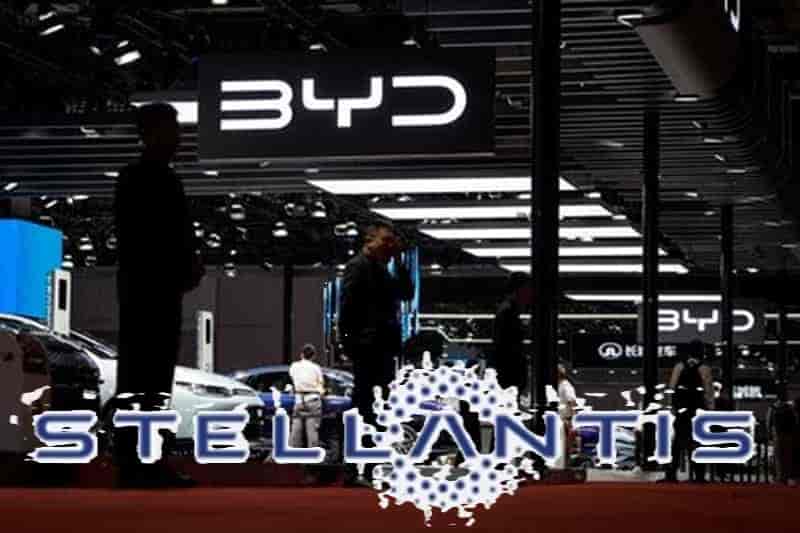
BYD, EVE to challenge Korean firms at InterBattery 2025
Chinese battery giants are set to strengthen their foothold in Korea by participating in the 2025 InterBattery trade fair in Seoul next month. This move comes amid escalating global trade tensions spurred by U.S. President Donald Trump’s protectionist policies. Plastics sorting
According to event organizers, BYD and EVE are among 79 Chinese firms joining the annual exhibition. This marks their first participation in InterBattery, with Chinese representation growing from 62 companies in 2024 and 24 in 2023. Despite a global slowdown in EV demand, the event will host a record 646 companies this year.
BYD and EVE ranked second and ninth in global EV market share last year. BYD recently entered the Korean market, launching budget electric passenger cars after establishing a local subsidiary.
“BYD has been a key player in lithium-ion batteries for three decades, delivering over 5 billion units,” the event’s website states. “We provide tailored cell and pack solutions with extensive design and manufacturing expertise.”
However, BYD’s exhibition booth will span only 36 square meters—far smaller than Korea’s leading battery firms. Notably, CATL, another major Chinese manufacturer, will again be absent.
LG Energy Solution and Samsung SDI will each showcase technologies in 540-square-meter booths, while SK On will occupy 450 square meters. POSCO Future M will also expand its presence compared to last year. Plastics sorting