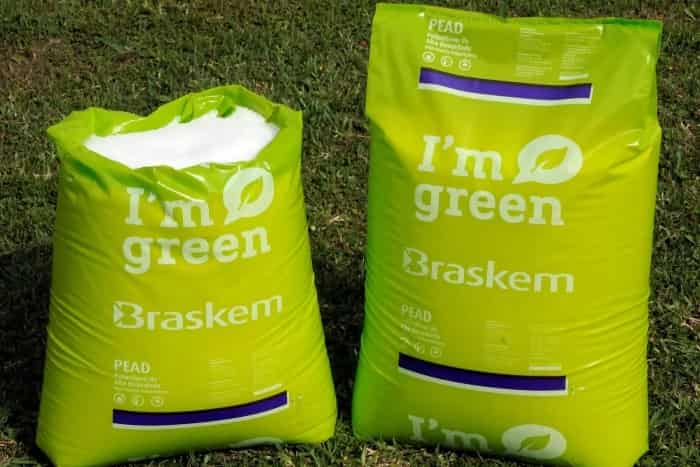
Bioeconomy – The bioeconomy is becoming increasingly important economically. The current global value of the bioeconomy is projected to be at 4 trillion USD, and some projections indicate that it may climb to 30 trillion USD, accounting for one-third of the world economic value 01-04-2025 - Archive
Bioeconomy
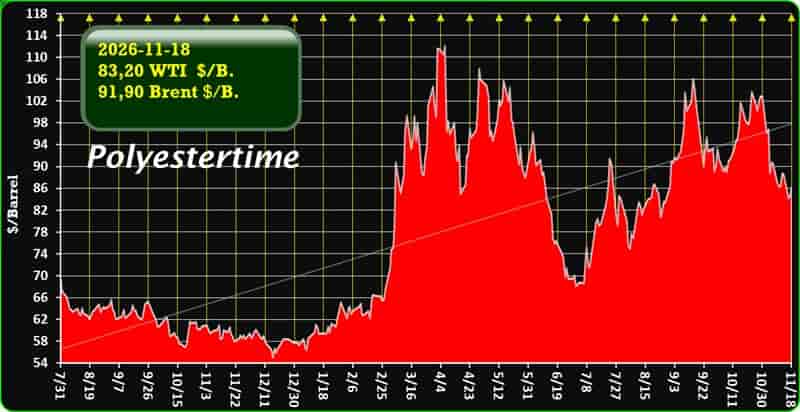
Crude Oil Prices Trend

Plastics Europe Trade Press Conference – Focus on Circular Economy
Every year Plastics Europe Germany, the association of plastics producers, holds its trade press day, usually right around the beginning of spring. And so it was again this year. Around two dozen participants across the trade press found their way digitally to an exciting event on 15 March 2022, where (almost) everything revolved around the climate-neutral circular economy.
Almost everything, because Ingemar Bühler (photo top left), CEO of Plastics Europe Germany and host of the event, also began by saying a few words about Putin’s invasion of Ukraine, which of course could not go unmentioned – not only for reasons of the impact on supply chains and co – could not remain unmentioned. Bioeconomy
A turning point in time, which also illustrates how important it is that our industry follows the path of decoupling from fossil raw materials more consistently and courageously, and that resources are circulated more efficiently overall.
Dr Henning Wilts (photo top centre), head of the circular economy department at the Wuppertal Institute, kicked off the day with his presentation “Climate-neutral industry? Circular economy as a key strategy”.
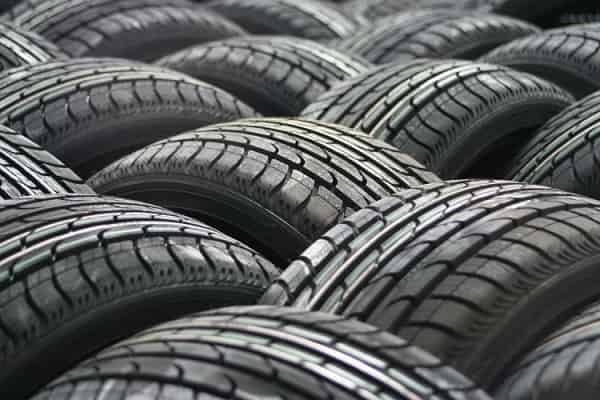
VTTI and Pyrum Innovations AG, a specialist in waste tyre recycling via thermolysis, have partnered to develop a state-of-the-art recycling plant at VTTI’s Antwerp Terminal
The project involves constructing a thermolysis plant capable of processing up to 90,000 tonnes of end-of-life tyres annually, implemented in two 45,000-tonne phases.
VTTI will fully own the plant, while Pyrum will be the development partner, providing its patented thermolysis technology.
This process will transform waste tyres into valuable by-products, including Tyre Pyrolysis Oil (TPO) and Recovered Carbon Black (rCB), promoting a circular economy and enhancing the sustainability of industrial by-products. Pyrum was chosen for its advanced and proven technology and successful industrial-scale operations. Bioeconomy
BASF has expanded its Ultramid Advanced T1000 polyphthalamide (PPA) family with the launch of new EQ and HR series, designed for demanding applications in extreme environments
These new grades, based on polyamide 6T/6I, offer enhanced purity (EQ) and improved resistance to hydrolytic degradation (HR).
The Ultramid Advanced T1000 HR range ensures long-term stable performance, particularly in the presence of high-temperature coolants. The T1300HG7 HR grade demonstrates chemical and dimensional stability with fluids like glycol, thermal oils, and water, even above 130°C, extending the lifespan of automotive cooling circuit components and industrial pumps and fittings. Bioeconomy
The Ultramid Advanced T1300EG7 EQ, a high-purity version, is almost free of electrically active components while maintaining excellent thermal aging resistance in the presence of water, hydrogen, or high-purity refrigerants. It offers thermal stability from -40°C to +100°C, making it suitable for e-mobility and fuel cell applications like end plates and fluid distributors, requiring stable mechanical properties over a vehicle’s lifespan.
BASF emphasizes that both HR and EQ versions combine high mechanical strength and stiffness at elevated temperatures with superior resistance to creep and cooling fluids, surpassing standard polyamides and many other PPAs. Ultramid Advanced T1000 LT grades, also hydrolysis-resistant and laser-transparent, are available for laser welding applications.

Versalis, Eni’s chemical division, has opened a new plant in Porto Marghera, Venice, dedicated to producing polymers from mechanically recycled materials
This facility underscores Versalis’ commitment to a circular and sustainable economy through innovative plastic recycling practices.
The plant boasts an annual production capacity of up to 20,000 tonnes, focusing on crystal polystyrene (r-GPPS) and expandable polystyrene (r-EPS) derived from recycled EPS waste. These recycled products, marketed under the Versalis Revive® brand, will incorporate between 35% and 100% post-consumer recycled content, targeting applications in the packaging and construction sectors. Bioeconomy
This new facility bolsters Versalis’ product range, addressing the structural challenges facing the European chemical industry. Its strategic location near other Versalis sites in Mantua, Ferrara, and Ravenna will also enhance logistical efficiency for both sourcing materials and distributing finished goods.
Revolutionizing Plastic Recycling Through Irradiation
“The world’s commitment to ending plastic pollution is clear and undeniable,” said Inger Andersen, Executive Director of the UN Environment Programme (UNEP), when the fifth negotiation session for an international legally binding instrument on plastic pollution, including in the marine environment, came to a close in Busan, Republic of Korea, in December 2024.
As representatives from more than 170 nations and observers from hundreds of organizations roll up their sleeves for the next session in Geneva, Switzerland, scientists and technologists are making headway in research to tackle the global crisis of plastic pollution. Bioeconomy
Recycling and upcycling efforts are intensifying as the most viable options for managing plastic wastes, with radiation technologies emerging as an innovative, clean and efficient tool to convert used plastic together with biomass into new products.
The scourge of plastic pollution is nothing new. Natural polymers such as rubber and cellulose were widely used before synthetic plastics emerged with the Belgian chemist Leo Baekeland’s invention of the first wholly synthetic plastic, Bakelite, in 1907.
By the mid-20th century, global plastic production per year reached about 2 million tonnes. Today, with annual production surpassing 400 million tonnes, it is nearly impossible to go a day without coming across some form of plastic. If business continues as usual, global production of primary plastic is forecast to almost triple, reaching 1100 million tonnes by 2050. Bioeconomy

The bioeconomy is becoming increasingly important economically. The current global value of the bioeconomy is projected to be at 4 trillion USD, and some projections indicate that it may climb to 30 trillion USD, accounting for one-third of the world economic value
The world is on the verge of a new industrial revolution, powered by bio-innovation. Among emerging economies, India’s bioeconomy is a fascinating story of innovation, prosperity, and growing global significance. India’s bio-economy has grown from $10 billion in 2014 to $165.7 billion in 2024, according to Union Minister Dr. Jitendra Singh, who released the “India Bioeconomy Report 2025” (IBER 2025) during the BIRAC Foundation Day ceremony at the National Media Centre today. This exponential rise, he added, demonstrates the government’s commitment to biotechnology as a vital driver of India’s future economic success. Bioeconomy
How is the world moving forward with bioeconomy?
In the evaluation by World Bioeconomy Forum, a biotechnology, bioresource, or bioecology vision approach to the bioeconomy was utilized. The United States, China, and India have been heavily focused on biotechnology, whereas the EU has been more inclined toward bioresource and bioecology visions. There are now indicators that approaches are being expanded to be more thorough. Biotechnology grows in relevance.