Recycling Industry – EU Polybutylene Terephthalate (PBT) prices showed resilience in March 2025, supported by slightly improved demand and high energy costs, according to GC Intelligence However, early indications suggest a weakening of this upward momentum 02-04-2025 - Archive
Recycling Industry
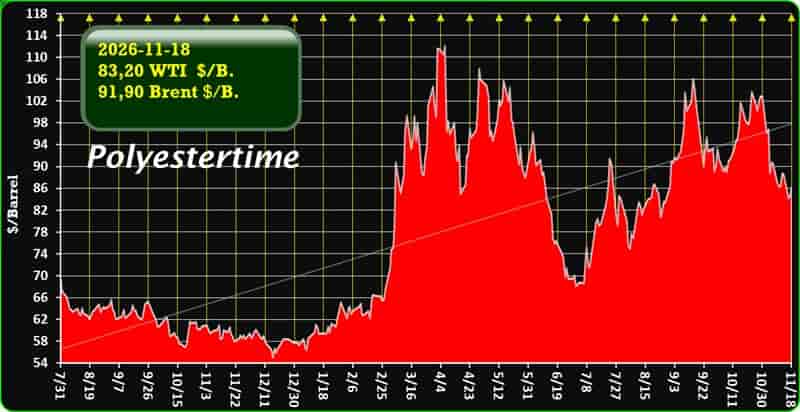
Crude Oil Prices Trend

A Fresh Start in Amsterdam: What the European Recycling Industry Hopes to Gain from PRSE
When the European recycling industry gathers at the Plastics Recycling Show Europe (PRSE) in Amsterdam starting 1 April, the mood is likely to be rather gloomy. The current economic situation appears too uncertain for businesses.
Anyone wanting to witness the dramatic developments in the market firsthand need only step outside the exhibition halls. The Netherlands is currently experiencing an unprecedented wave of bankruptcies, pulling more and more recycling companies into financial ruin. Across the rest of Europe, voices predicting a difficult future for the industry at least in the short to medium term are growing louder. Recycling Industry
The fact that recycling companies are looking ahead with apprehension is also due to the image of the products in question many industries still consider recyclates inferior, and the willingness to pay big money for these so-called secondhand materials is consequently lower.
However, the processing of post-consumer recycled (PCR) materials in particular requires enormous effort and cost. This makes it difficult to turn a profit, and there is a lack of clear directives without loopholes.
The EUs proposed mandatory recyclate usage quotas have so far failed to stabilise or even increase demand. On the contrary, the constant back-and-forth in Brussels regarding the percentage requirements only adds to the uncertainty for all market participants. Yet the example of PET shows that it can work. Recycling Industry

RENOLIT is investing 130 million euros and merging its Worms and Frankenthal sites in Worms
The plastics processor RENOLIT is merging its Worms and Frankenthal sites at the location in Worms. The family-owned company is investing around 130 million euros in the project. The merger of the two sites is expected to take up to five years. All employees from the Frankenthal site will be offered a job at the Worms site.
’At a time when, unfortunately, more and more German companies are relocating their production abroad, we are investing in Germany as a business location,’ says Karsten Jänicke, Chief Executice Officer of RENOLIT. ’The merger of the two locations is one of the largest investment projects in our company’s history.’ Recycling Industry
RENOLIT is to set up a modern, shared production facility for single-layer films at its site in Worms, Germany. The facility will include everything from the mixing room to the cooling storage area for the Visual Communication Market Unit. To do this, the company plans to transfer both the production volumes and some of the existing machinery from the Frankenthal site to the Worms site.

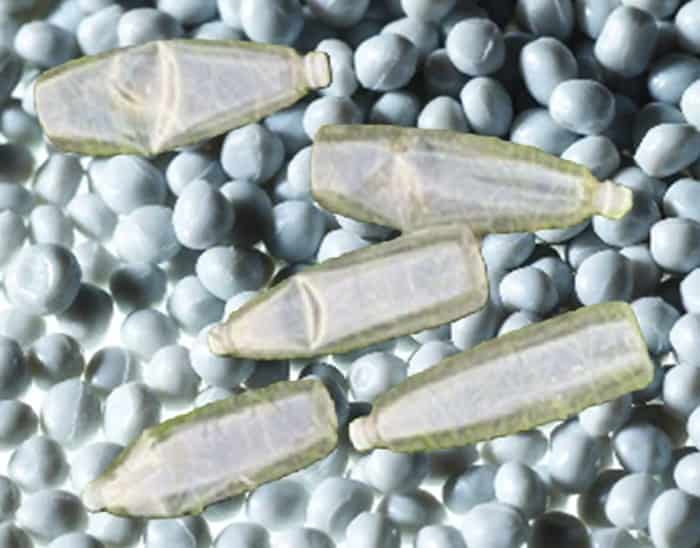
EU Polybutylene Terephthalate (PBT) prices showed resilience in March 2025, supported by slightly improved demand and high energy costs, according to GC Intelligence
However, early indications suggest a weakening of this upward momentum.
While suppliers and importers aimed for price increases, the market remains fragile with underlying demand still subdued across most sectors. Modest recovery has been observed in construction and electronics, but overall volumes remain limited.
The announcement of a 25% US tariff on EU cars and light trucks, effective April 2nd, further clouds the market outlook.
Meanwhile, flame-retardant PBT grades are facing significant cost increases due to restrictions on additives in China, with some hikes exceeding €1,000 per metric ton. This surge in additive costs is putting additional pressure on the pricing of these specialized PBT grades within the European market. Recycling Industry
Kemira and IFF have finalized their investment decision to form a 50/50 joint venture for large-scale production of renewable biobased materials
The total investment is estimated at around EUR 130 million, with commercial production expected to commence in late 2027.
The joint venture will leverage IFF’s Biorefinery in Kotka, Finland, to build a new manufacturing plant.
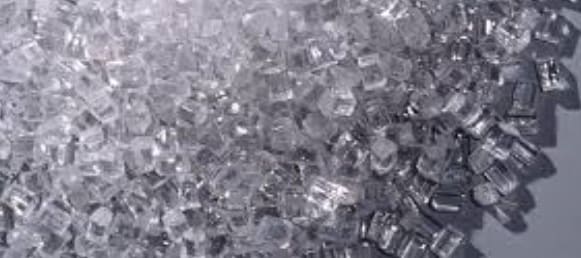
This facility will utilize the Designed Enzymatic Biomaterial™ (DEB™) technology platform, converting up to 44,000 metric tons of plant-based sugars annually into bioproducts, including high-performance biopolymers for diverse applications. Kemira holds exclusive global rights for DEB™ commercialization in the Paper, Board, and Water Treatment markets. Recycling Industry
The project is anticipated to create approximately 30 direct new jobs in the Kotka region, with additional jobs during the construction phase. Both Kemira and IFF CEOs expressed enthusiasm for scaling up this sustainable innovation, providing competitive biobased alternatives to fossil-derived products and meeting the increasing demand for high-performing, sustainable materials. The DEB™ technology promises superior purity, consistency, and enhanced performance compared to traditional biopolymers.
Visit : Kemira

It’s a well-known challenge in recycling: discarded PET bottles are often recycled into polyester textiles for clothing and carpeting, but this flow is largely one-way
Recycling companies typically cannot take old polyester garments and use them as feedstock to create new bottles or thermoformed packaging.
However, chemical recycling technologies are emerging with the potential to change this dynamic. The vision is to create a more integrated PET and polyester fabric recycling system where bottles and textiles can be interchangeable raw materials. This could unlock significant new sources of material for PET packaging, according to experts at the recent Plastics Recycling Conference. Recycling Industry
“Textiles to bottles, this is the dream,” stated Ben Dixon from Systemiq, emphasizing the potential of chemical recycling and depolymerization technologies, alongside improvements in collection infrastructure and design for recyclability. While currently T-shirts and jackets aren’t commonly recycled back into bottles, the technology to achieve this is developing.
A study by Systemiq, funded by Eastman Chemical Co., suggests that by 2040, the deployment of chemical recycling could yield 1.5 million metric tons of recycled PET and polyester from textiles and difficult-to-recycle packaging, a substantial increase from today’s near-zero levels. The study also projects a near doubling of traditional mechanical recycling of PET bottles to 2.1 million metric tons by 2040.
Combined, these advancements could lead to a 70 percent recycling rate for PET packaging (up from 23 percent) and a 19 percent recycling rate for polyester textiles (up from 1 percent) by 2040.
Despite the exciting potential, challenges remain, including the significant investments needed for new technologies and economic headwinds such as competition from virgin materials and imported recycled materials. Recycling Industry

The European Commission is expected to approve a minor revision to the EU’s 2019 CO2 emission standards for new cars and light commercial vehicles on April 1st
This update specifies a three-year compliance period (2025-2027) for calculating potential excess emissions premiums, instead of annual assessments.
This “one-off” adjustment aims to provide vehicle manufacturers with added flexibility while maintaining predictability for investors. The 29-page proposal does not alter the EU’s overall 2030 target of reducing economy-wide CO2 emissions by 55% compared to 1990, nor does it lower the existing CO2 emission standards.
Under the 2019 regulation, annual fleet-wide average CO2 emissions from new cars and vans are to be reduced in five-year intervals, with a 15% reduction target for 2025-2029 compared to 2021 values. Recycling Industry
Without this legal change, manufacturers exceeding their targets would face penalties of €95 per g/km per new vehicle registered.
The commission is also accelerating a broader review of the regulations, expected to commence later this year. However, there were no updates regarding the potential expansion of compliant fuels beyond e-fuels to include other low-carbon options like biofuels.