China ev overproduction – China’s EV Industry Faces Dangerous Crisis as Massive Surplus Production Triggers Fierce Price Wars, Factory Slowdowns, Global Tensions and Mounting Risks for Automakers 08-12-2025
China ev overproduction
China’s EV Glut: Surplus Production Hammers Profitability and Industry Stability
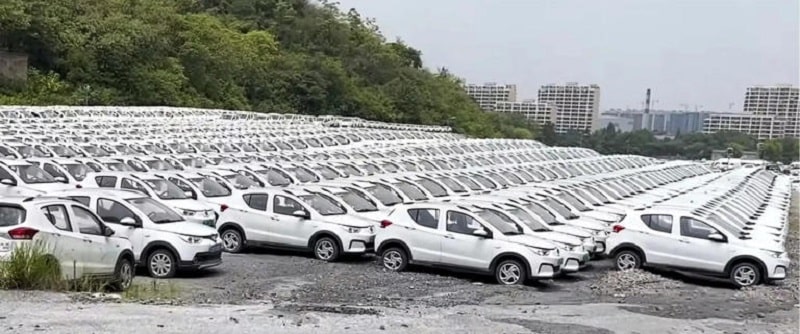
China’s electric-vehicle (EV) industry — long hailed as the future of global automotive — is increasingly facing the harsh reality of overproduction. What was once a fast-growing success story now shows signs of structural strain: factories running far below capacity, swelling inventories, steep discounting, mounting pressure on automakers’ margins, and fears of a painful consolidation ahead.
EV Boom And The Rise Of Overcapacity
Following years of aggressive expansion supported by subsidies, favourable policies and massive investment, Chinese automakers built out EV production capacity at a blistering pace. china ev overproduction
According to recent industry data, the problem now is that supply growth outpaces demand. Economy+2Korea Joongang Daily+2
As one sign of imbalance, inventory levels across China’s auto industry climbed to 3.5 million vehicles in April 2025 — the highest level recorded since late 2023. Korea Joongang Daily And despite many plants churning out cars, factory utilization averaged only about 49.5% last year, meaning roughly half the industrial capacity sat idle. Economy+1
Why Demand Is Failing to Keep Up
On paper, China’s EV adoption continues to grow: sales of electric and plug-in hybrid vehicles reportedly increased sharply in 2024. ANSA.it+2euronews+2 Yet growth has not been smooth or evenly distributed. Early 2025 data suggest a sharp slump in deliveries: in the first 12 days of January, EV and plug-in hybrid deliveries plunged 50% compared with December. South China Morning Post
Analysts connect this volatility to two main dynamics. First, consumer subsidies for EV purchases in China have recently been phased out or reduced, weakening incentive-driven demand. South China Morning Post+1 Second, competition among dozens — if not hundreds — of brands producing EVs and plug-in hybrids has created an oversaturated market, leading to aggressive price-cutting. Economy+1
Consequences: Price Wars, Deflation, Falling Profitability
The surplus of supply has triggered a painful price war. Some dealers and manufacturers are offering steep discounts to clear inventory, in many cases cutting costs much deeper than originally planned. Reuters+2The Guardian+2
Profitability for EV makers is under threat. When production outpaces real demand and plants run half-empty, fixed costs remain — but revenue per car falls. As one industry report bluntly noted: “making more is no longer the solution.” Economy
For many smaller or niche EV brands, this is unsustainable. According to a recent analysis, out of the roughly 129 Chinese EV or plug-in hybrid brands active today, only about 15 are predicted to survive through 2030. Economy
Surplus Isn’t Just Domestic — Export Pressure Rises
With domestic markets saturated and demand weakening, many Chinese automakers are turning to exports as a pressure-valve. Cheap EVs from China are increasingly targeting emerging markets in Asia, the Middle East, Latin America, and Africa, where EV infrastructure is nascent and price sensitivity is high. Korea Joongang Daily+2aranca.com+2
This flood of low-cost EVs is sharpening global competition and may force automakers elsewhere to reduce prices or lose market share. For China, though, exporting helps absorb part of the overcapacity — though likely at reduced margins compared to domestic sales. Korea Joongang Daily+1
Structural Imbalance: When Production Efficiency Backfires
The Chinese EV industry invested heavily in automation, advanced battery and assembly lines, and end-to-end supply chains. That efficiency helped scale output rapidly — but now that advantage may be backfiring. china ev overproduction
With too many cars produced relative to buyers, efficiency becomes a liability: it creates too much supply too fast, outstripping real-world demand. Economy+1
In that sense, what once was a strength has become a structural weakness. The risk is not only financial losses, but erosion of trust among consumers and investors. china ev overproduction
The Road Ahead: Consolidation, Restructuring, and Survival of the Fittest
Given the scale of overcapacity and falling profitability, experts expect major consolidation in China’s EV sector. With only a fraction of current brands likely to survive to 2030, those that remain must compete on cost, brand strength, and capacity to export or innovate. Economy+1
For surviving firms, success will likely require strategic shifts: focusing on higher-margin segments (e.g. feature-rich or export-ready EVs), improving cost efficiency, and avoiding destructive price wars. Others may exit the market, merge, or pivot away from EVs altogether.
What This Means for Global EV Industry
China’s EV oversupply does not only affect domestic players. As Chinese automakers export excess vehicles globally, competitive pressure increases on foreign EV companies — especially in price-sensitive emerging markets. This dynamic could accelerate EV adoption worldwide, but also intensify price and margin pressure across the industry. china ev overproduction
Moreover, the glut may shift global supply-chain dynamics: increased exports from China may lead to surplus capacity and downward pricing pressure globally, potentially delaying or disrupting growth plans of non-Chinese EV makers. china ev overproduction
Conclusion: Boom to Bust — A Cautionary Tale for Rapid EV Scaling
China’s EV industry — once celebrated as the vanguard of automotive electrification — is now wrestling with the unintended consequences of aggressive expansion. china ev overproduction
Overcapacity, idle factories, falling factory utilization, aggressive discounting, and shrinking profits show how rapidly the industry’s fortunes can swing when supply outpaces demand. china ev overproduction
What started as a surge toward electrification risks becoming a structural glut that forces consolidation, shrinks margins, and leaves many manufacturers vulnerable. As China attempts to export its way out of domestic overcapacity, the global EV market may feel the ripple effects. china ev overproduction
For now, the message is clear: in the EV world, scale and speed matter — but only if growth is matched by real demand. Otherwise, overproduction can turn a green promise into a painful industry correction. china ev overproduction