Avantium, Casa da Malha and Lacatoni Showcase PEF Sportswear Prototypes at Milano Unica
Avantium, Casa da Malha and Lacatoni present PEF sportswear prototypes, showing how plant-based recyclable polymers could enter performance apparel.
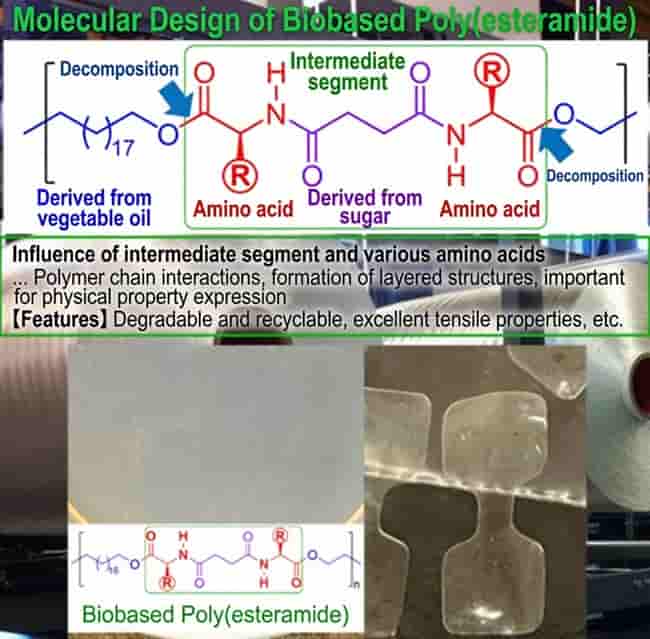
Researchers in Japan have developed recyclable biobased polymers from non-edible renewable materials that show tensile properties beyond common polyolefins.
Avantium has spun out its Volta Technology platform into Carbeau, a new company backed by €35.2 million in funding to scale electrochemical CO₂ conversion into chemicals and materials.
Biodegradable 3D printing is entering a more serious phase. Inspired by Kaneka’s work in bio-based polymers and the wider rise of PLA, PHA and compostable materials, manufacturers are rethinking how printed parts are designed, used and disposed of.
Amcor and Kelpi are evaluating seaweed barrier coatings for fiber packaging, aiming to improve moisture and gas protection while supporting recyclability.
Borouge International has introduced a bio-based version of a polypropylene grade used in drinking water and irrigation fittings, offering lower-carbon performance without changing processing requirements.
SABIC has introduced a new PCR polycarbonate compound designed for circular consumer electronics. The material combines 75% post-consumer recycled content with carbon fiber reinforcement, dimensional stability and thin-wall flame retardancy.
Epoch Biodesign’s planned London demonstration plant could mark a turning point for nylon 6,6 recycling, bringing AI-engineered enzymes closer to commercial-scale circular materials production.
Toray and PTT Global Chemical have created an innovative process to produce fully bio-based Nylon 66 using cassava pulp residues. The project could reduce dependence on fossil raw materials and accelerate sustainable plastics and textile production.