Bio-Based Polypropylene Pipes Move into Drinking Water Infrastructure
Bio-Based Polypropylene Pipes Move into Drinking Water Infrastructure
The transition to lower-carbon infrastructure materials is moving beyond packaging and consumer goods. Borouge International has introduced a bio-based version of an established polypropylene grade used in drinking water and irrigation fittings, adding a new option for manufacturers that need sustainability gains without compromising technical performance.
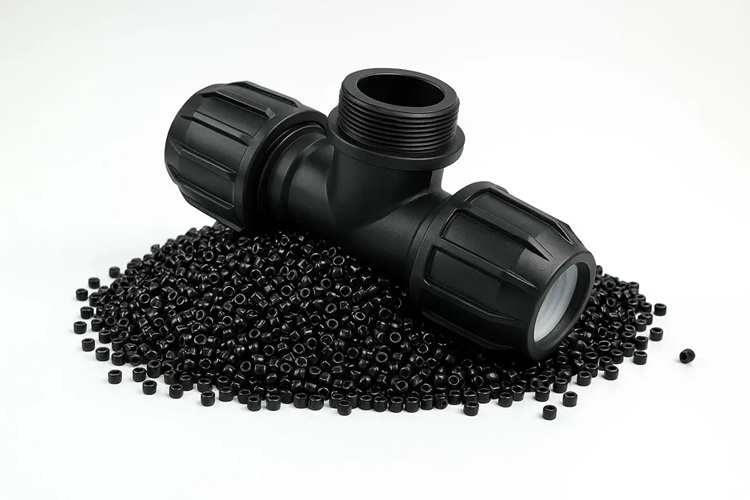
The material, BA160E-8229-01, is already used in pipe compression fittings and mechanical joints. The new version replaces 10% of fossil-based feedstock with certified bio-based feedstock derived from waste and residue streams. It has been added to Borouge International’s Bornewables portfolio, which focuses on renewable-based polyolefins with reduced carbon footprint.
Why this matters for water infrastructure
Plastic pipe systems are essential to modern water networks. They must deliver safe drinking water reliably, resist mechanical stress, meet strict regulatory requirements and remain efficient to process at industrial scale.
For this reason, sustainability in pipe materials cannot come at the expense of performance. A lower-carbon polymer used in drinking water infrastructure must still provide durability, purity, dimensional stability and predictable processing behavior.
Borouge International’s approach is important because the bio-based version is designed as a direct replacement for the conventional grade. In practice, this means manufacturers can target a lower-carbon material without redesigning their production process or changing the way the material is processed.
A drop-in PP grade for pipe fittings
BA160E-8229-01 is a fully formulated polypropylene compound based on a beta-nucleated heterophasic block copolymer. It is designed for injection molding applications such as compression fittings and mechanical joints used in drinking water and irrigation systems.
The grade is engineered to deliver optimized mechanical properties and controlled crystallization behavior. This allows higher demolding temperatures and shorter cooling cycles, helping processors reduce cycle times and improve manufacturing productivity.
According to Borouge International, the bio-based version keeps the same processing characteristics, mechanical performance and drinking water approvals as the conventional material. That makes it a practical solution for pipe fitting manufacturers that want to reduce the carbon footprint of their products without introducing additional complexity.
Certified bio-based feedstock and mass balance
The renewable feedstock used in the material is certified under the ISCC PLUS system and allocated through a mass balance approach. This is increasingly common in the polymer industry, especially when renewable or circular feedstocks are introduced into existing large-scale production systems.
Mass balance does not mean that each individual polymer pellet physically contains the exact same proportion of renewable feedstock. Instead, certified renewable input is tracked through the production and supply chain, and the sustainability claim is allocated to finished products according to controlled certification rules.
For infrastructure customers, this traceability is important. Public utilities, construction companies and pipe system suppliers are under growing pressure to document the environmental profile of materials used in long-life assets.
Lower-carbon materials without process disruption
One of the main challenges in sustainable infrastructure is implementation. Water networks require approved, proven and highly reliable materials. Any material substitution can trigger technical validation, regulatory checks and production adjustments.
A bio-based polypropylene grade that performs like the conventional version can therefore accelerate adoption. It allows manufacturers to improve the environmental profile of fittings while maintaining established production parameters.
This is particularly relevant for injection molding operations, where cycle time, demolding behavior and consistent mechanical performance directly affect productivity and cost.
A wider shift in polymer infrastructure
The launch reflects a broader trend in the plastics industry: renewable and circular feedstocks are increasingly being used in applications where long-term performance is essential.
While much of the public discussion around plastics focuses on packaging, technical plastics also play a major role in infrastructure, healthcare, mobility, energy and construction. In these sectors, the sustainability challenge is not simply to replace plastic, but to reduce fossil dependency while preserving material performance.
Bio-based polypropylene pipes and fittings are part of this shift. They show how polymer producers can use certified renewable feedstocks to lower the carbon footprint of essential infrastructure components without forcing customers into major design or manufacturing changes. bio-based polypropylene pipes
What comes next
The introduction of bio-based BA160E-8229-01 suggests that lower-carbon polyolefins are moving into more demanding technical applications. For drinking water and irrigation systems, the key point is not only the renewable content, but the combination of certification, drop-in compatibility and maintained approvals.
As infrastructure projects face stricter sustainability requirements, materials that combine verified renewable feedstock, processing efficiency and regulatory compliance are likely to gain attention.
For pipe fitting manufacturers, the message is clear: sustainability is becoming a specification requirement, not an optional marketing feature. The next phase of polymer innovation will depend on materials that reduce environmental impact while continuing to meet the performance standards of critical infrastructure.
More…