Epoch Nylon Plant Deal Brings Enzymatic Recycling to Industrial Scale
Epoch Nylon Plant Deal Brings Enzymatic Recycling to Industrial Scale
Epoch Biodesign has acquired a nylon 6,6 production facility in Blanes, Spain, in a move that could accelerate the commercial development of enzymatically recycled engineering plastics.
The UK biotechnology company is taking control of the former Domo Polymer Solutions Spain operation following an insolvency auction. The transaction includes a commitment to retain 60 employees, preserving most of the plant’s workforce and maintaining an important industrial activity in the Catalan town.
For Epoch, the deal is more than a conventional factory acquisition. It gives the company commercial-scale polymerisation capacity, allowing it to connect its plastic-deconstruction technology with the final production of recycled nylon.
Insolvency auction safeguards 60 jobs
The Blanes production unit was awarded to Epoch Biodesign through an auction conducted as part of Domo Polymer Solutions Spain’s insolvency proceedings.
RocaJunyent, the law firm acting as insolvency administrator, said Epoch’s successful offer exceeded €6.5 million and included the transfer of 60 employment contracts from a workforce of approximately 70 people.
This differs from some recent international coverage, which valued the transaction at just over €4 million. Because the insolvency administrator’s announcement relates directly to the auction process, the figure above €6.5 million provides the strongest publicly available reference for the winning bid.
The acquisition gives the facility a route back into operation after a period of uncertainty and provides Epoch with an established European manufacturing base rather than requiring it to build an equivalent polymerisation plant from the ground up.
A 52,000-tonne nylon production facility
The Blanes site has annual nylon 6,6 production capacity of approximately 52,000 tonnes, according to recent polymer-industry reporting.
Epoch says this represents more than 50,000 tonnes of annual polyamide 6,6 polymerisation capacity. Industry coverage has estimated that the facility accounts for around 10% of active installed nylon 6,6 capacity across Europe, the Middle East and Africa.
The site’s restart will therefore be important not only for Epoch but also for regional nylon supply. Nylon 6,6 is used in textiles, automotive components, electrical equipment and other industrial applications that require heat resistance, durability and mechanical strength.
Production at Blanes is expected to resume during 2026. Some reports identify October as the planned restart period, although the exact operational timetable should be treated as a company target rather than a guaranteed production date.
From waste plastics to finished recycled nylon
Epoch develops recycling processes based on enzymes designed with the support of artificial intelligence.
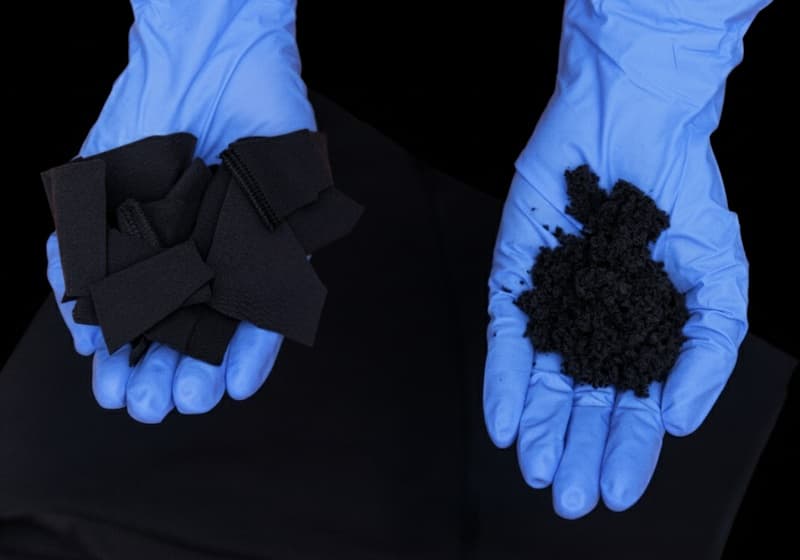
Its technology is intended to break difficult plastic waste into chemical building blocks, or monomers, under lower-temperature conditions than many conventional chemical recycling processes. Those recovered components can then be purified and used to manufacture new polymer.
Until now, Epoch’s principal focus has been the depolymerisation stage: converting waste nylon into reusable raw materials.
The Blanes acquisition adds the polymerisation stage needed to turn those raw materials into finished nylon 6,6. This could give Epoch greater control over product quality, production schedules and customer qualification.
It also creates a more integrated industrial model. Instead of supplying recovered monomers to an unrelated producer, the company aims to manage the route from waste feedstock to finished polymer.
Why polymerisation capacity matters
Owning polymerisation equipment could help Epoch address one of the central difficulties facing advanced recycling companies: moving from a successful recycling process to a consistent, commercially acceptable material.
Manufacturers do not buy recycling technology. They buy polymers that must satisfy defined specifications for strength, viscosity, colour, processing behaviour and durability.
A company that controls both depolymerisation and polymerisation can adjust more parts of the process and investigate how variations in recovered feedstock affect the final material.
This integration could also simplify customer trials. Textile, automotive and industrial manufacturers generally need repeatable samples and reliable production volumes before they can approve a recycled polymer for use in existing supply chains.
The Blanes plant provides Epoch with an established platform for producing those materials at a substantially larger scale.
Nylon 6,6 remains difficult to recycle
Approximately two million tonnes of nylon 6,6 are produced globally each year, according to figures cited by Epoch and its industry partners.
Only a small proportion is recycled after use. Current recycling routes can be limited by contamination, mixed materials, dyes, additives and deterioration in polymer quality.
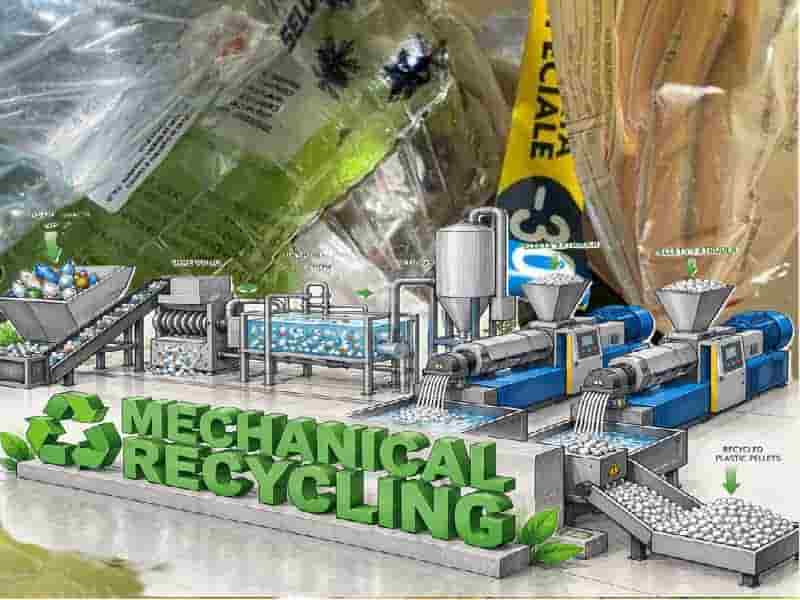
Mechanical recycling is suitable for some relatively clean and consistent nylon waste streams. However, repeated processing can affect performance, while many post-consumer products are too complex or contaminated for straightforward mechanical recovery.
Enzymatic depolymerisation offers a different approach. By breaking the polymer into smaller chemical components, the process seeks to remove impurities and recover feedstock that can be used to manufacture new nylon.
The technology must still demonstrate that it can operate economically and reliably across large, variable waste streams. The Blanes acquisition does not by itself solve those scaling challenges, but it gives Epoch the downstream infrastructure needed to test its model at a much larger industrial level.
London recycling plant supports the strategy
The Spanish deal follows the development of Epoch’s nylon recycling operation in London.
The company says it has operated a multi-tonne pilot system and is developing a larger demonstration plant. Its longer-term objective is to establish more than 50,000 tonnes of annual biorecycling capacity by 2029.
The London and Blanes facilities are expected to perform complementary roles.
The recycling operation can process nylon waste into chemical intermediates, while the Spanish plant can convert suitable recovered material into finished polymer. Together, the sites could form an integrated European production chain for recycled nylon 6,6.
The commercial significance will depend on how quickly Epoch can commission the systems, qualify recycled output with customers and secure sufficient volumes of appropriate waste material. Epoch nylon plant
Collaboration with INVISTA
Epoch has also signed a memorandum of understanding with INVISTA, a major producer of nylon intermediates, polymers and fibres.
The collaboration combines Epoch’s enzyme platform with INVISTA’s polymerisation knowledge and international manufacturing experience. The companies have said their aim is to develop post-consumer recycled nylon 6,6 with performance suitable for commercial customers.
The agreement is relevant because qualification is one of the largest barriers to introducing recycled engineering polymers.
Automotive suppliers, apparel brands and industrial manufacturers need evidence that recycled nylon can meet the same technical and processing requirements expected from established materials.
INVISTA’s involvement could provide additional polymer expertise and support the testing needed to move from demonstration quantities to customer-approved production.
Funding from fashion and climate investors
Epoch has raised more than $50 million from investors and strategic partners, according to recent company and industry reports.
Its financial backers include Lowercarbon Capital, Extantia, KOMPAS VC and Mundi Ventures, the venture-capital arm associated with Inditex. Lululemon has also invested in the company as it looks for technologies capable of recovering nylon from textile products.
This support illustrates the growing interest in fibre-to-fibre and textile-to-polymer recycling.
Fashion companies face pressure to reduce dependence on virgin fossil-based materials while improving what happens to garments at the end of their useful lives. Nylon is particularly challenging because it is commonly combined with elastane, coatings, dyes and other fibres.
A recycling system able to process complex nylon waste and return it to a virgin-equivalent polymer could therefore address a significant gap in the circular textile economy.
Commercial scale remains the decisive test
The Blanes acquisition gives Epoch assets, production capacity and an experienced workforce. It does not automatically guarantee that enzymatic recycling will compete with established nylon manufacturing.
The company must integrate the Spanish operation with its recycling platform, restart production safely and demonstrate consistent quality. It must also control energy use, enzyme costs, waste-feedstock preparation and the purification of recovered monomers.
Demand will be another determining factor. Customers may express strong interest in circular materials, but large-scale adoption depends on price, performance, availability and regulatory acceptance.
The facility nevertheless provides Epoch with something that many recycling start-ups lack: an existing route to substantial commercial production.
A new model for advanced plastic recycling
The Epoch nylon plant deal points towards a broader shift in the recycling sector.
Technology developers are increasingly seeking control over more of the material chain. Producing recovered monomers is valuable, but owning polymerisation capacity can bring a company closer to the final material purchased by brands and manufacturers.
For Epoch, the Blanes facility connects biotechnology with conventional industrial production. Enzymes are intended to recover the chemical components of discarded nylon, while established polymer equipment converts those components into usable material.
The success of that model will be measured by verified output rather than installed capacity alone. Recycled-content levels, product quality, emissions, operating costs and customer adoption will determine whether the process can deliver meaningful circularity at scale.
The acquisition is therefore an important industrial step, but also the beginning of a more demanding phase. Epoch must now show that its recycling platform and the Blanes polymerisation plant can operate as one commercially viable system.
More…