Breakthrough: SK chemicals Transforms Waste Banner Recycling Into Regional Circular Economy Success
A New Era for Waste Banner Recycling
South Korea is witnessing a groundbreaking shift in how discarded advertising banners are handled. SK chemicals has just announced the formation of the Waste Banner Resource Circulation Consortium, a multi-partner initiative designed to turn waste banners back into new banner fabric using advanced chemical recycling technology. This move marks a significant step forward in addressing the country’s mounting plastic waste problem while creating a sustainable, region-based circular economy model. waste banner recycling
The Scale of the Waste Banner Problem
Every year, approximately 6,000 tons of waste banners are generated across South Korea, with about 70% ending up in landfills or incinerators. These banners, typically used once for events, elections, or promotional campaigns, have short lifespans but long environmental consequences. Previous upcycling efforts—such as converting old banners into tote bags or collection sacks—have faced criticism for amounting to little more than one-time recycling, failing to address the root of the waste issue.
The newly launched consortium targets more than 1,000 tons of annual waste banner volume across the Gyeongsang, Honam, and Jeju regions alone. By establishing comprehensive collection and recycling systems in these areas, SK chemicals aims to dramatically reduce the amount of banner waste sent to disposal facilities while creating a replicable model for other regions. waste banner recycling
How the Consortium Works
The Waste Banner Resource Circulation Consortium brings together four key partners, each with a specific regional and functional role:
-
MOA and Daehan Media handle banner collection in the Gyeongsang region
-
Upcloth manages collection in the Honam region
-
Seogwipo City’s Resource Circulation Team covers Jeju Island
MOA specializes in pre-processing, converting collected banners into a form suitable for chemical recycling. SK chemicals then applies its depolymerization technology to break the plastic waste down to its molecular building blocks, transforming it into feedstock that can be repolymerized into new banner fabric. Daehan Media serves as the production partner, manufacturing the chemically recycled banner fabric and distributing it through its nationwide sales network.
Upcloth brings additional social value to the initiative by employing participants in local self-sufficiency programs and people with disabilities, creating jobs while advancing environmental goals. Seogwipo City, the only local government in the consortium, works to establish the institutional framework needed to complete the entire cycle—from collection to reuse—within the region. waste banner recycling
The Technology Behind the Transformation
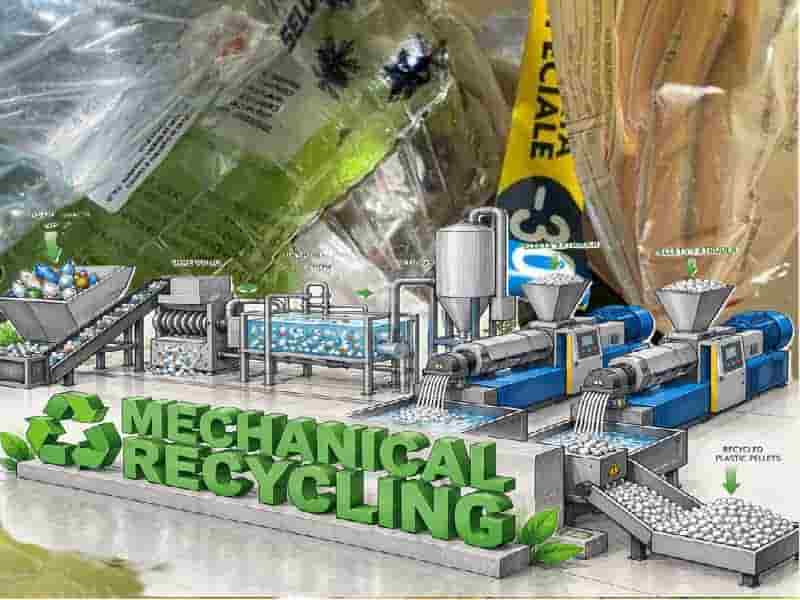
What sets this initiative apart is SK chemicals’ depolymerization technology, which fundamentally differs from conventional mechanical recycling. Traditional mechanical recycling involves shredding, washing, and remelting waste plastic—a process limited to high-quality waste streams like clear PET bottles and prone to quality degradation with each cycle.koreatimes.co+2
Depolymerization, by contrast, breaks waste plastics down at the molecular level, returning them to their original feedstock state before repolymerizing them into new materials. This chemical process structurally eliminates the effects of prior use, colorants, and impurities, enabling the recycling of a much wider variety of waste plastics, including textile-based banners. Perhaps most importantly, material quality does not degrade even after repeated recycling cycles, making depolymerization ideally suited for creating a true closed-loop system where banners become banners again. waste banner recycling
Building Regional Circular Economy Models
The consortium’s approach goes beyond simple waste management—it aims to create region-based circular economy models where waste generated locally becomes a resource within the same region. SK chemicals plans to establish and standardize provincial-level collection and sorting systems, taking into account each region’s unique characteristics and existing infrastructure.koreatimes.co+3
This localized approach addresses a key challenge: while waste banners are a universal problem for local communities, each region’s circumstances and existing systems differ. By working with regional partners who understand local conditions, the consortium can develop tailored solutions that are both practical and scalable. Once proven successful, the model can be replicated in other regions across South Korea and potentially beyond. waste banner recycling
A Growing Network of Partnerships
This latest consortium builds on SK chemicals’ expanding network of partnerships for waste banner recycling. The company signed its first memorandum of understanding on waste banner resource recovery with the City of Gunsan and Revelop in August 2024. This was followed by MOUs with the Ministry of the Interior and Safety and multiple cities—including Sejong, Gangneung, Cheongju, Naju, and Changwon—in June 2025, and with the City of Seoul in August 2025.morningstar
The 2026 Solveathon for Overcoming Regional Decline, held in conjunction with the Social Value Festa and hosted by the Korea Chamber of Commerce and Industry and the Ministry of the Interior and Safety, provided the platform for SK chemicals to issue its challenge on waste banner processing and circular economy development. The response led directly to the formation of the current consortium, demonstrating how public-private collaboration can accelerate sustainable innovation. waste banner recycling
Environmental and Economic Impact
The implications of this initiative extend well beyond waste reduction. By diverting banners from landfills and incinerators, the consortium will reduce greenhouse gas emissions associated with waste disposal while conserving raw materials needed for new banner production. The chemical recycling process also requires less energy than producing virgin plastic from fossil fuels, contributing to broader climate goals.
Economically, the project creates new business opportunities in collection, pre-processing, and recycled material manufacturing while generating local employment—particularly through Upcloth’s inclusion of self-sufficiency program participants and people with disabilities. For local governments, the initiative offers a practical solution to a persistent waste management challenge while advancing circular economy
Looking Ahead
SK chemicals’ representative emphasized the importance of collaboration in scaling this model: “Through collaboration with the participating organizations, we will broaden the scope to the metropolitan and provincial level to build waste banner circulation systems, and create real success stories of turning waste banners back into banners.”morningstar
As the consortium moves into full-scale operation, it will serve as a test case for whether regional circular economy models can effectively address plastic waste while creating economic and social value. If successful, this approach could be applied to other waste streams beyond banners, potentially transforming how South Korea—and other nations—think about plastic recycling and resource circulation.
More…