Bioplastics Market Trends: Packaging and Healthcare Drive the Next Phase
Bioplastics Market Trends: From Sustainable Promise to Industrial Reality
Bioplastics are entering a more serious phase. They are no longer discussed only as symbolic alternatives to fossil-based plastics, but increasingly as functional materials for packaging, healthcare, consumer goods and regulated applications.
The shift is being driven by three forces: regulation, brand sustainability targets and technical progress in renewable polymers. Recent industry reporting also shows that packaging and medical applications are becoming two of the most important test beds for the next generation of bioplastics.
At the same time, the market is becoming more realistic. Bioplastics are not automatically better simply because they are bio-based, biodegradable or compostable. Their value depends on feedstock, performance, additives, production energy, waste infrastructure and end-of-life route.
What Are Bioplastics?
A material is generally considered a bioplastic when it is bio-based, biodegradable, or both. This means the term covers different families of materials, from PLA and PHA to bio-based PE, bio-based PP and emerging polymers such as PEF.
This distinction matters. A bio-based plastic may not be biodegradable. A biodegradable plastic may still require specific industrial composting conditions. A compostable material may not be suitable for every recycling stream.
That is why the next phase of bioplastics will not be won by broad environmental claims. It will be won by materials that can prove performance, traceability, regulatory compliance and credible end-of-life behavior.
Packaging Remains the Main Growth Driver
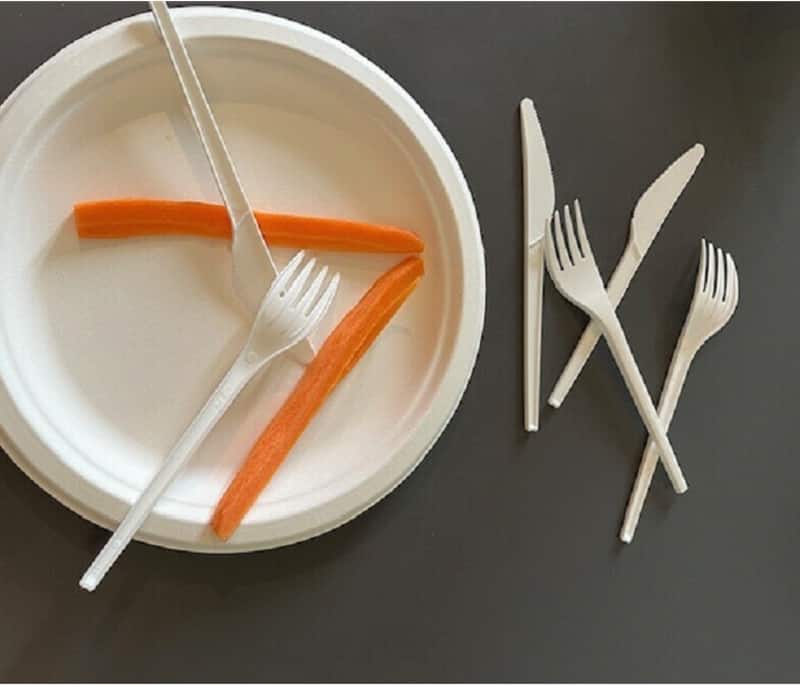
Packaging is still the strongest commercial driver for bioplastics. Food packaging, flexible films, paper coatings, food-service items and consumer goods packaging all need materials that can reduce fossil carbon while maintaining barrier performance.
The challenge is technical. Packaging must often resist grease, oxygen and moisture while also remaining recyclable, compostable or compatible with paper recovery systems.
BASF’s expanded ecovio portfolio is one example of this direction. The company has introduced certified compostable grades for flexible barrier packaging, designed to help manufacturers choose between different end-of-life options such as organic recycling or paper recycling depending on the application.
This reflects a broader trend: bioplastics are becoming part of hybrid packaging systems rather than simple one-to-one replacements. Paper-based packaging, for example, often needs a functional coating to handle liquids, fats or oxygen-sensitive products.
Regulation Is Reshaping the Market
Europe’s Packaging and Packaging Waste Regulation is becoming a major reference point for packaging design. The PPWR entered into force on 11 February 2025 and will generally apply from 12 August 2026, covering packaging and packaging waste across all materials and origins.
For bioplastics, this creates both opportunity and pressure. Materials will need to fit into a clearer regulatory framework around recyclability, waste prevention, recoverability and circularity.
The European debate is also moving toward the role of bio-based feedstocks in packaging. Recent analysis commissioned for the European Commission found no technical barriers to bio-based packaging and highlighted potential greenhouse-gas savings, while also calling for policy clarity to support defossilisation.
Healthcare Opens a More Demanding Opportunity
Healthcare is a slower but potentially important market for bioplastics. Medical devices, surgical tools, autoinjectors, pharmaceutical packaging and automated handling systems require materials with high mechanical strength, stability, sterilization compatibility and strict documentation.
Medical-grade bioplastics companies are focusing on materials such as PLA, bio-PE and PEF for healthcare applications where quality management and supply-chain qualification are essential. Biovox, for example, describes its MedEco materials as biobased polymers designed specifically for regulated healthcare uses.
The healthcare sector also has a waste problem. A 2025 Royal Society of Chemistry review notes that biobased and biodegradable polymers could help reduce the environmental impact of medical disposables, but only if waste management and circularity strategies are properly addressed.
This is where bioplastics face a higher bar. In healthcare, a material cannot rely on sustainability positioning alone. It must also pass validation, sterilization, aging, safety and regulatory requirements.
PLA, Bio-PE, Bio-PP and PEF: Different Roles
PLA remains one of the best-known bioplastics. It offers stiffness, strength and potential for chemical recycling through depolymerization. These qualities make it relevant for selected packaging and medical applications.
Bio-PE and bio-PP are different. They are chemically similar to their fossil-based equivalents, which can make substitution easier in existing products, tools and processes. For manufacturers, this can reduce engineering effort and validation complexity.
PEF is one of the more interesting emerging materials. It is often discussed as a potential alternative to PET because of its barrier performance, stiffness and strength. In sensitive packaging, including pharmaceutical primary packaging, stronger barrier properties could allow downgauging and lower material use.
The Credibility Problem: Not All Bioplastics Are Greener
The market still faces a credibility problem. Bio-based origin does not automatically mean lower toxicity, lower emissions or better end-of-life performance.
Lifecycle analysis remains essential. A recent Nature Communications study on bio-based plastic packaging highlighted that climate, ecosystem and human-health trade-offs must be assessed together, not reduced to a single sustainability claim.
This is especially relevant for materials made from agricultural feedstocks, waste streams, captured carbon or chemically intensive processes. Some routes may reduce fossil carbon but increase other environmental burdens.
The same issue appears in food packaging research. A recent review of chitosan-based biodegradable packaging notes that environmental performance depends on the full lifecycle, including feedstock extraction, processing, energy demand, functionality and degradation behavior.
The Market Is Maturing, But Costs Remain a Barrier
Bioplastics still face several barriers to scale. These include higher production costs, limited availability, inconsistent waste infrastructure and performance gaps in some applications.
However, the sector is moving from experimental adoption to more structured industrial use. Market research published in 2026 describes bioplastics as a small but growing share of polymer production, with expansion expected to outpace the wider plastics market through 2036.
The key shift is that customers are asking more specific questions. They want to know whether a material is recyclable, compostable, bio-based, mass-balanced, segregated, food-contact approved, medical-grade, or compatible with existing machinery.
That level of detail is a sign of maturity.
What Comes Next for Bioplastics?
The future of bioplastics will likely be application-specific. There will not be one winning material.
Flexible packaging may require compostable barrier layers. Paper packaging may need bio-based coatings. Healthcare may adopt medical-grade PLA, bio-PE, bio-PP or PEF where validation pathways are manageable. Food packaging may use biodegradable materials only where waste systems can process them correctly.
The companies most likely to succeed will be those that avoid vague sustainability language and provide clear data on performance, carbon footprint, chemical safety, feedstock origin and end-of-life.
Bioplastics are not a universal solution to plastic pollution. But when they are designed for the right application, supported by credible data and integrated into real waste systems, they can become an important part of the transition away from fossil-based materials.
Waste Wood Bioplastics Breakthrough Brings 99% Efficiency Gains
More…