Pirelli-Led Tyre-to-Tyre Recycling Project Targets a Closed Material Loop
Pirelli-Led Tyre-to-Tyre Recycling Project Targets a Closed Material Loop
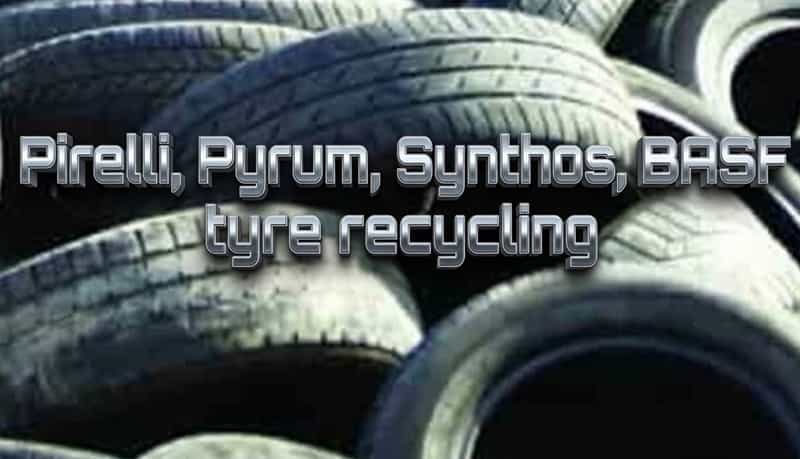
Pirelli, Pyrum, Synthos and BASF have launched a European tyre-to-tyre recycling initiative designed to convert end-of-life and manufacturing-scrap tyres into raw materials for new high-performance tyres.
Announced on 22 July 2026, the project connects tyre collection, pyrolysis, chemical manufacturing and synthetic-rubber production in one traceable industrial chain. Pirelli is coordinating the initiative, which aims to reduce dependence on virgin fossil-based resources without compromising tyre quality or performance.
Key facts
-
End-of-life tyres are collected in Germany, including through selected Driver retail outlets and motorsport operations.
-
Scrap tyres from Pirelli’s manufacturing plant in Breuberg also enter the recycling chain.
-
Pyrum converts the tyres into recovered carbon black and tyre pyrolysis oil.
-
BASF uses the oil as an alternative feedstock in chemical production.
-
Synthos converts certified chemical inputs into synthetic rubber.
-
Pirelli uses the resulting materials in new tyres produced in Europe.
-
Traceability and the allocation of recycled content are managed under the ISCC PLUS certification system.
How the tyre-to-tyre recycling process works
The project begins with tyres that have reached the end of their useful life, together with production scrap that cannot be sold or placed on a vehicle.
Rather than treating these tyres only as waste or using them in lower-value applications, the partners process them through an interconnected industrial system intended to preserve more of their material value.
Pyrum applies a thermal-decomposition process commonly described as pyrolysis or thermolysis. The tyres are heated at high temperatures in an oxygen-free environment and separated into reusable outputs.
Two of the most important products are recovered carbon black, or rCB, and tyre pyrolysis oil, known as TPO.
Recovered carbon black returns to tyre production
Carbon black is a critical tyre ingredient. It reinforces rubber compounds and contributes to properties such as strength, durability and resistance to wear.
In the new supply chain, Pyrum upgrades the recovered carbon black produced from scrap tyres before returning it directly to Pirelli’s European manufacturing operations.
The recycled material can then partially replace virgin carbon black. This creates one of the project’s most direct material loops: a component recovered from an old tyre becomes an input for a new one.
Pyrum has been developing industrial technology for recovering oil and carbon-rich material from end-of-life tyres for several years. The company describes its process as a method of producing secondary raw materials that can be returned to industrial value chains.
Pyrolysis oil becomes a chemical feedstock
The tyre pyrolysis oil follows a different route.
Pyrum supplies the oil to BASF, which introduces it alongside conventional fossil feedstocks during chemical manufacturing. The resulting production chain includes chemicals such as butadiene and styrene, which are important building blocks for synthetic rubber.
BASF uses a mass-balance system to assign the recycled feedstock proportion to its ISCC PLUS-certified Ccycled products.
Under mass balance, recycled and conventional inputs may be processed together in existing production infrastructure. Verified accounting then attributes an equivalent share of recycled content to specific certified products.
This approach does not necessarily mean that every individual molecule in the final product originated from a scrap tyre. It provides a certified method for tracking the quantity of alternative feedstock introduced into a complex, integrated production system.
BASF and Pyrum have previously worked together on applications in which pyrolysis oil from scrap tyres replaces part of the fossil feedstock used in chemical production.
Synthos completes the synthetic-rubber stage
Synthos receives the certified circular chemical materials and uses them to manufacture synthetic rubber for high-performance tyre applications.
The rubber is then supplied to Pirelli, closing the planned industrial loop.
Synthetic rubber must meet tightly controlled technical requirements. Depending on its formulation and position in a tyre, it can influence grip, elasticity, rolling resistance, wear and performance under changing temperatures.
Synthos already produces several families of rubber for the automotive and tyre industries, including styrene-butadiene and polybutadiene rubbers. Its role in the project is therefore essential: it converts chemical building blocks containing attributed circular content into a usable tyre-manufacturing material.
Why industrial collaboration matters
The initiative demonstrates why circular manufacturing is difficult for one company to achieve independently.
A tyre producer can collect scrap material and use recycled ingredients, but it does not normally operate every stage required to convert old tyres into refined carbon black, chemical intermediates and new synthetic rubber.
The project divides those responsibilities among four specialised businesses:
-
Pyrum manages the thermal conversion of tyres.
-
BASF integrates pyrolysis oil into chemical production.
-
Synthos manufactures certified synthetic rubber.
-
Pirelli coordinates the chain and reintroduces the materials into tyre production.
By linking these operations, the companies are attempting to keep recovered materials in higher-value applications instead of allowing them to move into unrelated products or lower-grade uses. tyre-to-tyre recycling
The role of ISCC PLUS certification
ISCC PLUS certification is important because circular supply chains involve several companies, production facilities and material transformations.
The certification framework supports traceability and verified accounting as materials move between the participating organisations. It also provides a common basis for attributing recycled inputs through the mass-balance method.
Certification should not be interpreted as proof that the process eliminates all environmental impacts. Pyrolysis, chemical processing and tyre manufacturing still require energy and industrial infrastructure.
However, a certified chain can provide greater transparency about where alternative feedstocks enter the system and how their quantities are allocated to final products.
A step towards reducing virgin raw-material demand
The partners have not announced a project-wide recycling-capacity figure or a quantified reduction in greenhouse-gas emissions. Claims about its total environmental benefit should therefore remain proportionate to the information currently available.
Its immediate significance lies in the structure of the supply chain: recovered carbon black returns directly to tyre manufacturing, while tyre-derived oil is used to produce chemical components and synthetic rubber that also return to Pirelli.
Pirelli has separately increased its use of recycled and renewable materials and has supported the development of certification routes for additional tyre inputs, including recycled steel.
The new collaboration takes that strategy further by connecting multiple tyre ingredients within a coordinated European system.
What happens next
The main test will be whether the partners can scale the model while maintaining consistent material quality, competitive costs and dependable supplies of suitable scrap tyres.
Further disclosures will also be needed to assess its full impact. Useful indicators would include annual processing volumes, the percentage of virgin inputs replaced, energy consumption, lifecycle emissions and the proportion of resulting materials used in commercially available tyres.
Even without those figures, the project offers a practical example of how manufacturers, recyclers and chemical suppliers can build a circular value chain around a technically demanding product.
Instead of viewing an old tyre as the end of a product’s life, the participating companies are treating it as a source of industrial raw materials—and potentially as the starting point for another tyre.
More…