Carbios Advances PET Textile Recycling After 100 Batches
PET textile recycling
Carbios Expands PET Textile Recycling Technology After 100 Industrial Batches
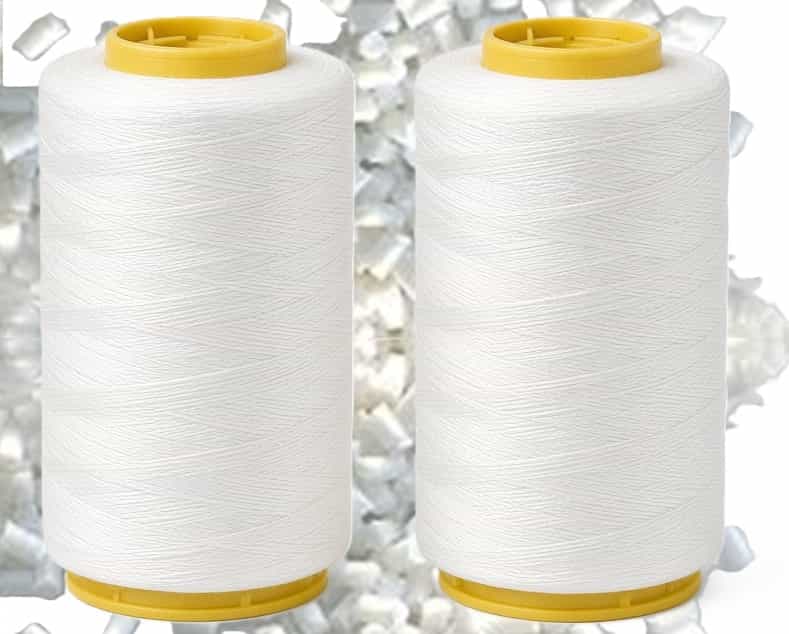
Carbios has reached a significant development milestone for PET textile recycling, completing 100 production batches at its industrial demonstration plant in Clermont-Ferrand, France.
The French biotechnology company says the trials validate its enzymatic “fiber-to-fiber” recycling process under conditions designed to represent industrial operations. The results have prompted Carbios to extend its technology-licensing offer beyond PET packaging and into the global textile market.
According to the company’s announcement on July 21, 2026, the demonstration plant achieved more than 95% conversion within 24 hours while processing complex post-consumer textile waste. The reported performance was reproduced across successive batches, an important consideration for prospective industrial licensees.
What Carbios achieved at Clermont-Ferrand
Carbios’ process uses enzymes to depolymerize polyethylene terephthalate, commonly known as PET, into its original chemical building blocks.
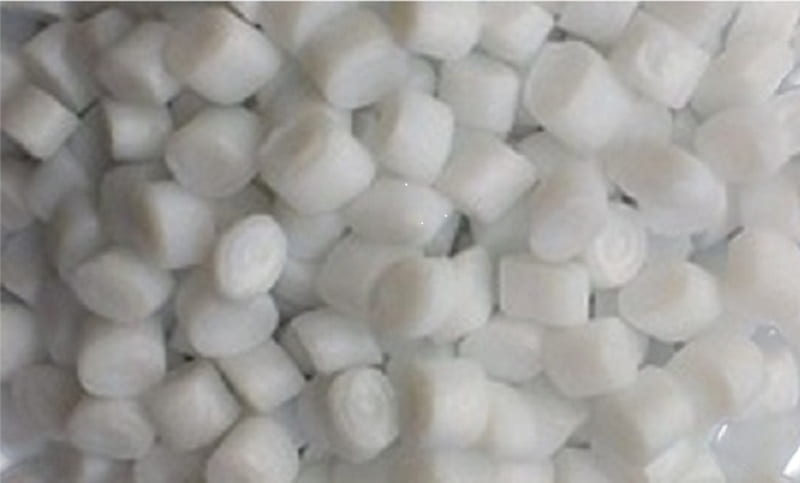
These recovered monomers can then be purified and used to manufacture new PET material. Carbios says the monomers obtained from textile waste have a quality comparable to those recovered from PET packaging and can be used to produce new, virgin-quality material.
The latest trials focused on difficult post-consumer textile streams rather than clean, uniform feedstock. Such waste can contain dyes, treatments, additives and other components that complicate conventional recycling.
Carbios reports that its system maintained conversion rates above 95% within 24 hours despite this complexity. The 100 completed batches therefore provide more meaningful evidence of process repeatability than a single laboratory or pilot-scale result.
However, these performance figures come from Carbios’ own industrial demonstration programme. They should not be interpreted as proof that every future commercial facility will automatically obtain identical results, costs or environmental outcomes.
Why textile-to-textile recycling matters
Polyester is one of the most widely used fibres in the global clothing and textile industries. Carbios estimates that textile applications consume approximately 67 million tonnes of PET polyester annually—almost twice the volume used in PET packaging.
The company consequently describes textiles as representing about two-thirds of worldwide PET consumption.
Despite polyester’s extensive use, large-scale fiber-to-fiber recycling remains difficult. Many existing systems depend on relatively clean materials, while used garments frequently combine polyester with cotton, elastane, coatings, fasteners and other substances.
Mechanical recycling can also reduce fibre quality over repeated cycles. Depolymerization technologies attempt to address that limitation by breaking PET down into chemical constituents that can be used to manufacture new polymer.
Carbios’ latest trials do not resolve every collection, sorting or preprocessing challenge. They do, however, indicate that its enzymatic process can handle complex PET-rich textile inputs under representative operating conditions. PET textile recycling
Licensing moves beyond packaging
Rather than relying exclusively on facilities that it owns and operates, Carbios is developing a licensing model through which industrial partners can deploy its proprietary process.
The company had previously positioned this model primarily around PET packaging. Following the Clermont-Ferrand trials, it is now offering licences for textile applications as well.
This expansion substantially increases the market that Carbios can address. Potential licensees could include recycling companies, chemical producers, textile manufacturers and other industrial groups seeking access to textile-to-textile recycling technology.
Licensing may allow the process to enter multiple regions without requiring Carbios to finance and construct every plant itself. Nevertheless, commercial success will depend on factors beyond technical conversion rates, including capital expenditure, energy and preprocessing requirements, feedstock availability, local regulation and demand for recycled monomers.
New EU rules increase pressure on fashion waste
The announcement arrives as European rules governing unsold textiles become stricter.
From July 19, 2026, large companies operating in the European Union are prohibited from destroying unsold apparel, clothing accessories and footwear, subject to limited exceptions. The measure forms part of the EU’s Ecodesign for Sustainable Products Regulation and is intended to direct more products toward reuse, resale, donation and recycling.
The regulation does not directly guarantee demand for Carbios’ technology. It does, however, reinforce a broader policy shift in which fashion companies are expected to improve inventory management and develop credible alternatives to incinerating or discarding unwanted products.
This changing regulatory environment could increase interest in scalable recycling infrastructure, particularly for polyester-rich materials that cannot readily be reused.
What the milestone means—and what comes next
The 100-batch milestone gives Carbios a stronger technical basis for discussions with potential textile-sector licensees.
It suggests that the company has progressed beyond isolated proof-of-concept experiments and can reproduce its reported conversion performance across a sustained demonstration programme. The ability to process both packaging and textile feedstocks may also make the technology relevant to a wider range of industrial partners.
The next test will be commercial deployment.
Prospective licensees will need evidence covering plant economics, feedstock preparation, energy and water requirements, lifecycle impacts, output consistency and integration with existing polymer-production infrastructure.
For now, Carbios has demonstrated an important step: its enzymatic process can repeatedly depolymerize complex PET textile waste at its demonstration facility. Turning that technical result into widely adopted, economically competitive fiber-to-fiber recycling will determine the milestone’s long-term significance.
Key facts
Company: Carbios
Location: Clermont-Ferrand, France
Technology: Enzymatic PET depolymerization
Demonstration milestone: 100 completed batches
Reported conversion: More than 95%
Reported processing period: Within 24 hours
Feedstock: Complex post-consumer textile waste containing PET polyester
Commercial development: Licensing expanded from PET packaging to textile applications
Data status: Performance figures reported by Carbios on July 21, 2026
More…
Carbios Pushes Back China PET Biorecycling Plant to 2028 as Wankai Investment Timeline Changes