Kumho Petrochemical Strategy Shifts to Specialty Materials
Kumho Petrochemical Strategy Targets Specialty Materials as Industry Pressure Mounts
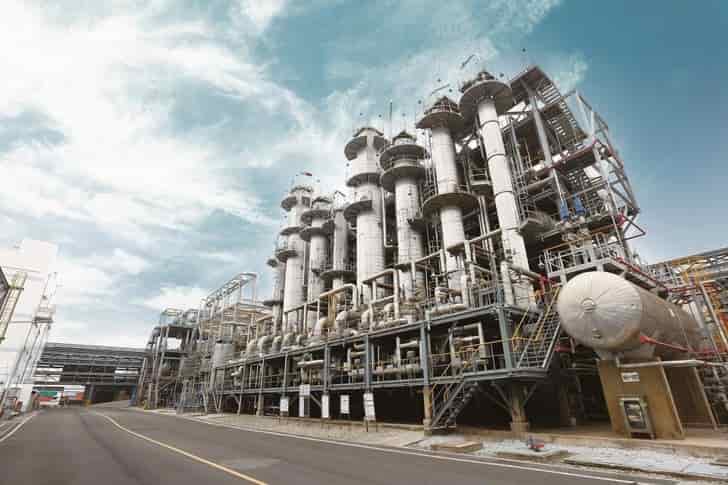
Kumho Petrochemical Group is accelerating its shift towards specialty materials, sustainable products and research-led manufacturing as South Korea’s petrochemical industry confronts prolonged oversupply and weak margins.
The company’s direction reflects a broader change taking place across the Korean chemicals sector. Producers that once relied heavily on large-volume commodity products are under growing pressure to reduce exposure to cyclical markets and develop higher-value materials for mobility, batteries, construction and lower-carbon manufacturing.
Why Kumho Petrochemical is changing direction
The global petrochemical downturn has been intensified by expanding production capacity, particularly in China, and by subdued demand for conventional chemical products.
The pressure is now driving structural changes across South Korea. On 23 July, industry reporting detailed a government-backed restructuring programme for the Yeosu petrochemical complex that will reduce annual ethylene capacity by around 1.4 million tonnes. The programme includes financial, tax and research support intended to help participating companies consolidate commodity production and invest in more competitive products.
Kumho Petrochemical is not one of the companies covered by that specific consolidation plan. However, the restructuring illustrates the same market forces behind its own strategy: basic petrochemical capacity alone is becoming less dependable as a source of sustainable earnings.
Instead of competing primarily through production volume, Kumho Petrochemical is seeking to differentiate itself through proprietary technology, specialised formulations and closer collaboration with customers.
High-performance rubber remains a central priority
A major focus is solution styrene-butadiene rubber, commonly known as SSBR.
SSBR is used in high-performance and low-rolling-resistance tyres. Its balance of durability, grip and wear resistance makes it particularly relevant to electric vehicles, which tend to be heavier than comparable combustion-engine vehicles and can place different demands on tyre performance.
Kumho Petrochemical has identified advanced synthetic rubber as an area in which its existing polymerisation expertise can support higher-value products. Its research organisation covers synthetic rubber, specialty chemicals, nanocarbon materials and process optimisation, with an emphasis on linking product development to commercial applications.
The opportunity is not limited to selling a material with improved specifications. Greater value may come from adapting rubber compounds to individual tyre designs, vehicle platforms and customers’ efficiency targets.
That would move the company closer to a technology-solutions model rather than a conventional bulk-material supply model.
Recycled plastics move into demanding automotive uses
Circular materials are another important component of the Kumho Petrochemical strategy.
The company has developed heat-resistant automotive-grade ABS containing material recovered from discarded electrical appliances. According to reporting on the commercialised product, the formulation uses more than 20% recycled raw material and reduces carbon emissions by approximately 16% compared with its conventional counterpart.
The material has also been engineered to meet automotive requirements for heat resistance, impact strength, appearance and volatile organic compound emissions.
This development is significant because recycled plastics have traditionally been concentrated in less technically demanding applications. Using recovered ABS in mass-produced vehicle interiors suggests that circular materials can move beyond simple substitution and compete in applications where consistency and safety standards are stricter.
For Kumho Petrochemical, that creates an opportunity to combine sustainability benefits with the margins associated with engineered materials.
Carbon capture adds an operational dimension
The group’s sustainability programme also extends to its manufacturing operations.
Kumho Petrochemical operates a carbon capture and utilisation facility at its Yeosu site with the capacity to capture approximately 76,000 tonnes of carbon dioxide annually. The system captures emissions from an on-site combined heat and power operation before processing the carbon dioxide for industrial and food-related uses.
Carbon capture does not eliminate the wider emissions associated with petrochemical production. Its economic and environmental value also depends on factors such as energy consumption, utilisation and the permanence of the resulting emissions reduction.
Nevertheless, the project demonstrates how the company is attempting to integrate emissions management into existing industrial processes rather than treating sustainability solely as a product-development issue. Kumho Petrochemical strategy
Expansion is becoming more selective
The group is not abandoning capacity investment entirely. Instead, expansion is being directed towards products where demand, efficiency or technical differentiation may offer better returns.
Kumho Mitsui Chemicals, a joint venture between Kumho Petrochemical and Mitsui Chemicals, is working on an additional 100,000 tonnes of annual methylene diphenyl diisocyanate capacity at its Yeosu plant.
The project is expected to increase total annual capacity from 610,000 tonnes to 710,000 tonnes. It relies on debottlenecking and process improvements rather than building an entirely separate production complex, with completion currently scheduled for 2027.
MDI is a raw material for polyurethane products used in automotive components, insulation, furniture, appliances and adhesives. The expansion is therefore connected to markets where energy efficiency, vehicle comfort and material performance can support demand for more specialised grades.
Research must translate into commercial results
Kumho Petrochemical’s strategic direction is consistent with the wider industry’s move away from undifferentiated commodity production. However, investing in research does not automatically guarantee stronger profitability.
Specialty materials can require long qualification periods, extensive testing and close cooperation with manufacturers. Automotive and battery-related products may take years to progress from laboratory development to mass production.
The company must also demonstrate that its lower-carbon products deliver measurable improvements rather than relying on broad environmental claims.
Execution will therefore be critical. Kumho Petrochemical will need to convert technical capabilities into products that customers adopt at scale, while controlling capital expenditure and maintaining competitiveness in its established businesses.
What the strategy means for the petrochemical sector
The Kumho Petrochemical strategy highlights a structural change in Asian petrochemicals.
Oversupply is encouraging companies to reduce their dependence on basic chemicals and compete instead through intellectual property, application expertise, recycled inputs, energy efficiency and specialised performance.
South Korea’s latest restructuring measures reinforce that direction. Government assistance for the Yeosu complex includes support for research and higher-value products alongside reductions in commodity capacity.
Kumho Petrochemical’s advantage is its established knowledge of synthetic rubber, resins and polymer processing. Its challenge is to use that knowledge to create businesses that remain profitable even when traditional petrochemical cycles weaken.
The shift towards SSBR, automotive recycled plastics, carbon management and advanced polyurethane materials indicates that the group is attempting to do precisely that.
Whether the transition succeeds will depend less on the number of research projects announced and more on how quickly those technologies become commercially defensible products.
Orlen strengthens petrochemical future with 3 strategic moves in major acquisition
More…