Game-Changing Deal Locks In 25 Million Pounds of Recycled Polypropylene Feedstock
Game-Changing Deal Locks In 25 Million Pounds of Recycled Polypropylene Feedstock
For decades, the North American recycled plastics market has operated largely on informal, short-term spot purchases rather than binding multi-year supply contracts. That dynamic shifted decisively on November 19, 2026, when Orlando-based PureCycle Technologies and Houston-based environmental services giant WM formally announced a multi-year supply agreement delivering nearly 25 million pounds of post-consumer polypropylene (PP) bales annually. Recycled Polypropylene Feedstock
Taking effect in November 2026, the deal connects North America’s largest residential and commercial waste collector directly with one of the industry’s most advanced purification recyclers. For consumer brands struggling to source consistent, food-grade recycled resin, securing predictable domestic recycled polypropylene feedstock represents a critical inflection point.
Bridging the Collection-to-Purification Gap
Polypropylene—commonly identified by the #5 resin code—is one of the most widely used plastics in everyday consumer packaging, appearing in yogurt tubs, takeout containers, bottle caps, and cold beverage cups. Despite its ubiquity, PP has historically lagged behind PET bottles and HDPE jugs in closed-loop recycling rates. Contamination, mixed pigments, and lingering odors made conventional mechanical recycling unsuitable for high-value food-contact packaging. Recycled Polypropylene Feedstock
The PureCycle and WM partnership directly addresses both halves of that bottleneck:
-
Upstream Collection and Optical Sorting: WM leverages its vast North American collection footprint and automated single-stream sorting facilities to isolate post-consumer PP bales at scale.
-
Downstream Dissolution Purification: PureCycle processes those sorted bales at its flagship Ironton, Ohio facility using a patented dissolution recycling technology originally developed by The Procter & Gamble Company. Unlike traditional mechanical shredding, dissolution uses physical solvents to strip away color, odor, additives, and contaminants without altering the polymer’s molecular structure.
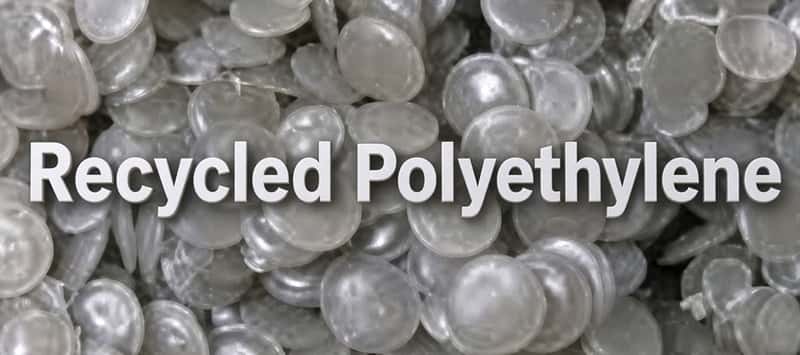
The resulting output, branded as PureFive resin, performs similarly to virgin polypropylene and meets U.S. Food and Drug Administration (FDA) standards for food-contact applications—allowing brands to drop recycled content directly into consumer packaging lines. Recycled Polypropylene Feedstock
How Curbside Infrastructure Unlocked New PP Supply
A supply commitment of nearly 25 million pounds per year would not have been possible without major upstream infrastructure upgrades. Since 2019, WM has invested heavily in robotics, optical sorters, and automated material recovery facilities (MRFs), putting the company on track to expand its polypropylene recovery volume by roughly 250 percent by the end of 2026.
A pivotal milestone occurred in November 2025, when WM officially added polypropylene plastic cups alongside paper to-go cups to its universal list of accepted curbside recyclables. Today, all of WM’s single-stream recycling facilities accept both paper and PP cups. That policy shift opened residential curbside bins across the United States to millions of tons of rigid drinkware that previously ended up in landfills, transforming everyday takeout cups into a dependable stream of recycled polypropylene feedstock.
As Ryan Nordt, executive director of recycling at WM, noted in the company’s announcement, achieving true circularity for polypropylene requires both reliable recovery infrastructure and committed domestic end markets willing to put that material back to work. Recycled Polypropylene Feedstock
From Sports Stadiums to Quick-Service Restaurants
Beyond bulk bale shipments, PureCycle and WM are actively expanding closed-loop circularity programs tailored to high-volume commercial venues. The two companies have already demonstrated this model inside major sports stadiums: WM collects and sorts used souvenir cups after games, PureCycle converts the plastic into PureFive resin in Ironton, Ohio, and cup manufacturers mold that resin back into new stadium drinkware.
With nationwide curbside acceptance now backing commercial collection, both companies are targeting quick-service restaurants (QSRs) and convenience store chains next. Because QSR operators distribute billions of cold PP beverage cups annually under tightening corporate sustainability targets, closed-loop regional recovery offers a tangible way to cut Scope 3 packaging emissions while securing domestic resin supply.
Chris Talarek, Vice President of Feedstock at PureCycle, highlighted that locking in multi-year supply from North America’s largest recycler establishes a repeatable blueprint—moving plastic seamlessly from residential bins and stadium concourses through WM’s sorting hubs and PureCycle’s purification lines back onto retail shelves. Recycled Polypropylene Feedstock
Global Regulatory Shifts Amplify Domestic Circularity
The timing of the PureCycle–WM agreement coincides with major global regulatory tightening around plastic waste trade. On November 21, 2026, the European Union’s updated Waste Shipment Regulation officially entered into force, prohibiting exports of plastic waste from EU member states to non-OECD countries.
While the EU export ban targets European waste streams rather than North American bales, industry analysts note that global trade restrictions are accelerating a “local-for-local” shift across polymer markets worldwide. Countries and major packaging brands can no longer rely on exporting mixed plastic waste overseas; instead, they must build domestic sorting and advanced recycling capacity capable of keeping polymers inside regional manufacturing loops.
By formalizing a multi-year contract in a sector historically dominated by informal handshake deals, PureCycle and WM are signaling that recycled polypropylene is maturing into an institutional-grade commodity. If additional waste haulers and resin producers follow suit with long-term off-take agreements, circular polypropylene could finally move from pilot programs into mainstream North American packaging. Recycled Polypropylene Feedstock
Revolutionary Polypropylene Recycling Plant Secures Eastern Europe’s Circular Future
More…