Revolutionary Aliplast Modena Recycling Plant Unleashes Zero-Kilometer Polymers
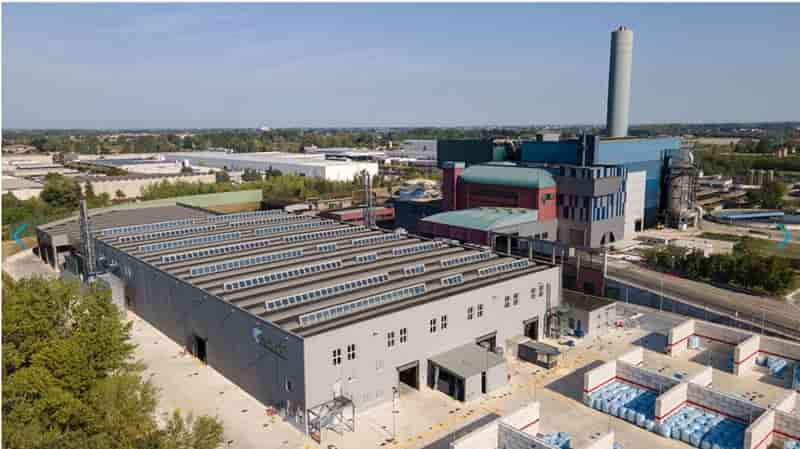
Aliplast Modena recycling plant
Revolutionary Aliplast Modena Recycling Plant Unleashes Zero-Kilometer Polymers
MODENA, ITALY — A major leap forward for European circular manufacturing has arrived in Emilia-Romagna. The Hera Group, through its specialized recycling subsidiary Aliplast, officially inaugurated the R3GID (Recover Recycle Regenerate Plastic) industrial facility in Modena. Attended by Italy’s Minister of the Environment and Energy Security, Gilberto Pichetto Fratin, and top industrial leadership, the event marks a milestone in tackling one of Europe’s most challenging environmental hurdles: the high-grade recycling of rigid plastics.
The newly operational facility represents a €48.8 million investment—supported in part by €7.7 million from Italy’s National Recovery and Resilience Plan (NRRP). Engineered to convert historically non-recyclable rigid plastics into secondary raw materials, the site achieves technical specifications virtually indistinguishable from fossil-derived virgin polymers. Aliplast Modena recycling plant
Technical Superiority and Uncompromising Purity
For decades, rigid plastic waste—sourced from complex post-consumer municipal streams and industrial scrap in sectors like automotive, cosmetics, consumer electronics, home appliances, and furniture—has presented a severe recycling challenge. Traditional sorting and processing techniques often failed to eliminate impurities, leaving vast quantities of material destined for municipal waste-to-energy incinerators or landfills.
The Aliplast Modena recycling plant redefines these technical boundaries. Utilizing Nextchem’s proprietary NX Replast™ upcycling technology as a strategic partner, the facility produces high-purity recycled polymers (specifically High-Density Polyethylene [HDPE] and Polypropylene [PP]) with certified purity levels exceeding 99%.
| Key Operational Metric | Performance Benchmark |
| Annual Processing Capacity | 30,000 tonnes of rigid plastic waste |
| Certified Material Purity | Exceeds 99% purity level |
| Target Polymers | High-Density Polyethylene (HDPE) & Polypropylene (PP) |
| Total Capital Investment | €48.8 Million (€7.7M NRRP funding) |
| Full-Capacity Workforce | 80 specialized employees |
| Annual CO₂ Emissions Avoided | ~30,000 tonnes CO₂ equivalent |
By achieving virgin-grade material qualities, Aliplast allows industrial manufacturers to implement closed-loop manufacturing. Plastic parts from end-of-life electronics, vehicle bumpers, personal care containers, and home furnishings can now be directly re-fed into their original manufacturing chains as high-performance, traceable “Made in Italy” compounds.
Bridging Europe’s Structural Recycling Shortfall
The opening of R3GID directly addresses a critical geopolitical and regulatory imbalance across the continent. While recent European directives enforce strict recycled-content mandates, industrial recycling infrastructure has historically lagged behind regulatory ambitions. Aliplast Modena recycling plant
European regulations, including the Packaging and Packaging Waste Regulation (PPWR) and the updated End-of-Life Vehicles (ELV) Directive, set aggressive statutory targets:
-
PPWR Demands: Requires an extra 5.7 million tonnes of European recycling capacity for rigid HDPE and PP by 2040, with 2.4 million tonnes needed as early as 2030.
-
ELV Requirements: Mandates a minimum recycled plastic content in new vehicles of 15% by 2032 and 25% by 2036 (with at least 20% sourced from end-of-life automotive waste).
Currently, Europe possesses roughly 13.5 million tonnes of total plastic recycling capacity, but only 3.5 million tonnes are allocated to rigid plastics—with Italy accounting for approximately 440,000 tonnes. The supply deficit threatens to strain industrial supply chains and penalize manufacturers unable to source compliant raw materials.
“Europe has a structural gap in recycling: capacity is stagnant or in decline, while new regulations will drive up demand for recycled plastic with quality equivalent to virgin polymer,” stated Orazio Iacono, CEO of the Hera Group. “R3GID represents a ‘first-mover’ response. It provides Italian manufacturers with high-quality, locally sourced materials while cutting import costs and securing supply.”
Beyond industrial security, the economic benefits for the national balance sheet are substantial. Italy pays roughly €800 million annually to the European Union in “plastic tax” contributions on non-recycled plastic packaging waste. By diverting 30,000 tonnes of rigid waste into high-value circular production annually, the Modena facility alone could generate national savings of approximately €24 million per year.
Industrial Symbiosis: The Circular Modena Hub
Beyond the chemical upcycling technology inside the factory, the physical placement of the Aliplast Modena recycling plant demonstrates world-class industrial ecology. Located at the Hera Group’s integrated complex on Via Cavazza in Modena, R3GID operates in direct synergy with neighboring environmental infrastructure:
-
Closed-Loop Water Management: Industrial process water used for washing and shredding rigid plastics is supplied directly by the adjacent municipal wastewater treatment plant. After usage, the water returns directly to the treatment plant for purification, creating a self-sustaining hydraulic loop. Aliplast Modena recycling plant
-
Clean Energy Integration: The high-energy mechanical processing and extrusion lines are powered by electricity generated onsite at Hera’s co-located waste-to-energy facility.
This closed-loop system directly mitigates energy overheads—which historically comprise nearly 30% of operational expenses in the plastic regeneration sector—while lowering the carbon footprint of production. When evaluated against standard virgin plastic production from fossil fuels, the plant directly offsets approximately 30,000 tonnes of CO₂ equivalent every year.
Scaling Up: Strategic Vision for 2029 and Beyond
The inauguration in Modena represents one piece of a broader, multi-billion-euro decarbonization strategy executed by the Hera Group. Under its 2025–2029 industrial plan, the multi-utility company has committed €2 billion specifically to circular economy projects, out of a total strategic investment plan of €5.5 billion.
Through the R3GID facility, the expansion of its LDPE flexible film plant in Borgolavezzaro (Novara), and the pending acquisition of a 70% majority stake in Poland’s Kronos Polymer Polska, Aliplast is on track to double its global recycling throughput. Combined, Aliplast will soon control more than 210,000 tonnes per year of high-purity secondary raw material production capacity, backed by a total operational capacity exceeding 255,000 tonnes annually. Aliplast Modena recycling plant
As global supply chains face growing geopolitical risks, energy volatility, and stringent regulatory oversight, the Aliplast Modena recycling plant provides a scalable blueprint for industrial sovereignty. By converting localized waste into high-tech secondary polymers, Italy demonstrates that environmental compliance and competitive manufacturing can advance hand in hand. Aliplast Modena recycling plant
Revolutionary Hard Plastic Packaging Recycling Breakthrough Solves Ocean Crisis
More…