Breakthrough in Automotive Chemical Recycling Turns Car Waste into Low-Carbon Chemicals
Breakthrough in Automotive Chemical Recycling Turns Car Waste into Low-Carbon Chemicals
Every year, millions of cars reach the end of their operational lives across Europe, leaving behind a complex puzzle of metals, plastics, and foams. While steel and aluminum are routinely recovered, a stubborn fraction known as automotive shredder residue (ASR) typically ends up in incinerators or landfills. Now, a newly announced industrial alliance in Germany is demonstrating how automotive chemical recycling can convert this difficult waste stream into high-value chemical raw materials.
Launched by materials manufacturer Covestro, the Fraunhofer Institute for Environmental, Safety and Energy Technology UMSICHT, and life-cycle data specialist Carbon Minds GmbH, the CARBEX project aims to build a circular bridge between scrapped vehicles and chemical manufacturing. Backed by the German Federal Ministry of Research, Technology and Space under its KlimPro-Industrie II program, the three-year initiative runs through August 2029 and targets a continuous pilot-scale operation by 2028. automotive chemical recycling
Solving the Automotive Shredder Residue Challenge
When an old vehicle is dismantled and shredded, the remaining mixture of non-metallic materials is notoriously contaminated and heterogeneous. In Germany alone, more than 466,000 metric tons of automotive shredder residue are generated annually, with roughly 210,000 metric tons sent to energy recovery or disposal.
Polyurethane foams—commonly found in car seats, acoustic insulation, and structural parts—account for an average of 20 percent of this residue by weight. Because mechanical recycling struggles with mixed, dirty polymers, these materials have historically been burned rather than reused. automotive chemical recycling
The CARBEX consortium is tackling this bottleneck by extracting BTEX aromatics—benzene, toluene, ethylbenzene, and xylenes—directly from shredder waste. These four compounds serve as foundational building blocks across the chemical sector. Covestro relies on benzene to manufacture methylene diphenyl diisocyanate (MDI) for rigid insulation foams and toluene to produce toluene diisocyanate (TDI) for flexible seating and mattress foams. By recovering these molecules from discarded vehicles, manufacturers can close the material loop while reducing their dependence on crude oil.
How Self-Catalyzing Pyrolysis Cuts Emissions by 40 Percent
Conventional BTEX production relies heavily on steam cracking fossil-based naphtha, a carbon-intensive industrial process. In Germany, traditional aromatics manufacturing generates roughly 8 million metric tons of direct carbon dioxide equivalent (CO2e) emissions per year, alongside an additional 11 million metric tons tied to crude oil extraction and naphtha refining.
To break away from fossil feedstocks, CARBEX utilizes Fraunhofer UMSICHT’s patented Pyromat process. Unlike standard pyrolysis, which often requires expensive external catalysts that rapidly degrade when exposed to real-world plastic contaminants, Pyromat pairs thermal decomposition with an autocatalytic reforming step. automotive chemical recycling
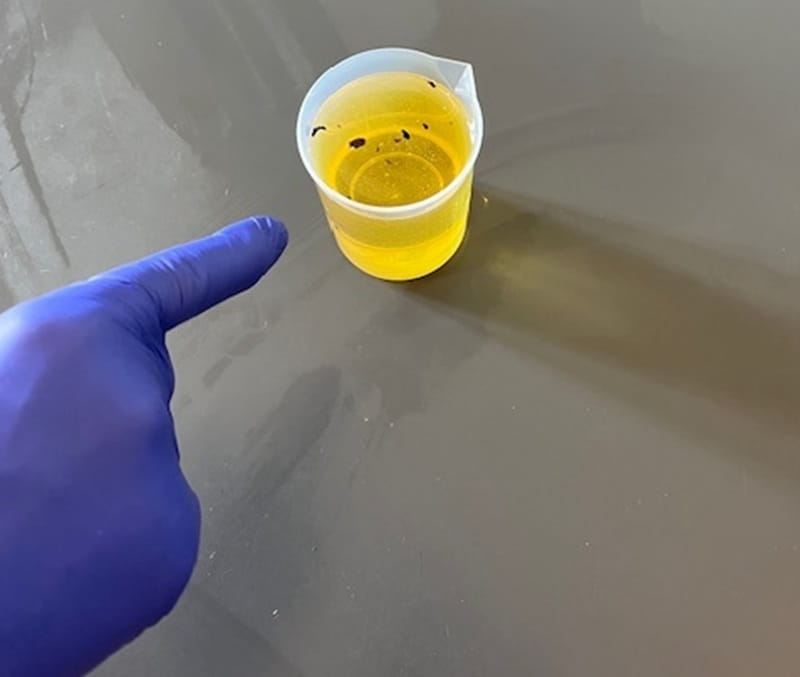
Operating at approximately 500 degrees Celsius, the process turns its own byproduct—pyrolysis coke—into both a catalyst and a chemical filter. Mineral components naturally present in the coke, including calcium carbonate, titanium dioxide, and copper, actively encourage the formation of aromatic molecules. Simultaneously, the coke traps harmful halogens like chlorine and bromine, keeping them out of the resulting oil. automotive chemical recycling
Early laboratory trials using genuine automotive shredder residue delivered standout results:
-
Higher Aromatic Yield: The recovered pyrolysis oil achieved a BTEX concentration of 62 percent by weight—roughly 60 percent higher than conventional pyrolysis oils.
-
Ultra-Low Contamination: Halogen levels dropped by up to 99 percent, protecting downstream industrial equipment from corrosion.
-
Substantial Carbon Savings: Process emissions clocked in at roughly 1.1 metric tons of CO2e per metric ton of BTEX, representing an almost 40 percent reduction compared to the 1.6 to 1.8 metric tons emitted during fossil naphtha steam cracking.
Market assessments indicate that scaling this technology across German industry could eliminate up to 640,000 metric tons of CO2e emissions annually. With global crude oil benchmarks remaining volatile amid ongoing geopolitical tensions in late 2026, replacing imported fossil naphtha with domestic waste feedstocks also strengthens industrial supply chain resilience.
Scaling From Lab Bench to Industrial Value Chain
Moving a chemical innovation from laboratory glassware to commercial reliability requires coordinated engineering across the entire value chain. Within CARBEX, each partner handles a distinct stage of scale-up:
-
Reactor Conversion: Fraunhofer UMSICHT is modifying an existing pyrolysis unit at its Sulzbach-Rosenberg branch, converting a fixed-bed reactor into a continuous moving-bed system. The team aims to run 10 kilograms of waste per hour and produce at least 50 kilograms of purified pyrolysis oil containing fewer than 30 parts per million of halogens—the strict purity threshold required for industrial petrochemical plants. automotive chemical recycling
-
Distillation and Validation: Covestro is designing a model-based distillation process to isolate pure benzene and toluene from the pyrolysis oil. Engineers will test these recycled chemicals directly in MDI and TDI synthesis while evaluating overall economic feasibility.
-
Environmental Verification: Carbon Minds GmbH is conducting an independent, ISO-compliant cradle-to-gate life cycle assessment to verify the true carbon footprint of the recycled aromatics from waste collection to chemical gate. automotive chemical recycling
Regulatory Momentum Drives Circular Automotive Plastics
The timing of the CARBEX launch aligns closely with tightening European environmental legislation. Under the EU End-of-Life Vehicles Regulation (ELVR), which formally entered into force in mid-2026, automakers face binding recycled-content mandates for plastics in new vehicle types.
Starting in September 2032, new vehicle designs must incorporate at least 15 percent recycled plastic, rising to 25 percent by September 2036. Crucially, at least 20 percent of that recycled plastic must originate from end-of-life vehicles in a closed-loop system, and the regulation explicitly recognizes chemical recycling under mass-balance accounting rules.
Germany alone produces more than 2.6 million metric tons of aromatics each year, representing a market valued at roughly 1.95 billion euros. By proving that contaminated automotive shredder waste can be transformed into virgin-grade chemical feedstocks, Covestro and Fraunhofer UMSICHT are laying the technical groundwork for automakers and chemical producers to meet Europe’s 2032 circularity mandates while cutting industrial carbon emissions. automotive chemical recycling
Unlocking Strategic Advantage: LyondellBasell Bets Big on EU Chemical Recycling Growth
More…