Bio-Based Plastics – Swedish GreenTech Startup Lignin Industries Secures €3.9 Million to Tackle Fossil Plastics Pioneering a Bio-Based Plastics Revolution In a major stride toward sustainable materials, Swedish GreenTech startup Lignin Industries AB has raised €3.9 million in a new funding round 15-05-2025 - Archive
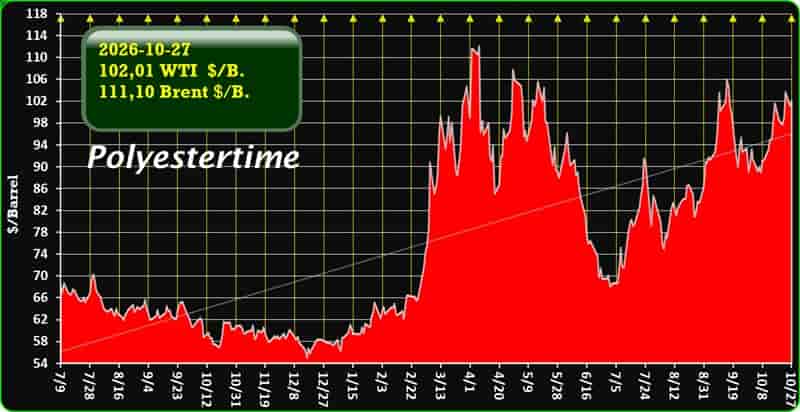
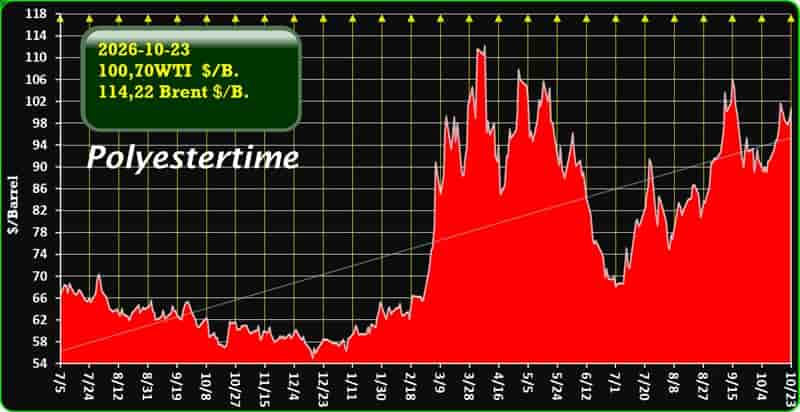
Crude Oil Prices Trend

Swedish GreenTech Startup Lignin Industries Secures €3.9 Million to Tackle Fossil Plastics
Pioneering a Bio-Based Plastics Revolution
In a major stride toward sustainable materials, Swedish GreenTech startup Lignin Industries AB has raised €3.9 million in a new funding round. Based in Knivsta, the company is now poised to accelerate the commercialization and scale-up of its innovative bio-based thermoplastic, Renol.
This latest round was spearheaded by the Carrick family—the company’s founders and majority stakeholders—alongside support from more than two dozen investors. Notably, over 40% of the capital came from new backers, underlining growing market confidence in eco-friendly alternatives to fossil plastics. Bio-Based Plastics
A Natural Solution to a Global Problem
Lignin Industries’ breakthrough lies in Renol, a thermoplastic created from lignin, an organic polymer found in all plants and the second most abundant biopolymer on Earth. By upcycling forestry byproducts, the startup offers a viable, green substitute for traditional plastics—without the need to overhaul existing manufacturing infrastructure.
“Lignin Industries exists to show another way is possible,” said Dr. Christopher Carrick, Founder and Chair of the Board. “By looking to the natural world, we can positively reform the global plastic industry.”
Using a proprietary process, the company converts lignin into a high-performance, sustainable plastic that integrates seamlessly into existing production lines. The result? A renewable solution that works in polyethylene films, ABS moulds, propylene applications, and beyond. Bio-Based Plastics
From Forest Roots to Global Markets
Founded in 2018, Lignin Industries is the brainchild of Dr. Carrick, a chemist with academic expertise and deep roots in Europe’s forest industry. This intersection of science and legacy gave rise to a new kind of GreenTech innovation—Renol, which leverages green chemistry to bring circular economy principles into plastics manufacturing.
Since stepping out of stealth mode in early 2024, the startup has quickly attracted attention. Its partnership with UK-based compounder Hellyar Plastics has opened doors across sectors such as consumer electronics, home appliances, and construction. Bio-Based Plastics
“We are enjoying commercial cut-through,” said CEO Fredrik Malmfors. “We’re onboarding new customers and fulfilling repeat orders. Renol is proving itself in the field and in the market.”
Commercial Growth and Strategic Momentum
The funding round marks not just a financial milestone, but a catalyst for commercial scaling and product expansion. Lignin Industries is currently in advanced talks with major manufacturers and has signed Letters of Intent with category leaders across Europe.
Among its high-profile collaborations is a project with Scania and support from Vinnova, Sweden’s government innovation agency. Furthermore, Renol-based e-commerce bags, produced with recycled content, have already been adopted by eco-conscious fashion brands. Bio-Based Plastics
These partnerships show a growing demand for greener materials that don’t compromise on performance or manufacturability.
What’s Next for Lignin Industries?
As the startup moves into its next phase, the focus is clear: scaling production, refining use cases, and entering new markets. The fresh capital will supercharge its R&D capabilities, support customer onboarding, and help bring more Renol-based products to the global market.
With mounting pressure on industries to decarbonize and eliminate fossil-based plastics, Lignin Industries is well-positioned to lead the charge—offering a real, scalable alternative backed by science, sustainability, and commercial traction.
Key Takeaways
- ? €3.9M raised to accelerate Renol thermoplastic commercialization
- ? Made from lignin, a plant-based and abundant organic material
- ? Developed using proprietary green chemistry
- ? Compatible with existing plastic manufacturing systems
- ? Partnerships include Hellyar Plastics, Scania, Vinnova, and more
- ? Actively scaling operations and expanding product offerings
Lignin Industries is not just innovating—it’s redefining what’s possible in sustainable plastics. The Renol-ution is here. Bio-Based Plastics

Driving Sustainability: TechnoCompound and RE Plano Expand Partnership on Post-Consumer Recyclates
A Greener Future for Automotive Plastics
TechnoCompound GmbH (Bad Sobernheim) and RE Plano GmbH (Lünen), a subsidiary of REMONDIS Recycling, have announced a deeper collaboration to boost the use of post-consumer recyclates (PCR) in the automotive industry. This strategic move is in response to tightening EU sustainability regulations, including the End-of-Life Vehicles (ELV) Directive, which encourages the circular use of materials in car manufacturing.
Turning Household Waste into High-Tech Vehicle Components
Using PCR from household waste—particularly the lightweight packaging fraction—for technical applications is no small feat. These materials face high demands in terms of mechanical properties, low emissions, and odor control, especially for interior vehicle components. Bio-Based Plastics
TechnoCompound, with over 35 years of experience in creating plastic compounds from recycled materials, sees this partnership as an essential step forward. Managing Director Dirk Breitbach explains, “Our collaboration with RE Plano enhances our ability to upcycle PCR into high-performance materials suitable for the demanding standards of vehicle interiors.”
AI-Driven Sorting Enhances Purity and Precision
RE Plano is leveraging cutting-edge AI-supported sorting technology at its new facility in Bochum, Germany. This system identifies and classifies individual packaging items with extreme accuracy, using programmable sorting criteria to ensure exceptional material purity. Bio-Based Plastics
Managing Director Ralf Mandelatz is optimistic about scaling this innovation: “With TechnoCompound as our partner, we can meet the automotive sector’s volume and quality requirements. Their technical expertise complements our precision sorting capabilities perfectly.”
Multi-Stage Processing Ensures High-Quality Recyclates
To meet the strict demands of the automotive market, RE Plano doesn’t stop at sorting. Its facility in Lünen applies multi-stage processing to fine-tune the properties of the recyclates. This ensures they meet rigorous specifications—especially for contact-sensitive or aesthetic applications, such as cosmetic packaging and car interiors.
Dr. Nabila Rabanizada, Head of R&D at REMONDIS Recycling, adds: “Our advanced processing guarantees the reliability and performance of our recyclates across multiple industries.” Bio-Based Plastics
Compounding Expertise Enables OEM-Grade Materials
Once the high-purity recyclates are delivered, TechnoCompound applies additives, compounding techniques, and further material enhancements. The result: PCR-based plastic grades that pass OEM-specified emission and odor chamber tests, ready for use in real-world automotive applications.
Dr. Gerald Aengenheyster, Head of Development & Application Technology at TechnoCompound, states, “We provide material solutions with the right balance of PCR and PIR (post-industrial recyclate) tailored to each application and OEM specification.”
From R&D to Real-World Use: Automotive Applications Today
While the automotive industry is still exploring how to integrate PCR from full end-of-life vehicle recycling, solutions using the light packaging fraction are already commercially viable. Bio-Based Plastics
In fact, TechnoCompound’s PCR-based plastics are already being used in current vehicle production. A standout example includes an instrument panel carrier made from TechnoGreen PP LGF—a long glass fiber reinforced polypropylene—used in two vehicle models already on the road.
Supporting Compliance and Sustainability Goals
As car manufacturers and their suppliers strive to meet environmental targets, partnerships like that of TechnoCompound and RE Plano are key. They help OEMs comply with evolving legislation while delivering on their sustainability commitments within the circular economy. Bio-Based Plastics
Together, these two innovators are turning everyday household waste into durable, high-performance automotive components—paving the way for a more circular, sustainable automotive future.

Save the Date: Chemical Recycling Europe Forum 2025
? Location: Van Der Valk Airport Hotel, Brussels, Belgium
? Dates:
Networking Reception: 15 September 2025, 18:00–20:00
Conference: 16 September 2025, 09:30–17:00
Join us for high-level dialogues, innovation showcases, and strategic collaboration shaping the future of chemical recycling in Europe.
? Why Attend?
- Stay ahead of regulatory shifts (PPWR, ELVR, End-of-Waste)
- Connect with key stakeholders across the value chain
- Gain market intelligence from top analysts Bio-Based Plastics
- Exchange knowledge and forge partnerships
? Agenda Highlights
- Keynote speeches and panel discussions
- Interactive sessions and innovation showcases
- Case studies and collaborative initiatives
? Who Should Attend?
- Policy makers
- Technology providers
- Investors in circular economy
- Industry professionals and supply chain experts
- NGOs and sustainability researchers
Don’t miss this opportunity to shape the future of chemical recycling in Europe. We look forward to seeing you in Brussels! Bio-Based Plastics
Click for Early Bird registration
Source: Chemical Recycling Europe (CRE)

Standards Agencies Discourage ‘Ocean-Bound’ Plastics in Food-Contact Packs
? Key Message
The UK Food Standards Agency (FSA) and Food Standards Scotland (FSS) advise businesses to avoid using plastics recovered from open environments—often called ‘ocean-bound’ plastics—in packaging that directly contacts food.
? Safety Concerns and Scientific Basis
- Based on findings from the Joint Expert Group for Food Contact Materials (FCMJEG).
- There is not enough evidence to confirm the safety of such plastics for food-contact uses. Bio-Based Plastics
⚖️ Legal and Regulatory Position
While current regulations require assessment of decontamination processes, there are no specific laws or authorizations that address ocean-bound plastics directly. This creates uncertainty around their safety for use with food.
? What is Discouraged
Authorities discourage the use of recycled plastics from:
- Beaches and oceans
- Rivers and open waterways
- Landfills and uncontrolled environments
- Areas with poor waste management systems Bio-Based Plastics
✅ Recommended Alternatives
- Use plastics recycled from controlled sources, such as kerbside collection systems.
- Repurpose ocean-bound plastics for non-food-contact applications.
? Official Statement
“We acknowledge the benefits of recycling abandoned plastic… But when it comes to food safety, our priority is clear: there is a potential health risk from using these materials in food-contact packaging.” Bio-Based Plastics
— Dr. James Cooper, Deputy Director of Food Policy at the FSA
? Implications for Industry
Businesses should evaluate packaging sources, ensure compliance with regulatory expectations, and explore safe alternatives for sustainability initiatives involving recovered plastics.

Freshfields Advises Rieter AG on Strategic CHF 850 Million Acquisition of Barmag
Global law firm Freshfields Bruckhaus Deringer has successfully advised Rieter AG in a landmark acquisition of Barmag from OC Oerlikon, valued at CHF 850 million.
This high-profile transaction marks a major strategic step for Rieter AG, a globally recognized leader in spinning systems for natural staple fibers. With the acquisition of Barmag, Rieter extends its footprint into the synthetic fiber segment—strengthening its market position across the entire textile value chain. Bio-Based Plastics
A Strategic Leap in the Textile Industry
Rieter AG’s purchase of Barmag is more than a financial investment—it’s a calculated move to enhance the company’s capabilities in manmade fiber technology. Barmag is a world-class provider of:
- Filament spinning systems
- Texturing machines
- BCF systems (Bulked Continuous Filament)
- Staple fiber spinning solutions
- Nonwoven technologies Bio-Based Plastics
In addition to its product portfolio, Barmag also delivers comprehensive engineering services, making it a full-service solution provider in the fiber production sector. By integrating these capabilities, Rieter aims to meet the evolving needs of both natural and synthetic yarn manufacturers around the globe.
Why This Deal Matters
This acquisition is a powerful synergy that positions Rieter AG as a one-stop provider for yarn production systems—whether from natural fibers or synthetics. As global demand grows for sustainable, high-performance textiles, having versatile production capabilities is a significant competitive advantage.
It also underlines Rieter’s commitment to innovation, diversification, and future-proofing its operations in an increasingly complex textile landscape. Bio-Based Plastics
Legal Expertise Behind the Deal
Freshfields Bruckhaus Deringer served as lead legal advisor to Rieter AG, partnering with Zurich-based law firm Lenz & Staehelin under the StrongerTogether alliance. The transaction required cross-border legal coordination, covering corporate law, finance, antitrust, IP, real estate, and compliance.
Deal Leadership
- Heiner Braun (Partner, Frankfurt) – Lead advisor
- Bastian Schuster (Principal Associate, Munich) – Co-lead
Global Legal Support Team
Freshfields assembled a deep bench of legal professionals across major jurisdictions:
- Antitrust: Ninette Dodoo (Hong Kong), Frank Röhling (Berlin), Helena Haag (Berlin), Nick English (London)
- Corporate/M&A: Paul Humphreys, Menachem Kaplan, Francesco Lombardo, Federico Ferrari, and others across New York, Milan, Munich, London, and Vienna
- Finance: Luigi Verga, Filippo Sciarrone, Valentina Armaroli (all Milan)
- Real Estate: Julia Haas and Christina Puhl (Frankfurt) Bio-Based Plastics
- Employment: Frank Schaer, Fabian Zöpfchen (Frankfurt), Jordan Lieberman (New York)
- Compliance & Regulatory: Michael Ramb (Berlin/Düsseldorf), Valentin Weigel (Berlin), Marlen Vesper-Gräske (Berlin/New York), Oliver Neuner (Hamburg)
- Intellectual Property: Iris Amschl (Vienna), Yulianna Tkach (Munich)
- Data Protection: Tanja Pfleger, Elisabeth Pferschy (Vienna)
Looking Ahead
With this acquisition, Rieter AG is poised to become a central player in the global fiber processing market. Its enhanced portfolio not only covers the entire production spectrum but also meets the demand for energy-efficient and sustainable solutions in the textile industry. Bio-Based Plastics
As textile manufacturers face growing pressure for innovation and adaptability, Rieter’s integrated approach—now including Barmag’s pioneering systems—makes it an invaluable partner for future-focused operations.
Tags: Rieter AG, Barmag, Freshfields, OC Oerlikon, textile industry, mergers and acquisitions, corporate law, fiber production, manmade fibers, legal advisory, industrial engineering, sustainability
IISc Scientists Transform Hard-to-Recycle PU Foam into 3D Printing Material
A Game-Changer for Plastic Waste Management
Polyurethane (PU) foam—found in everything from mattresses to car seats—has long been a recycling nightmare.
Its complex chemical structure has made traditional recycling nearly impossible. Each year, millions of mattresses are discarded, each containing 15 to 20 kilograms of PU foam, adding up to a massive environmental burden. Bio-Based Plastics
Fortunately, scientists and innovators are racing to find solutions. And now, a major breakthrough has emerged from the Indian Institute of Science (IISc), Bengaluru.
Introducing SaLSO: A Breakthrough Chemical Recycling Technology
A research team at IISc, led by Professors Suryasarathi Bose and Subodh Kumar, has developed a
patented chemical recycling process called SaLSO. This process transforms PU foam waste into feedstock for
3D printing—an application that not only addresses waste but also supports next-generation manufacturing. Bio-Based Plastics
Unlike conventional methods that rely on mechanical recycling, SaLSO chemically breaks down PU foam into its fundamental components. These base chemicals can then be repurposed into high-performance 3D printing materials, giving a second life to plastics once considered unrecyclable.
Why Chemical Recycling Is a Big Deal
Chemical recycling represents a promising alternative to mechanical recycling, especially for complex plastics like PU foams. Here’s why:
- Breaks Down Polymers to Core Molecules: Enables the creation of virgin-quality plastic from waste materials.
- Enables Closed-Loop Recycling: Produces materials suitable for sensitive applications, including food-grade packaging.
- Handles Hard-to-Recycle Materials: PU foams, epoxies, and polyolefins can be processed and reused effectively.
According to the British Plastics Federation, this process supports sustainable, food-safe uses from post-consumer plastic waste.
SaLSO’s Compatibility and Impact
The SaLSO process works with various PU foam hardness levels and achieves up to 98% efficiency. Bio-Based Plastics
Beyond PU foams, it can also recycle:
- Epoxy resins
- Unsaturated polyesters
- Polyolefins
These materials can be turned into raw inputs for 3D printing, significantly widening the process’s environmental benefits.
A Leap Toward a Circular Plastic Economy
“This is a major leap in plastic waste management,” said Professor Bose in an interview with the Deccan Herald.
“We’ve developed a sustainable solution to upcycle materials that were previously considered unrecyclable.”
Professor Bose’s innovations extend beyond SaLSO. He also contributed to a UV-light-activated hydrogel capable of degrading microplastics in water—offering hope for tackling another pressing pollution issue. Bio-Based Plastics
Final Thoughts
The IISc’s SaLSO process is a landmark achievement in sustainable materials science. By converting PU foam into valuable 3D printing feedstock, this technology points to a future where even the most stubborn plastic waste can be upcycled, reducing our dependence on virgin plastics and shrinking our environmental impact.
? Innovation meets sustainability—one molecule at a time.

CMG Granulators Joins RecyClass to Drive Plastic Circularity
A New Step Toward a Sustainable Future
CMG Granulators has officially joined RecyClass, further solidifying its position as a technological leader in plastic recycling. This partnership reflects CMG’s unwavering commitment to developing innovative, sustainable solutions that support the circular economy.
By becoming a part of RecyClass, CMG is pledging its advanced expertise in size reduction technology to help improve the recyclability of plastic materials. This collaboration represents not just a strategic alliance, but a shared vision for a greener, more efficient future. Bio-Based Plastics
What is RecyClass?
RecyClass is a non-profit, cross-industry initiative working to enhance the recyclability of plastic packaging across Europe. The organization plays a crucial role in:
- Creating transparent standards for recycled materials
- Promoting scientific, data-driven tools
- Establishing a harmonized approach to measuring recyclability and recycled content
- Building traceability systems for plastic waste origins
RecyClass brings together manufacturers, recyclers, and innovators to ensure plastic packaging is designed for real-world recyclability—not just theoretical models.
Shared Values: A Commitment to Excellence
CMG and RecyClass are aligned in their belief that trustworthy, transparent, and scientifically supported standards are essential to drive the future of plastics.
RecyClass operates on four foundational principles:
? Scientific Evidence
All guidelines and tools are based on rigorous laboratory testing and real-world data.
? Transparency
Clear criteria and open processes ensure all stakeholders can verify and trust the results.
✅ Reliability
Third-party assessments and certifications back every claim and standard.
? Traceability
Advanced tracking systems provide visibility throughout the entire value chain, from raw material to finished product. Bio-Based Plastics
By contributing to these principles, CMG supports the development of tools that can transform how the plastics industry measures and improves circularity.
Why CMG Granulators Joined RecyClass
? Strength in Collaboration
To accelerate progress in plastics circularity, industry-wide cooperation is essential. That’s why CMG Granulators chose to become a part of RecyClass—an initiative that unites players across the plastics value chain to tackle recycling challenges head-on.
CMG aims to:
- Support recyclability design by sharing expertise in plastic size reduction
- Contribute to standardized recycling practices
- Advance third-party traceability of recycled materials
- Promote best practices in product design for recyclability
Through RecyClass, CMG gains access to a powerful platform to amplify its sustainability efforts and co-create meaningful change. Bio-Based Plastics
CMG’s Global Reach and Technical Excellence
With its headquarters, production facility, and technical center based in Italy, CMG operates on a truly global scale. The company boasts the largest distribution network in the plastics industry, offering localized service and technical support worldwide.
By blending global reach with specialized local expertise, CMG ensures that high-quality service is always within reach—supporting customers from design to deployment.
Looking Ahead
CMG’s decision to join RecyClass is not just a milestone—it’s a statement. It represents a strategic, values-driven commitment to the circular transformation of plastics. By uniting with like-minded innovators and industry leaders, CMG is helping to reshape the future of sustainable plastic processing. Bio-Based Plastics
This partnership will play a key role in fostering innovation, responsibility, and accountability—three cornerstones that define both CMG and RecyClass.
Learn More
To explore more about CMG’s sustainability mission or RecyClass initiatives, visit: