Biodegradable bags – UPM helps unlock value in rPET UPM’s involvement in the Waste to Resource program in China sees the company assisting in unlocking high-value recycling of PET bottles, with its RW85C wash-off labels 11-04-2025 - Archive
Biodegradable bags
Trump’s tariff policies have triggered a financial crisis, threatening U.S. public debt confidence, akin to the 2010 Eurozone crisis
The sudden policy reversal, though averting immediate disaster, underscores the severe risks involved.
The core issue is the erosion of trust in U.S. Treasuries, considered previously safe assets. China, a major holder, views its $759 billion in U.S. securities as leverage, potentially destabilizing markets.
Trump’s history of bankruptcies and lack of trade expertise exacerbate concerns, raising fears of unpredictable decisions. The financial instability, beyond mere tariff effects, disrupts market confidence and increases borrowing costs.
The Fed’s potential intervention mirrors the ECB’s past actions, but the U.S. government’s perceived unreliability poses unique challenges.
Trump’s tariffs, even post-reversal, damage international trade and deter long-term investment in the U.S. The resulting uncertainty and erosion of the rule of law further undermine business confidence.
Globally, countries are distancing themselves from the U.S., seeking alternative multilateral partnerships. While China won’t fully integrate into these blocs, negotiations will become more pragmatic.

China Strikes Back: Tariffs Rise, Tensions Escalate
China has sharply increased counter-duties on US goods from 84% to 125%, effective April 12, signaling no intention to back down in its trade standoff with the United States. President Xi Jinping declared, “There are no winners in trade wars,” reinforcing China’s stance of self-reliance and resilience amid economic pressure from Washington.
While the US believes China relies too heavily on American markets to resist for long, Beijing is leveraging alternative routes—triangulating exports through South America and restricting key rare earth exports—to counteract tariffs. The yuan has also been deliberately devalued, hitting its lowest exchange rate in 17 years, a move that could support exports but risks domestic inflation and capital flight. Biodegradable bags
Despite reduced US debt holdings, China still holds $768 billion in American bonds, a potential but weakened financial weapon. Xi’s message remains firm: China will not yield to pressure or threats. As both powers escalate economic retaliation, fears grow of a broader global impact, from disrupted supply chains to dampened investor confidence.
Amid market volatility, Chinese officials promise new business support to stabilize the economy. Though Beijing isn’t closing the door on negotiations, it sees conceding now as a sign of weakness. State media echo a clear message: China is prepared for a prolonged economic showdown. Biodegradable bags

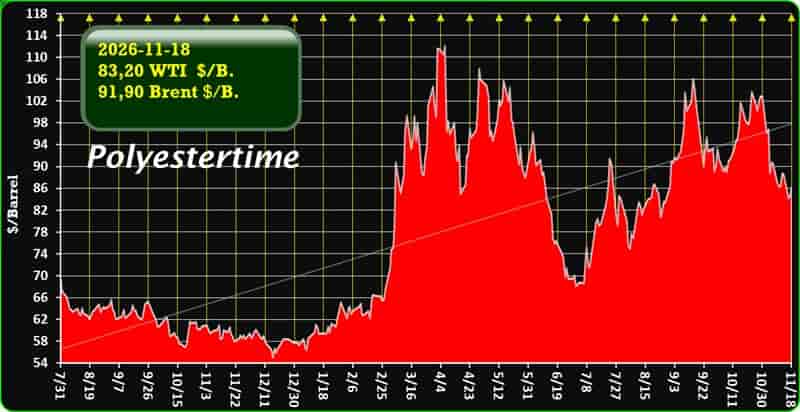
Crude Oil Prices Trend

US Dollar Declines Amid Tariff Uncertainty: Analysts Say Damage Is Irreversible
The US dollar continues to slide against major currencies, driven by market anxiety over unpredictable US trade policy. Although recent tariffs introduced by the Trump administration were paused for most countries—except China—investors remain wary. Biodegradable bags
The dollar dropped 1% against a basket of global currencies. The euro climbed 1.1% to $1.11, the British pound rose 0.9% to $1.29, the Swiss franc surged 2.2% to 0.84 per dollar, and the Japanese yen strengthened 1.5% to 145 per dollar.
According to Deutsche Bank’s head of foreign exchange research, George Saravelos, the fallout is already evident. In a note cited by the Financial Times, he stated, “The damage to the dollar has been done,” citing declining economic performance relative to other nations and reduced appetite among foreign investors to fund the US external deficit.
Saravelos also warned that the US currency and bond markets are now more exposed to political decisions, investor sentiment, and the nation’s dual deficit—comprising both trade and fiscal shortfalls. Biodegradable bags
This vulnerability, he suggested, may weaken the dollar’s long-term position unless confidence in US economic leadership is restored.

China’s Strategic Checkmate to Trump in Five Moves
China has been quietly preparing for a trade war with the U.S. since Donald Trump’s first presidential term, according to a CNN analysis. As Trump’s tariffs on Chinese imports surged to 125%, Beijing retaliated with matching duties of up to 84%, fueling a rapid escalation. President Xi Jinping has harnessed nationalism to justify resistance, framing U.S. actions as “unilateral bullying.”
But China isn’t just reacting—it’s leveraging the crisis. Jacob Gunter of MERICS notes that Beijing anticipated a drawn-out economic struggle and made long-term preparations. The resulting standoff threatens a $500 billion trade relationship and could spike U.S. consumer prices while shaving off up to $860 billion before supply chains adapt, JP Morgan analysts say. Biodegradable bags
While China may face bankruptcies and mass layoffs, it possesses a unique resilience, as seen during COVID-19. Unlike the U.S., Chinese leaders aren’t beholden to voter sentiment. Victor Shih from UC San Diego believes China can endure more economic pain than American politicians.
The People’s Daily emphasized China’s readiness and deep experience in trade disputes. Xi’s five-part strategy includes expanding trade ties beyond the U.S., relocating manufacturing to third countries, shoring up rare earth supply chains, addressing domestic debt, and boosting consumption. Biodegradable bags
By diversifying and fortifying its position, Beijing is playing the long game—suggesting China may be better equipped than the U.S. for this economic war of attrition.

UPM helps unlock value in rPET
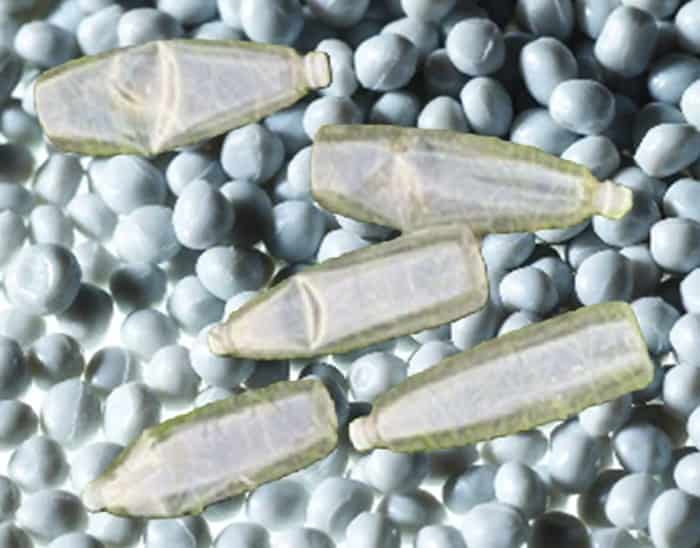
UPM’s involvement in the Waste to Resource program in China sees the company assisting in unlocking high-value recycling of PET bottles, with its RW85C wash-off labels.
The domestic recycled PET (rPET) industry faces ongoing challenges in production efficiency and product quality due to non-recyclable design elements in PET bottles.
Specifically, residues from traditional pressure-sensitive labels and their adhesives can contaminate the recycling stream during the label removal process, hindering high-value recycling of PET bottles. Biodegradable bags
This was a core finding of a special report, jointly released by Deutsche Gesellschaft für Internationale Zusammenarbeit (GIZ), and the China Plastic Reuse and Recycling Association (CPRRA) at the 7th China International Import Expo (CIIE). The case collection focused on the Design for Recycling (DfR) and high-value application of recycled plastics.
Since the launch of Waste to Resource (WtR) program, which aims to upgrade the value chain of packaging waste through improving collection and recycling in China, GIZ has conducted in-depth research to address different industry recycling challenges.
In collaboration with UPM Raflatac and Nongfu Spring, GIZ initiated a three-year innovative pilot case focusing on the DfR for PET bottles. By using UPM RW85C wash-off labels on one of Nongfu Spring’s seasonal beverage bottles, this pilot case aims to explore a successful circular economy model of PET packaging. Biodegradable bags

Gravis Launches 100% Recycled FIBC Bulk Bag
In a move poised to revolutionize the bulk bag industry, Gravis has announced the launch of its groundbreaking Sustainabulk™ 100% Recycled FIBC Bulk Bag.
This cutting-edge innovation is not just a product – it’s a commitment to environmental sustainability, making it easier for businesses worldwide to meet their environmental goals while optimizing their operations. Biodegradable bags
A Breakthrough for the Planet
Unlike traditional Flexible Intermediate Bulk Container (FIBC) bags made from virgin polypropylene – which rely on petroleum-based production processes and are notoriously difficult to recycle – the Sustainabulk™ bag is crafted entirely from recycled PET (rPET) plastic, including materials like discarded plastic bottles and bulk bags.
By shifting to rPET, businesses can reduce their carbon emissions by up to 70%, drastically minimizing their environmental impact. Furthermore, the process of recycling rPET is far more sustainable than the petroleum-intensive production of virgin polypropylene, ensuring a greener future for both industry and planet.

Why is toxic food packaging still legal?
Three years ago, we published this blog. It was about the EU’s plan to fight toxic chemicals and pollution in the European Green Deal. At that time, for the first time ever, Europe was on its way to revising the food contact materials (FCMs) legislation – a dinosaur at almost 50 years old. Everyone agreed: it needed a transformation.
Despite this, today, reform has yet to happen.
Food contact materials are critically important from a public health perspective: everything we eat and drink comes in contact with them. And it may surprise you to know that more than 3,600 chemicals used in food packaging are getting into people’s bodies, and about 100 of them are known to be of high concern for human health. Biodegradable bags
Action is well overdue. Policymakers have recognised the urgency to act on food packaging safety. The new Packaging and Packaging Waste Regulation restrictions on food packaging that use PFAS, commonly known as “forever chemicals”, is a good step. We also have a new EU law restricting use of bisphenol A in certain food contact materials and articles. Even Oliver Várhelyi, Commissioner for Health & Animal Welfare, said: “Maintaining high food safety standards in the European Union and protecting citizens is one of the Commission’s highest priorities”.

AI Recycling Robot Boosts Waste Sorting Efficiency at UMass
UMass Amherst pilots smart recycling tech to improve material recovery
A new AI-powered recycling solution is streamlining waste operations and improving material recovery at the University of Massachusetts Amherst. Developed by alumni-founded startup rStream, the mobile system uses computer vision and artificial intelligence to automate sorting, helping institutions address common inefficiencies in traditional recycling programs.
Automated Waste Sorting Using AI and Computer Vision
The rStream trailer unit is designed to process up to one ton of waste per hour, separating recyclables from trash in real time. The system identifies items on a conveyor belt and automatically redirects them into appropriate waste streams—recovering materials that would otherwise be lost in landfill-bound trash. Biodegradable bags
Unlike many conventional systems that only clean up recycling contamination, rStream also extracts recoverable items from general waste. This two-way sorting model helps reduce material loss and enhances overall recovery rates—critical benefits for organizations looking to improve sustainability metrics without scaling up infrastructure.

Biodegradable bags are TOXIC – and may be linked to organ damage
They’re often marketed as a more environmentally-friendly alternative to traditional plastic bags.
But a new study might make you rethink reaching for those biodegradable bags. Biodegradable bags
Experts from Southeast University in China have warned that these ‘eco-friendly’ options could be toxic.
The first consumed normal food and the other two groups consumed food infused with starch-based microplastics.
The doses – low and high – were calculated and scaled from what an average human is expected to consume daily.
They fed the mice for three months and then assessed their organ tissues, metabolic functions and their gut bacteria.
Analysis revealed that compared to those who ate normal food, the mice exposed to the starch-based plastic particles had multiple damaged organs including the liver and ovaries.