bioPEtex Advances Bio-Based Polyethylene Textiles
bioPEtex Advances Bio-Based Polyethylene Textiles for Circular Sportswear
Polyethylene is one of the world’s most widely used polymers, but its role in textiles has remained limited. A German research project called bioPEtex is now working to change that by developing bio-based polyethylene textiles suitable for industrial processing, sportswear and recyclable textile applications.
The project brings together TECNARO GmbH, the Institute for Textile Technology at RWTH Aachen University, BB Engineering and FALKE. Their shared objective is to make bio-based polyethylene, also known as bio-PE, usable in established textile production routes such as melt spinning, false-twist texturing and knitting.
Why polyethylene is difficult to use in textiles
Polyethylene is lightweight, durable, hydrophobic and chemically stable. These properties have made it highly successful in packaging, films and technical applications.
In clothing, however, PE has historically faced major limitations. It crystallizes at relatively low temperatures, which creates a narrow processing window during spinning and texturing. It is also difficult to dye using conventional textile dyeing systems.
This is why PE is usually found in textiles only as a functional component in composites, geosynthetics or special high-performance fibers, rather than in mainstream apparel or home textiles.
What the bioPEtex project is developing
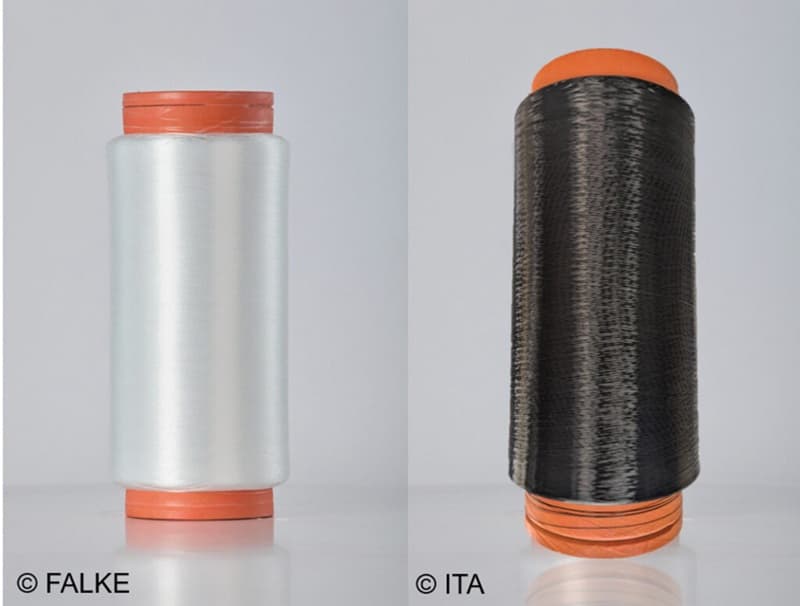
bioPEtex aims to produce industry-ready textile fibers from bio-based polyethylene. TECNARO is working on spinnable bio-PE compounds, including bio-based color pigments. RWTH Aachen’s Institute for Textile Technology and BB Engineering are developing the melt spinning and false-twist texturing processes needed to convert the polymer into usable yarns.
FALKE, known for hosiery and sportswear, is carrying out initial knitting trials. A key milestone is the production of a white T-shirt, which provides an early demonstration of how PE-based fibers could move from laboratory development toward market-oriented textile testing.
The project also targets recyclability at the end of the product life cycle, a critical point for textile producers seeking materials that can fit into circular economy models.
Why bio-based PE matters
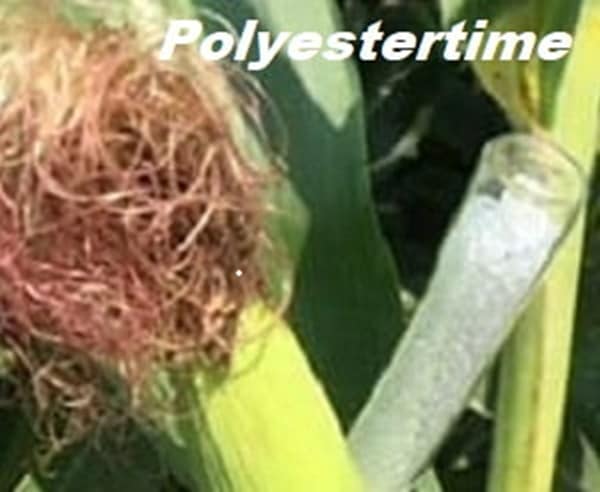
Bio-based polyethylene is chemically identical to fossil-based polyethylene. The difference is the origin of the raw material: bio-PE is typically produced from renewable feedstocks such as sugar cane, sugar or starch-based resources.
Because it is a drop-in polymer, bio-PE can potentially benefit from existing knowledge, processing infrastructure and recycling streams developed for conventional PE. This makes it different from many new biopolymers that require dedicated processing or recycling systems.
For textile producers, that compatibility could become commercially important. It may allow manufacturers to introduce lower-carbon material options without completely redesigning industrial supply chains.
Potential applications in sportswear and technical textiles
The first relevant applications are likely to be areas where PE’s natural characteristics are useful. These include lightweight sportswear, outdoor textiles, technical textiles and products where hydrophobic behavior, low density and recyclability are priorities.
In sports textiles, PE fibers could support garments that are light, quick-drying and resistant to moisture absorption. In technical textiles, they may offer value in applications where chemical stability and low weight are more important than conventional dyeability.
Recent research on PE-based stretchable yarns also points to a broader trend: polyethylene-family materials are being investigated as a route toward mechanically recyclable textile systems. This reinforces the idea that PE could become more relevant in future circular textile design. bio-based polyethylene textiles
The processing advantage
One possible advantage of PE is its relatively low melting point compared with several other synthetic textile polymers. Lower processing temperatures can reduce energy demand during fiber production, depending on the final industrial setup.
BB Engineering’s role is especially relevant because the company supplies spinning, texturing, recycling, extrusion and filtration technology. Its expertise can help assess whether bio-PE yarn production can be scaled beyond laboratory trials and integrated into existing chemical fiber production environments.
Texturizing is a key step because it influences the haptic, functional and mechanical properties of the final yarn. For clothing applications, this is essential: a technically successful fiber must also deliver comfort, elasticity, processability and consistent fabric performance.
The sustainability question
bio-based polyethylene textiles are not automatically sustainable simply because the carbon source is renewable. The real environmental value depends on feedstock sourcing, energy use, durability, recyclability, collection systems and end-of-life processing.
However, the bioPEtex approach is promising because it addresses more than just bio-based content. The project also focuses on industrial processability and end-of-life recyclability, two areas that are often weak points in sustainable textile innovation.
If PE-based textile products can be designed for easier recycling, they could help reduce the complexity created by blended fibers and chemically incompatible textile structures.
A possible alternative to PET in selected textile markets
Polyester remains the dominant synthetic fiber in the textile sector, but it faces growing scrutiny because of fossil feedstocks, microplastic concerns and recycling limitations. Bio-based PE will not replace PET across all textile applications, but it may become attractive in selected segments where low weight, hydrophobicity and circular design are more important than traditional polyester performance.
The opportunity is therefore not a universal substitution, but a targeted material platform for specialized textile categories.
Market outlook
The successful production of a T-shirt is an early but important proof point. It shows that bio-based PE can move beyond raw polymer development and enter recognizable textile formats.
The next challenges will be scale-up, cost competitiveness, fabric performance, finishing, durability, recyclability validation and customer acceptance. Dyeability and aesthetics will also remain important, especially for fashion and sportswear markets.
For now, bioPEtex shows that polyethylene, long associated mainly with packaging, could become part of the future textile material portfolio. If the project succeeds at industrial scale, bio-based polyethylene textiles may offer manufacturers a new route toward lighter, recyclable and lower-carbon textile products.
Key takeaways
bioPEtex is developing textile fibers from bio-based polyethylene.
The project partners include TECNARO, RWTH Aachen University, BB Engineering and FALKE.
The work focuses on melt spinning, false-twist texturing, knitting trials and recyclability.
A white T-shirt has been produced as an early demonstrator.
Bio-based PE could become relevant for sportswear, outdoor products and technical textiles.
The material is chemically identical to fossil-based PE, but uses renewable feedstocks.
Its future will depend on scale-up, performance, cost and verified circularity.
Bioplastics Market Trends: Packaging and Healthcare Drive the Next Phase
More….