European chemical industry – Europe Risks Losing Its Chemical Industry Forever as Jim Ratcliffe Warns Politicians Must Act Immediately to Stop Economic and Strategic Collapse 20-12-2025
European chemical industry
Europe’s Chemical Industry at a Critical Breaking Point
The European chemical industry is facing one of the most severe crises in its history. Sir Jim Ratcliffe, founder of INEOS and one of Europe’s most influential industrial leaders, has issued a stark warning to policymakers across the continent. Without immediate and decisive intervention, Europe risks losing a cornerstone industry that underpins its economy, security, and technological independence.
The European chemical industry is valued at approximately one trillion euros and supports millions of jobs directly and indirectly. It supplies essential materials for defence, healthcare, food production, construction, and advanced manufacturing. Yet today, this vital sector is shrinking at an alarming pace, driven by policy failures, unfair global competition, and unsustainable cost pressures.
Why the European Chemical Industry Is Declining
According to Ratcliffe, the collapse of the European chemical industry is not the result of normal market cycles. Instead, it stems from structural disadvantages imposed on European producers.
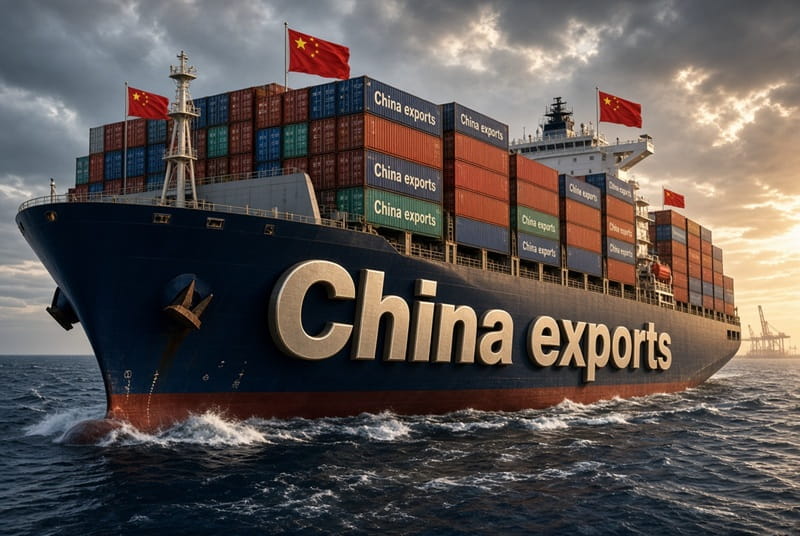
One of the most damaging factors is the flood of low-priced chemical imports from China. Chinese manufacturers have dramatically expanded capacity, far beyond domestic demand. As a result, massive volumes of chemical products are being exported at prices that European producers cannot compete with.
At the same time, changes in United States trade policy have redirected Chinese exports away from the American market and toward Europe. This has intensified pressure on European chemical companies, many of which are already operating at slim or negative margins.
The European chemical industry now faces a perfect storm of oversupply, dumping-level prices, and declining demand.
Energy Prices Put Europe at a Severe Disadvantage
Energy costs are another major driver of decline. Chemical manufacturing is highly energy intensive, and Europe’s energy prices are currently around four times higher than those in the United States.
For the European chemical industry, this gap is devastating. Even the most efficient and technologically advanced plants cannot compete globally when energy costs are so disproportionate. As a result, production is increasingly shifting to regions with cheaper energy, leaving Europe exposed to supply risks and industrial hollowing.
High energy prices also discourage investment in new facilities, innovation, and modernization, accelerating the downward spiral.
Carbon Policies and Their Unintended Consequences
While climate action is essential, Ratcliffe argues that Europe’s current carbon taxation framework is crippling the European chemical industry without delivering meaningful global emissions reductions.
European producers are taxed heavily for carbon emissions, while imported chemical products often face no equivalent penalties. This creates carbon leakage, where production moves abroad to regions with lower environmental standards, increasing global emissions rather than reducing them.
The result is a paradox. Europe sacrifices its industrial base while continuing to consume carbon-intensive imports. For the European chemical industry, this policy imbalance is existential.
A Wave of Closures Across Europe
The impact of these pressures is already visible across the continent. Between 2022 and 2027, approximately 90 chemical facilities in Europe have either closed or announced plans to shut down.
These closures represent nearly 25 million tonnes of lost production capacity. Each facility would cost roughly one billion euros to replace, amounting to a loss of nearly one trillion euros from Europe’s industrial asset base.
This scale of decline is unprecedented in the European chemical industry and far exceeds the damage seen during the 2008 financial crisis.
Strategic Risks for Europe’s Economy and Security
The decline of the European chemical industry has consequences far beyond economics. Chemicals are foundational inputs for defence systems, pharmaceuticals, medical equipment, fertilizers, packaging, and countless manufactured goods.
As domestic production disappears, Europe becomes increasingly dependent on imports, particularly from China. This dependency introduces serious strategic risks, especially during geopolitical tensions or supply chain disruptions.
Losing control over chemical supply chains means losing autonomy over critical sectors that sustain modern societies.
Why Immediate Political Action Is Essential
Ratcliffe emphasizes that the data is clear and the warning signs can no longer be ignored. The European chemical industry cannot survive without immediate intervention.
Key actions needed include:
-
Temporary and targeted tariff protection against unfairly priced imports
-
Urgent reform of carbon taxation to prevent carbon leakage
-
Measures to reduce industrial energy costs
-
A coherent industrial strategy that values manufacturing as strategic infrastructure
Without swift decisions, Europe risks allowing an entire industry to disappear within a single decade.
The Cost of Inaction Will Be Permanent
Once chemical plants close, they rarely reopen. Skilled workers leave, supply chains collapse, and investment moves elsewhere. Rebuilding the European chemical industry from scratch would take decades and trillions of euros, if it is even possible at all.
This is why the current moment is so critical. Policymakers still have an opportunity to stabilize the sector, protect jobs, and secure Europe’s industrial future. But that window is rapidly closing.
A Final Warning for European Leaders
The decline of the European chemical industry is not inevitable. It is the result of policy choices that can still be corrected. However, delay will turn decline into permanent loss.
Europe stands at a crossroads. One path leads to industrial resilience, strategic independence, and sustainable manufacturing. The other leads to dependency, deindustrialization, and long-term economic weakness.
The choice now rests with Europe’s political leaders, and the time to act is now.
More…