EV Battery -The first production vehicle featuring this technology is anticipated by decade’s end. Partnering with US-based Factorial Energy, Mercedes is assessing the battery’s efficiency, longevity, and performance. The trials involve a modified EQS model equipped with this advanced power source 22-02-2025 - Archive
EV Battery
$100m investment realized: Avgol unveils new production line delivering high-loft and additional spunbond nonwoven capacity
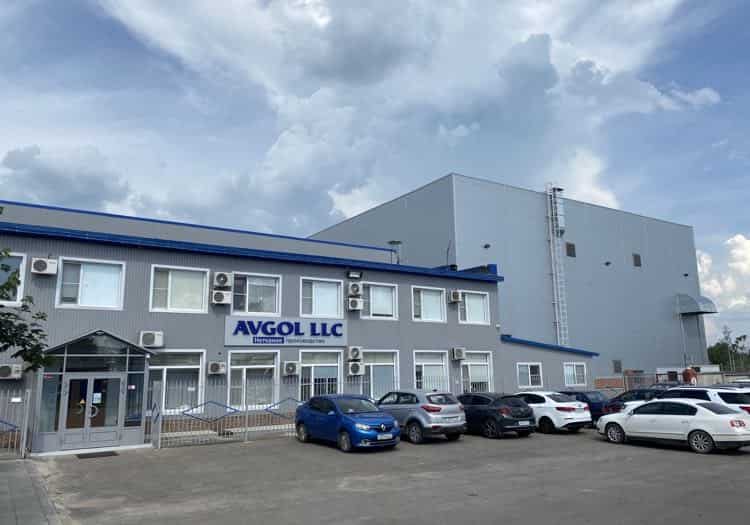
Avgol, an Indorama Ventures company, celebrated the opening of its brand-new high-speed, high-capacity flexible multiple beam nonwovens production line at its facility in Mocksville, NC. This milestone underscores the company’s commitment to excellence and innovation.
It also represents the successful realization of a $100 million investment. Diego Boeri, Executive President of Indorama Ventures’ Fibers Segment including Avgol, attended the opening and said: “This is a very nice example of how our strategy to collaborate closely with leading industry players pays off.
Thanks to our team’s customer intimacy, we are able to deliver market-driven innovation that meets current industry trends and helps our customers to respond to the needs of many end consumers in the baby diaper, adult incontinence and feminine care industry.”
In addition to the new production line and as part of the investment, Avgol has installed a state-of-the-art 3-layer lamination line that further expands the company’s nonwoven composite capabilities. EV Battery
Engineered with precision temperature controls, high-speed bonding technology, and an integrated quality inspection system, this advanced machine efficiently fuses three layers to produce lightweight, durable composites with exceptional strength and consistency. Designed to meet the highest quality and performance standards, it reinforces Avgol’s commitment to delivering top-tier products and setting new industry benchmarks in nonwoven composite manufacturing.
Gigafactories: what they are, how they work and why they are the future of batteries
Gigafactories are revolutionising the energy and electric mobility sector, representing a fundamental pillar for the transition to a more sustainable economy. But what are they exactly?
The term “gigafactory” was popularised by Tesla, which opened the first large-scale lithium-ion battery production plant in 2016.

Air Liquide and TotalEnergies to Invest Over €1B in Green Hydrogen
TotalEnergies and Air Liquide will collaborate on two green hydrogen (H2) projects to help decarbonize TotalEnergies’ refineries in Belgium and the Netherlands. Announced Tuesday, these projects represent a joint investment exceeding €1 billion ($1.1 billion) and aim to reduce CO2 emissions by up to 450,000 metric tons per year. EV Battery
Green hydrogen, produced via electrolysis using renewable electricity instead of natural gas, emits only water and oxygen when burned. Many European governments are integrating H2 into long-term energy transition plans, yet high costs and uncertain demand have slowed investment in the sector.
TotalEnergies CEO Patrick Pouyanne supports using renewable H2 in refining operations to lower net CO2 emissions. However, he remains cautious about expanding H2 refueling stations for passenger cars, citing demand uncertainties.
The first project involves a 200-megawatt (MW) electrolyzer in Rotterdam, powered by TotalEnergies’ offshore wind farms. Operations are expected to begin by late 2027. The companies are seeking subsidies under European and national funding programs to support the estimated €600 million investment. EV Battery
Additionally, Air Liquide and TotalEnergies will form a joint venture to develop a 250-MW electrolyzer in the Dutch province of Zeeland. This initiative further strengthens their commitment to sustainable hydrogen production and industrial decarbonization.
Visit : TotalEnergies

Trump Pushes for Fort Knox Gold Audit: Market Implications
President Donald Trump has announced plans to audit Fort Knox’s gold reserves, the first such inspection since 1974. This decision has unsettled financial markets, sparking speculation and betting on prediction platforms.
“We’re going to Fort Knox to check if the gold is there,” Trump stated, responding to a call originally raised by financial blog ZeroHedge and later backed by Senator Rand Paul and Tesla CEO Elon Musk. EV Battery
Although Trump did not clarify the exact motive, his words suggest concerns about transparency and the actual availability of U.S. gold reserves. “If the gold isn’t there, we’ll be very angry,” he warned, emphasizing the issue’s importance.
Market Reaction and Financial Impact
The announcement caused immediate turbulence in financial betting markets. Both Polymarket and Kalshi are preparing betting options on the audit’s outcome.
Current Polymarket data shows: • 64% probability the audit occurs before May 2025 (up from 55% the previous day). • 17% probability of missing gold reserves.
Uncertainty has affected gold and cryptocurrency markets. Analysts suggest the audit could boost Bitcoin’s appeal over gold. Unlike physical gold, Bitcoin is fully traceable and verifiable in real time. EV Battery
The crypto community sees this as validation of blockchain transparency versus gold’s verification challenges. If discrepancies arise, trust in U.S. reserves may falter, driving investors toward Bitcoin and other digital assets.
This shift underscores how blockchain is reshaping financial markets and information processing.

Tozero and the Future of Electric Vehicle Battery Recycling
The electric vehicle industry has surged in recent years, driving demand for battery materials, particularly graphite. Tozero, a company specializing in EV battery recycling, predicts that by 2040, graphite demand in the EU will rise 20-25 times its current level.
With fossil fuel vehicle phase-outs beginning in 2030, Europe’s reliance on imported graphite—98% of which comes from China, controlling over 90% of global supply—poses trade risks and supply chain instability. Additionally, graphite accounts for 40% of a battery’s carbon footprint, making its reuse essential. Tozero asserts that recycled graphite from old batteries can be fully utilized in new ones. EV Battery
BATTERY RECYCLING
Despite its vital role in EV battery stability, graphite is often overlooked in recycling, even though it is more critical than lithium. Conventional methods lead to graphite being incinerated, wasted, or degraded by strong acids. Tozero’s innovative process preserves over 80% of graphite’s structure at an industrial scale.
Sarah Fleischer, Tozero’s co-founder and CEO, stated: “This marks a milestone not just for Tozero but for the European battery industry. Our recycled lithium has successfully re-entered the supply chain, and we are now proving the same for graphite.” EV Battery

Toray Unveils Breakthrough in Nylon 66 Recycling
Toray Industries has introduced an innovative recycling method for nylon 66. The company employs proprietary depolymerization technology using subcritical water, enabling rapid and uniform breakdown of nylon 66 into its monomer components within minutes.
Global demand for nylon 66 reaches approximately 1.3 million tons annually due to its durability and heat resistance. It is widely used in automotive applications such as airbags, tire cords, radiator tanks, cylinder head covers, and oil pans. Stricter plastic recycling regulations in Japan now mandate the collection of used nylon 66-based airbags, positioning it as a key candidate for chemical recycling. EV Battery
While chemical-recycled nylon 6 yields caprolactam, nylon 66 recycling requires recovering hexamethylenediamine and adipic acid. Leveraging expertise in nylon 6 recycling, Toray optimized depolymerization in subcritical water, developing technology to minimize side reactions. This advancement ensures efficient monomer recovery and allows nylon 66 regeneration through repolymerization. Toray’s process is expected to cut carbon dioxide emissions by half compared to petroleum-based production.
Initially focusing on automotive materials, Toray aims to refine separation and depolymerization processes for used nylon 66 components.
By 2025, the company will establish a framework for quality verification and customer evaluation. EV Battery
Full-scale production is anticipated by 2030, aligning with tighter recycling mandates.
Toray continues expanding nylon recycling, integrating nylon 6 and 66 technologies for broader industrial applications. This initiative supports a circular economy and advances carbon neutrality goals.

Mercedes-Benz is trialing a groundbreaking solid-state battery capable of surpassing 1,000 kilometers per charge
The first production vehicle featuring this technology is anticipated by decade’s end. Partnering with US-based Factorial Energy, Mercedes is assessing the battery’s efficiency, longevity, and performance. The trials involve a modified EQS model equipped with this advanced power source.
This system accommodates the expansion and contraction of internal components during charging and discharging, enhancing stability and lifespan. Favorable test results could revolutionize electric vehicle range and efficiency. EV Battery
Mercedes-Benz has yet to disclose comprehensive technical details but confirms the EQS’s 12-module battery pack supports flexible configurations. This solid-state technology promises a 25 percent range increase over conventional lithium-ion batteries of equivalent size and weight.
The current EQS 450+ features a 118 kWh battery delivering 511 miles of WLTP range. With solid-state integration, Mercedes aims to surpass 620 miles under real-world conditions. Factorial Energy provides cells with a density of up to 391 Wh/kg, utilizing a proprietary lithium-metal anode.
The company is advancing a more efficient version, Solstice, incorporating a solid sulfide electrolyte with a density of 450 Wh/kg. Simultaneously, it is developing silicon carbide inverters and cutting-edge power electronics for next-generation models, including future CLA, GLA, and EQA successors. EV Battery