Forever chemicals – The rapid shift to electric vehicles carries a hidden environmental concern: the presence of persistent PFAS “forever chemicals” in their batteries These compounds, used for stability in both the cathode and electrolyte of lithium-ion batteries, pose risks to ecosystems and human health due to their resistance to natural degradation 03-04-2025 - Archive
Forever chemicals
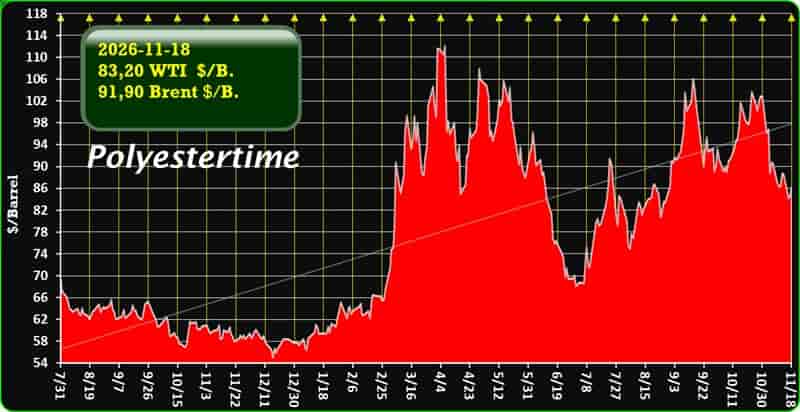
Crude Oil Prices Trend

The rapid shift to electric vehicles carries a hidden environmental concern: the presence of persistent PFAS “forever chemicals” in their batteries
These compounds, used for stability in both the cathode and electrolyte of lithium-ion batteries, pose risks to ecosystems and human health due to their resistance to natural degradation.
Researchers at the University of Chicago, led by Professor Chibueze Amanchukwu, are tackling this issue by completely redesigning battery chemistry to eliminate PFAS without sacrificing performance. Forever chemicals
They have developed a novel “non-fluorinated solvent” for the electrolyte that is entirely PFAS-free.
Crucially, these PFAS-free batteries have demonstrated comparable, and in some cases superior, performance to conventional batteries. They exhibit improved ion pairing, leading to higher energy density, and greater resilience to extreme temperatures, maintaining stable charge/discharge cycles from 15°C down to -40°C. Notably, they also show enhanced capacity retention, promising longer battery life and consistent long-term performance.
While still in the laboratory phase, this research indicates that environmental concerns related to EV batteries can be addressed during the design process. With millions of end-of-life EV batteries expected by the end of the decade, finding such solutions is critical to prevent widespread PFAS contamination and align electric mobility with true environmental sustainability. This innovative approach offers a more cautious and green path forward for future battery development. Forever chemicals
eXoZymes has developed a novel cell-free enzyme engineering approach that overcomes challenges in large-scale bio-based manufacturing
Their system designs enzymes to function effectively outside living cells, simplifying processes and enhancing reaction yields for products like nutraceuticals, pharmaceuticals, and biofuels from low-cost feedstocks like glucose.
This method avoids complexities and toxicity concerns associated with cell-based systems, allowing for higher product concentrations and more cost-effective downstream separations. Co-founder Paul Opgenorth highlights the homogeneous nature of their reactions, enabling complex one-pot transformations and easier purification, reducing equipment footprint and capital expenditure. Forever chemicals
eXoZymes utilizes artificial intelligence to optimize enzyme stability, longevity, activity, and resilience under industrial conditions. They have successfully scaled their system to 100-liter volumes for producing terpenes and cannabinoids, with ongoing efforts to scale up isobutanol production for biofuel applications. This project recently received funding from BioMADE, a public-private partnership aimed at advancing U.S. biomanufacturing.

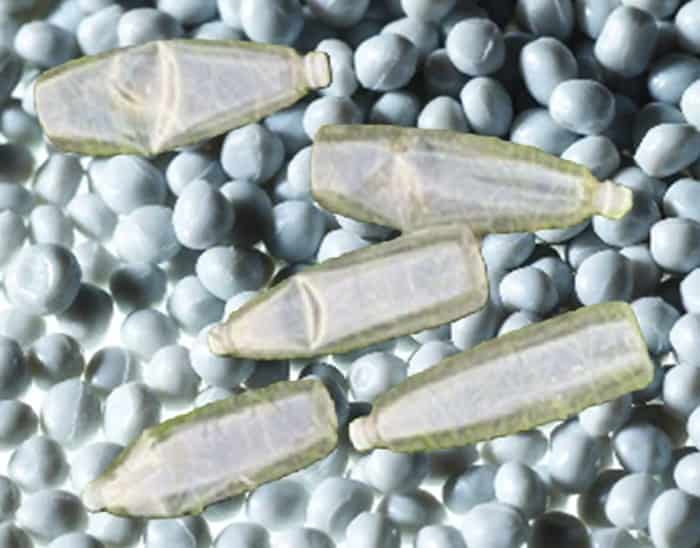
ICIS reports that incentives for recycled polyethylene terephthalate (rPET) in Europe remain weak in March 2025
Despite a bullish start to the year, the significant cost difference of nearly €600 per metric ton between food-grade rPET pellets (selling up to €1,800/MT) and virgin PET is causing some European brands to reduce their recycled content percentages.
According to ICIS senior editor Matt Tudball, the rPET market’s upward momentum is facing pressure from cheaper virgin PET imports, potentially widening the cost gap further. Several beverage and FMCG companies are reportedly reducing their rPET usage to the minimum levels required by contracts, often between 25% and 30% for beverage bottles. Forever chemicals
This minimum usage aligns with the mandatory recycled content target set by the EU’s Single Use Plastics Directive (SUPD). However, Tudball notes that many EU countries have not implemented significant financial penalties for non-compliance with this target, leading some producers to prioritize cost savings by using less rPET or even sticking with 100% virgin PET until strictly enforced.
The lack of strong enforcement and the substantial price premium of rPET over virgin material are hindering the widespread adoption of recycled content despite regulatory targets. Some rPET buyers struggle with the decoupling of rPET prices from virgin PET prices, which are largely driven by supply chain factors. Forever chemicals

PureCycle and Landbell Group Partner to Enhance Polypropylene Recycling in Europe
PureCycle Technologies, Inc. , a U.S.-based leader in plastic recycling, has partnered with Landbell Group, a global operator of over 40 producer responsibility organizations (PROs). This collaboration aims to advance polypropylene (PP) upcycling into high-purity, recycled PP for high-value applications across Europe.
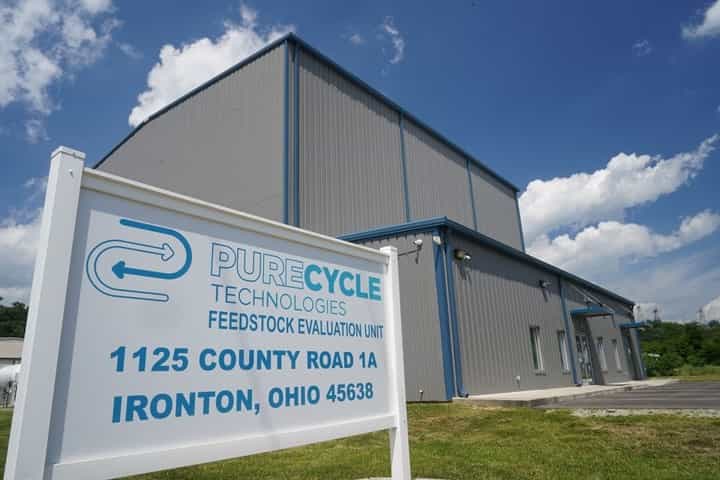
PureCycle Belgium will leverage its proprietary purification process, inspired by its Ironton, Ohio, facility, which will have a 48,600-tonne annual capacity when fully operational. This process converts PP waste into PureFive™ recyclate, a sustainable alternative to virgin PP, already in commercial use in the U.S. Forever chemicals
In January 2024, PureCycle Belgium and Landbell Group began working to enhance PP recycling in Europe. Landbell will contribute expertise in plastic collection, sorting, and processing across multiple European countries. The company will supply PP waste from household collections as feedstock for PureCycle’s first European recycling plant in Antwerp, Belgium, expected to process 59,000 tonnes annually.
Wiebe Schipper, PureCycle’s VP of European and Asia Pacific Operations, emphasized the importance of this collaboration in advancing plastic circularity in Europe. Landbell Group COO Uwe Echteler added that by combining both companies’ expertise, they aim to increase recycling rates and produce high-quality recycled PP, helping manufacturers meet new regulatory requirements. Forever chemicals
Periplast, a Portuguese extrusion machinery manufacturer celebrating its 40th anniversary at PRSE in Italy, is showcasing its innovative extrusion line for producing plastic lumber, a sustainable alternative to wood
This technology efficiently processes a mix of non-recyclable plastic waste – 70% LDPE, HDPE, PP, and 30% other mixed plastics and contaminants – transforming it into durable products like outdoor tables.
Designed specifically to handle mixed and non-recyclable plastics, Periplast’s extrusion system and specialized molds create high-quality structural beams suitable for diverse applications, including construction, landscaping, agriculture, and urban infrastructure projects. Forever chemicals
This process effectively addresses common issues associated with traditional wood, such as warping, chipping, rot, cracking, and general degradation, offering a cost-competitive solution due to significantly reduced maintenance requirements over its lifespan.
Beyond its technological advancements, Periplast actively participates in the Sustainable Plastics Mobilising Agenda, an initiative spearheaded by the Portuguese Plastics Industry Association (APIP).
Daniel Sousa, General Manager at Periplast, stated that their latest extrusion line empowers businesses to convert waste materials into long-lasting and profitable products, thereby reinforcing sustainability principles while simultaneously unlocking new and promising market opportunities. Forever chemicals

Norwegian scientists unveil lighter wiring to boost EV range and efficiency
Copper is the most widely used conductor due to its cost, availability, strength, conducting properties.
Electric vehicles (EVs) combine several technological innovations to produce a feat of engineering that promises to change the present and future of transportation.
While they outperform traditional internal combustion engine (ICE) vehicles in most areas, they struggle with range and energy efficiency. Forever chemicals
Improving these two factors requires innovation in different aspects of EVs, one of which is weight.
Researchers at SINTEF (The Foundation for Industrial and Technical Research) and NTNU (Norwegian University of Science and Technology) in Norway are addressing this challenge by working to reduce the weight of conductors used in EVs.
The weight of a vehicle (EV or ICE) directly impacts the amount of energy it requires to run in the form of electricity and fuel, respectively.
Components like copper wiring in EVs can weigh between 83 and 369 kg (or 183-814 lbs) for passenger vehicles and buses, respectively. Forever chemicals
Though this weight is a small portion of an EV’s total weight, the researchers believe that making small incremental changes can affect the overall performance of EVs.