GR3N Raises €15.5M to Scale PET Chemical Recycling and Build Industrial Plant in Spain
GR3N Raises €15.5 Million to Scale PET Chemical Recycling and Advance Europe’s Circular Economy
GR3N PET chemical recycling
GR3N Secures €15.5 Million to Accelerate PET Chemical Recycling in Europe
Europe’s push toward a circular plastics economy received another boost as Swiss cleantech company GR3N announced the successful completion of a €15.5 million Series B funding round. The investment will support the industrial deployment of its proprietary PET recycling technology and advance the construction of a large-scale recycling facility in Spain.
The round was led by venture capital firm 360 Capital, known for backing European deep-tech and climate-tech companies, with participation from textile innovation specialist VP Textile. The financing arrives at a time when European industries face growing pressure to increase the use of recycled materials and reduce dependence on virgin plastics.
Why PET Recycling Remains a Major Challenge
Polyethylene terephthalate (PET) is one of the most widely used plastics globally, found in beverage bottles, food packaging, polyester textiles, industrial films, and numerous consumer products.
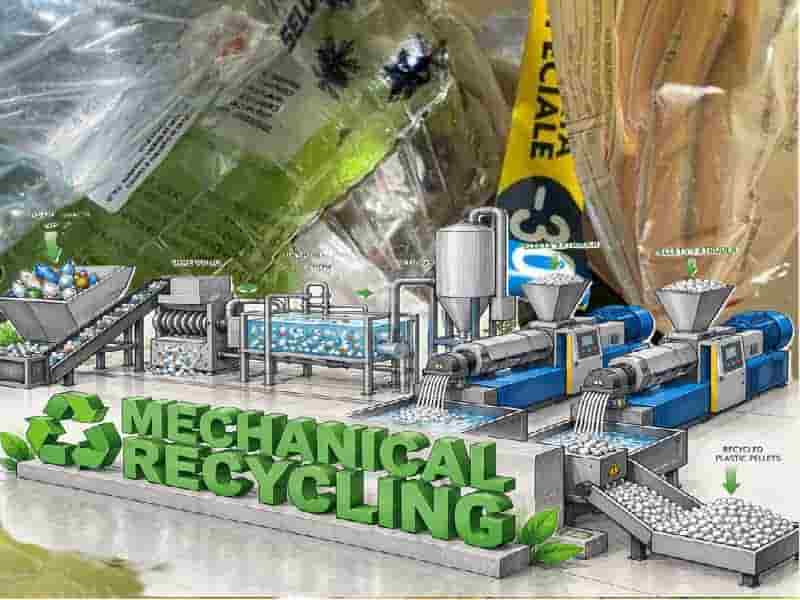
Despite decades of recycling efforts, most PET recycling still relies on mechanical processes. These methods are generally effective only for relatively clean and transparent plastic streams. Large volumes of colored plastics, textile fibers, multilayer materials, and contaminated PET continue to be sent to landfills or incineration facilities.
The challenge is becoming more urgent as regulators and major brands set increasingly ambitious targets for recycled content. Across Europe, manufacturers are preparing for stricter sustainability requirements and growing consumer demand for circular products.
GR3N’s Microwave-Based Approach
GR3N has developed a patented technology called Microwave Assisted Depolymerization (MADE), designed to chemically break PET waste back into its original molecular building blocks.
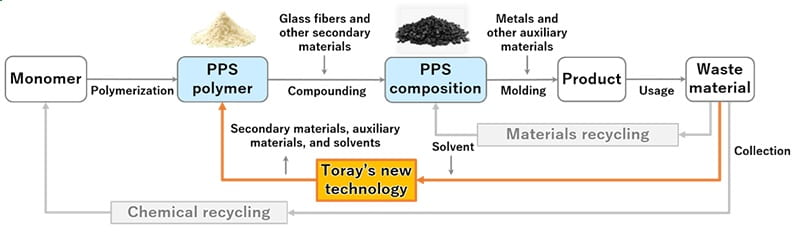
Unlike conventional recycling methods that often degrade material quality after multiple cycles, chemical recycling aims to produce high-purity raw materials that can be reused to manufacture new PET products without compromising performance.
A key advantage of the technology is its ability to process a broader range of PET waste streams, including textile-based polyester waste and colored plastics that are difficult to recycle mechanically.
The company says the process can significantly reduce carbon emissions compared with producing virgin PET while enabling continuous material recovery within a circular manufacturing model. GR3N PET chemical recycling
New Industrial Plant Planned in Spain
A substantial portion of the new funding will be allocated to the development of MODUS, GR3N’s first industrial-scale recycling facility.
The project is planned for Spain and is expected to process approximately 40,000 tonnes of PET waste annually once operational. The facility is being developed in partnership with engineering company Intecsa Industrial.
The project has also secured support through the European Union’s Innovation Fund, reflecting growing institutional backing for advanced recycling technologies that can contribute to decarbonization and resource efficiency goals.
If completed according to current plans, the facility could become one of Europe’s most significant demonstrations of large-scale microwave-assisted chemical recycling.
Leadership Expansion Supports Growth Phase
Alongside the funding announcement, GR3N confirmed the appointment of Martin Stephan as Chief Executive Officer.
The company believes his international experience in technology-driven businesses will help guide the transition from technology development to industrial deployment. The next phase of growth will focus on scaling operations, commercial partnerships, and construction activities linked to the Spanish facility.
Textile Waste Creates a Significant Opportunity
One of the strongest drivers behind interest in chemical recycling is the growing textile waste problem.
Polyester remains the dominant synthetic fiber used by the global fashion industry, yet only a small fraction of discarded garments is recycled into new clothing. Mixed fabrics, dyes, and contaminants have historically made textile recycling technically difficult and economically challenging.
Investors backing GR3N see chemical recycling as a potential solution capable of recovering high-quality raw materials from complex waste streams that currently have limited recycling options.
If successful at industrial scale, technologies such as MADE could help close the loop between textile production, consumption, and recycling while reducing the environmental footprint of synthetic fibers.
Growing Investor Interest in Climate and Circular Economy Technologies
GR3N’s funding round reflects continued investor appetite for technologies addressing industrial decarbonization, waste reduction, and resource efficiency.
Across Europe, climate-tech investors are increasingly focusing on scalable infrastructure capable of supporting circular manufacturing systems. Recent funding activity in deep-tech and climate sectors highlights ongoing demand for technologies that can help industries comply with sustainability regulations while maintaining competitiveness.
As recycling targets tighten and demand for recycled materials grows, advanced recycling technologies are expected to play an increasingly important role in Europe’s transition toward a low-carbon and circular economy.
For GR3N, the next milestone will be proving that its microwave-assisted recycling technology can perform efficiently at industrial scale and provide a commercially viable pathway for recycling the large volumes of PET waste that currently remain outside traditional recycling systems.
More…