Volvic Recycled Bottles Mark a Bold Shift—but Questions Remain
Volvic Recycled Bottles Mark a Bold Shift—but Questions Remain
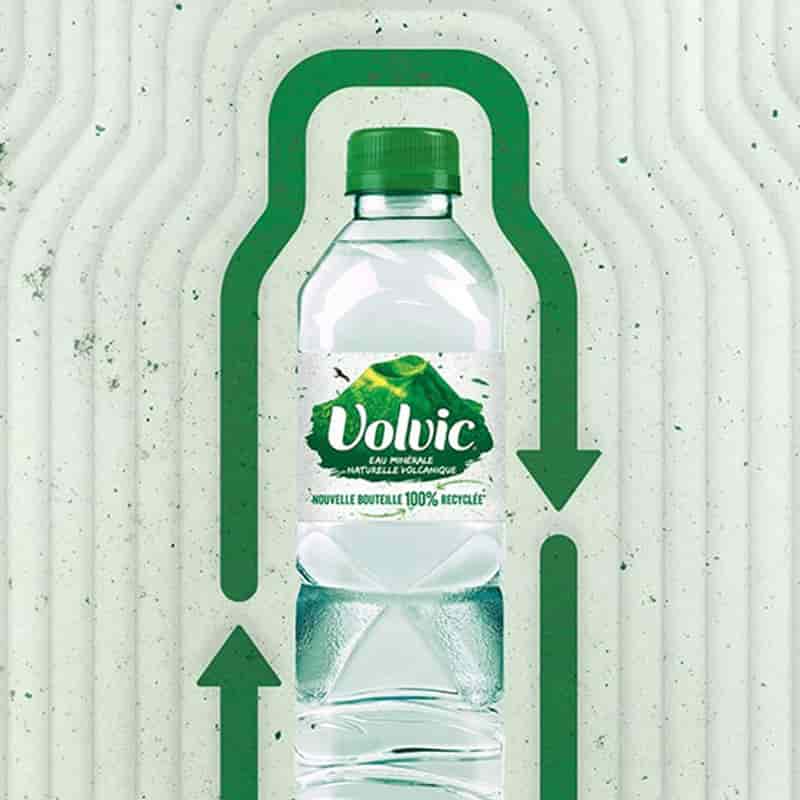
Volvic is completing a significant packaging change in France: the bodies of its plastic water bottles are now made entirely from recycled PET, commonly called rPET.
The distinction between the bottle and the complete package is important. The “100% recycled” figure applies to the plastic bottle body—not necessarily to its cap, label, inks or adhesives.
According to reporting published on August 13, the conversion follows an investment of nearly €2 million in Volvic’s production lines, including €547,000 in support from France’s ecological transition agency, Ademe. The bottles retain the brand’s familiar appearance and green caps.
The key facts
Volvic’s latest packaging initiative can be summarized as follows:
- Bottle bodies sold in France are being produced from 100% recycled PET.
- Caps and labels are excluded from that percentage.
- The bottles reportedly contain 15% less material than comparable packaging used in 2018.
- Volvic says the change can reduce the bottle’s carbon footprint by as much as 60%.
- The company’s French plant produces approximately five million bottles per day.
- The conversion follows several years of gradually introducing recycled PET into Volvic packaging.
These environmental figures are company claims and should be understood as estimates based on the methodology and boundaries selected for the assessment. A lower packaging footprint does not make bottled water impact-free.
Why recycled PET matters
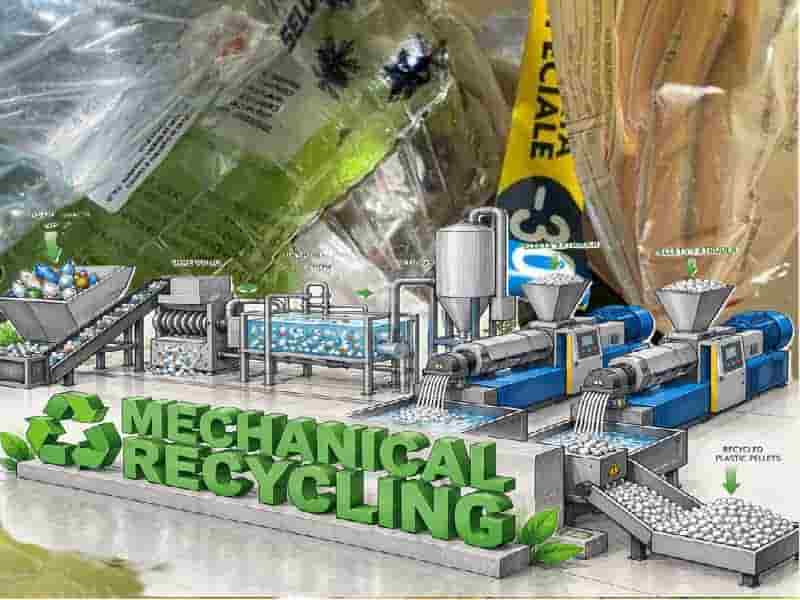
PET can be collected, cleaned and processed into material suitable for new bottles. Using rPET reduces demand for newly manufactured, fossil-based plastic and can lower emissions associated with packaging production.
Danone, Volvic’s parent company, states that all Volvic plastic bottles produced for Europe have used 100% rPET since 2025, excluding caps and labels. The company also reports reducing its use of virgin fossil-based packaging by 8% between 2020 and 2025. Danone’s packaging information
The French transition reportedly began much earlier. Recycled material was introduced into Volvic bottles in 2008, while large eight-litre containers made from recycled material appeared in 2016. Smaller 100% rPET bottle bodies began reaching French shops in October 2025.
Recycling still depends on collection
A bottle containing recycled plastic is not automatically part of a closed loop. It must still be collected, correctly sorted and successfully processed after use.
Ademe estimated that France collected 58.2% of plastic beverage bottles for recycling in 2024. That provisional figure remained well below the national targets of 77% for 2025 and 90% for 2029. Ademe’s collection assessment
This gap explains why reducing the amount of material used—and expanding reuse where practical—remains important alongside recycled content.
Europe’s packaging rules add new pressure
The timing of Volvic’s announcement is notable. The EU Packaging and Packaging Waste Regulation became generally applicable on August 12, 2026.
The regulation covers the entire packaging lifecycle and aims to reduce waste, increase the safe use of recycled plastic and make packaging placed on the EU market recyclable in an economically viable way by 2030. European Commission overview
Volvic’s use of rPET goes beyond the recycled-content level that will eventually be required for many plastic beverage bottles. Nevertheless, European policy is concerned with more than the percentage printed on a package: design, collection, practical recyclability and waste prevention all matter. Volvic recycled bottles
Earlier claims led to a court dispute
The new packaging also arrives after a legal challenge concerning Volvic’s previous environmental messaging.
French consumer organization CLCV said a Paris court found several claims—including “100% recycled,” “100% recyclable” and “carbon neutral”—misleading when presented without sufficient qualification. According to CLCV, the judgment highlighted components such as caps, labels, inks and adhesives, as well as the limitations of relying on carbon-offsetting projects.
Danone was ordered to pay €75,000 in damages. The company disputed the conclusions and indicated that it would appeal. CLCV’s account of the judgment
This background does not negate the value of using recycled PET. It does show why environmental statements should specify exactly which components and lifecycle stages they cover.
A meaningful improvement, not a complete solution
Moving Volvic’s bottle bodies to recycled PET can reduce virgin-plastic demand and packaging-related emissions. Lightweighting the bottles adds another measurable benefit.
However, “100% recycled bottle” can be misunderstood if readers assume that every packaging component is recycled or that every empty bottle will become another bottle. Collection losses, processing constraints, labels, caps and transport impacts remain part of the overall picture.
The most accurate conclusion is therefore a measured one: Volvic recycled bottles represent material progress in packaging design, but their environmental value depends on transparent claims, effective collection and continued reductions in single-use packaging.
Frequently asked questions
Are Volvic bottles completely made from recycled plastic?
The bottle bodies are made from 100% recycled PET. Caps and labels are excluded from that claim.
Does recycled PET eliminate the bottle’s carbon footprint?
No. It can reduce emissions associated with producing the bottle, but manufacturing, filling, transport, refrigeration and end-of-life treatment still have environmental impacts.
Are the new bottles recyclable?
PET bottle bodies are designed to be recyclable, but actual recycling depends on local collection, sorting and processing systems.
When did the EU’s new packaging regulation begin to apply?
The regulation entered into force in February 2025 and became generally applicable across the EU on August 12, 2026.
More…