NOVA Chemicals Acquisition Strengthens Borouge International’s Global Polyolefins Strategy
NOVA Chemicals Acquisition Puts Alberta’s Joffre Petrochemical Hub on the Global Polyolefins Map
The acquisition of NOVA Chemicals by Borouge Group International marks one of the most significant shifts in the global polyolefins industry in recent years. For Alberta, the transaction is more than a corporate ownership change. It places the Joffre petrochemical complex, one of Canada’s most important manufacturing assets, inside a much larger international platform spanning North America, Europe and the Middle East.
NOVA Chemicals, including its major Joffre site in central Alberta, now operates as part of Borouge International, the global polyolefins company formed through the combination of Borouge, Borealis and NOVA Chemicals. While NOVA and its subsidiaries continue to operate under their legal registered names, Borouge International has become the broader brand identity for the newly combined business.
The deal matters because polyolefins sit at the center of modern manufacturing. These materials, mainly polyethylene and polypropylene, are used in food packaging, industrial films, caps, containers, pipes, tanks, medical applications, mobility, infrastructure and consumer products. They are produced by linking molecules such as ethylene and propylene, which are usually derived from oil and natural gas, although renewable feedstocks are increasingly being explored across the sector.
Why the NOVA Chemicals acquisition matters
The NOVA Chemicals acquisition gives Borouge International a stronger position in North America, one of the world’s most important petrochemical and plastics markets. NOVA brings long-established polyethylene expertise, integrated production assets and access to customers across packaging, industrial and consumer-goods supply chains.
For Borouge International, the strategic logic is scale. Combining Borouge, Borealis and NOVA creates a broader production and technology base, with assets spread across key geographies. This geographic diversification is important in an industry shaped by feedstock costs, energy pricing, logistics, regional demand and trade policy.
For NOVA, the transaction places its Canadian and North American operations inside a larger global company with deeper access to technology, capital and international markets. That could strengthen the long-term competitiveness of assets such as Joffre, provided the company continues to invest in reliability, emissions performance, product innovation and operational safety. NOVA Chemicals acquisition
Joffre remains central to the story
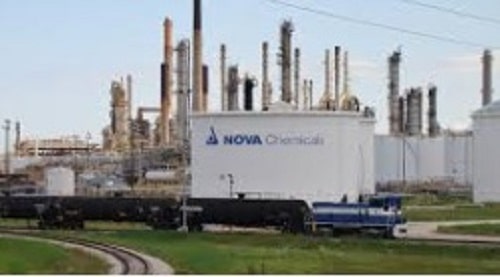
The Joffre site is one of the most important pieces of the NOVA Chemicals portfolio. Located in central Alberta, the large integrated petrochemical complex includes ethylene and polyethylene manufacturing units and supports hundreds of permanent employees as well as a large contractor workforce.
Its role is strategically important because it connects upstream feedstock access with downstream polyethylene production. Ethylene produced on site is used to manufacture polyethylene resins that later become products used in packaging, construction, agriculture, transportation, household goods and industrial applications.
The site’s polyethylene output includes linear low-density polyethylene, often used in food packaging, stretch film, heavy-duty sacks and flexible applications. It also produces high-density polyethylene, a material used in bottle caps, tanks, pails, crates, liners and recreational products.
This makes Joffre more than a regional employer. It is part of a global value chain that links Alberta’s energy and chemical resources with manufacturers and consumers around the world.
Turnaround work highlights industrial scale
The recent planned turnaround at the Ethylene One facility also shows the scale and complexity of the Joffre operation. Turnarounds are major maintenance events that require detailed planning, inspections, cleaning, repairs and equipment upgrades. They are essential for safety, reliability and long-term asset performance.
At a large petrochemical site, a turnaround can involve more than a thousand skilled workers at peak activity. These events also bring a temporary but meaningful economic boost to surrounding communities through demand for trades, engineering support, logistics, accommodation, food services and local suppliers.
For central Alberta, that matters. Petrochemical maintenance cycles do not only protect production assets; they also sustain a skilled industrial ecosystem. Welders, pipefitters, inspectors, engineers, contractors and specialized service companies all benefit from recurring maintenance programs.
A broader shift in the plastics industry
The NOVA Chemicals acquisition comes at a time when the global plastics sector is under pressure to become more efficient, more circular and more transparent. Polyethylene remains essential for modern life, but producers face rising expectations around recycling, emissions, product design and waste reduction.
This is where Borouge International’s scale could become important. Larger companies can invest more heavily in advanced materials, recycling-compatible resins, lower-carbon production pathways and technical support for customers trying to reduce packaging waste.
However, scale alone is not enough. The combined group will need to prove that it can balance growth with environmental responsibility. For customers, regulators and communities, the key question will be whether a larger polyolefins company can deliver better performance, not only larger volumes.
What it means for Alberta
For Alberta, the deal reinforces the province’s role as a petrochemical manufacturing center. The Joffre site gives Borouge International a major foothold in Canada and strengthens the link between Alberta’s energy resources and higher-value chemical production.
This could support long-term employment, supplier activity and industrial investment if the new ownership structure continues to prioritize the site. It could also increase the importance of Alberta within global decisions about polyethylene production, export markets and future capital allocation.
At the same time, local communities will watch closely for continuity. Workforce stability, contractor demand, environmental performance, turnaround planning and community engagement will all be important indicators of how the acquisition affects the region in practical terms.
The competitive picture
The global polyolefins market is highly competitive. Producers must manage feedstock access, energy costs, customer requirements, logistics, regulatory pressure and changing demand patterns. Packaging remains a major market, but producers are also targeting infrastructure, healthcare, mobility, energy and advanced industrial applications.
By adding NOVA Chemicals, Borouge International gains a stronger North American position and a more balanced global footprint. That may help it compete against other large petrochemical producers, especially in markets where customers want reliable supply, specialized grades and technical support.
The acquisition also reflects a wider trend: major energy and chemical companies are repositioning toward materials that remain in demand even as fuel markets evolve. Petrochemicals, especially polymers, are increasingly viewed as a long-term growth area for companies with access to competitive feedstocks and global distribution networks.
What to watch next
The most important developments will be operational and strategic rather than symbolic. Investors, customers and local communities should watch whether Borouge International increases investment in Joffre, expands technical capabilities, improves circular plastics offerings, or changes how NOVA’s North American assets are integrated into the wider group.
Another key issue will be reliability. Large petrochemical complexes depend on consistent maintenance, safe operations and efficient turnarounds. If the combined company can use its broader resources to strengthen asset performance, the acquisition could become a long-term advantage for both the company and the region.
The NOVA Chemicals acquisition is therefore not simply a change of ownership. It is a sign that Alberta’s petrochemical assets are now part of a larger global contest over scale, technology, feedstock advantage and sustainable plastics production.
For Joffre, the message is clear: a site built around ethylene and polyethylene has become an even more important node in the global polyolefins industry.
More…