Why PET Plastic Recycling Faces a Brutal Trade-Off Between Chemistry and Biology
Why PET Plastic Recycling Faces a Brutal Trade-Off Between Chemistry and Biology
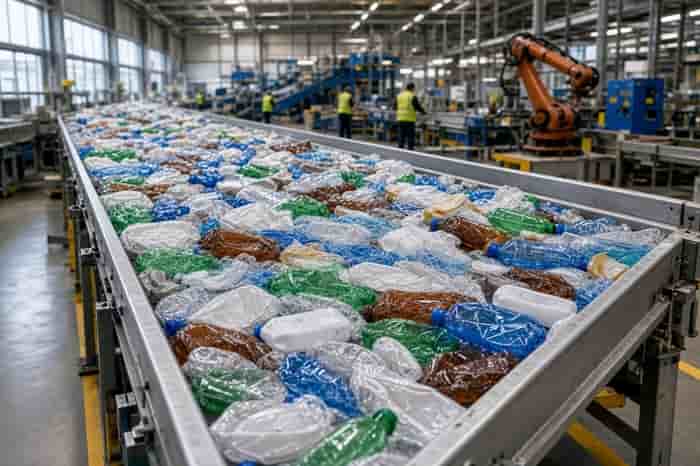
Poly(ethylene terephthalate)—better known as PET—sits inside millions of beverage bottles, food trays, packaging films, and polyester fabrics around the world. Because the polymer is durable and chemically stable, it holds up well during everyday use, yet that same toughness allows discarded PET to linger in landfills and ecosystems for decades. PET plastic recycling
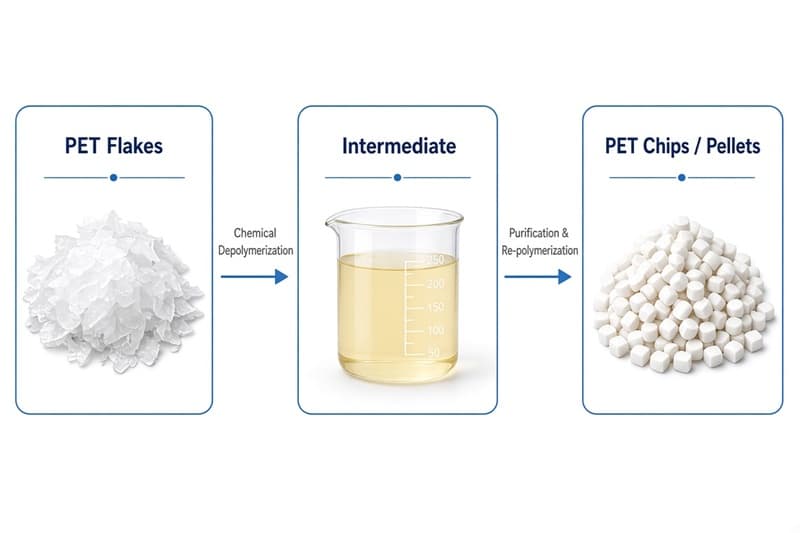
Mechanical recycling melts and reprocesses clean plastic into new items, but repeated heating gradually degrades polymer chains and struggles with heavily contaminated or mixed waste. Depolymerization takes a deeper approach by breaking PET back down into its fundamental chemical building blocks—primarily terephthalic acid and ethylene glycol—so manufacturers can rebuild high-quality material without starting from fossil feedstocks. PET plastic recycling
In a comparative review published in BMC Chemistry—highlighted across science reporting on November 24, 2026—authors Kevin Massani and Serena Gabrielli examine how chemical depolymerization and enzymatic biorecycling stack up against each other. Their analysis shows that neither pathway is a silver bullet on its own, and each carries distinct advantages and drawbacks depending on the waste stream.
How Chemical Depolymerization Handles Tough Waste Streams
Chemical recycling relies on thermochemical and catalytic reactions—including glycolysis, methanolysis, and pyrolysis—to sever the bonds holding PET chains together. Rather than merely softening the plastic, these processes break it down into reusable monomers and intermediates such as terephthalic acid and ethylene glycol. PET plastic recycling
The biggest strength of chemical depolymerization is maturity and versatility. Industrial facilities can process complex, mixed, or less-than-pristine plastic feedstocks that would jam or spoil simpler recycling lines. When waste streams include dyes, residues, or varied packaging components, chemical routes offer a proven way to recover usable raw materials at scale.
That capability comes with real environmental and economic trade-offs. Breaking sturdy polymer bonds often requires substantial thermal energy inputs, raising both operating costs and the carbon footprint if heat comes from fossil fuels. Certain chemical pathways also depend on hazardous solvents, reactive chemicals, or specialized catalysts that require careful handling, separation, and safety controls.
Why Enzymatic Biorecycling Attracts Green Chemists
Biorecycling takes a markedly gentler route by using specialized enzymes to catalyze PET depolymerization under mild operating conditions. Instead of forcing reactions with intense heat or harsh chemical reagents, biological catalysts target ester linkages in the polymer under far milder temperatures and environments.
For cleaner or well-sorted plastic streams, this approach lowers chemical reagent demand and reduces the energy penalty associated with extreme thermal processing. It aligns closely with green chemistry principles by turning biological selectivity into a tool for circular material recovery.
Even so, enzymatic biorecycling still faces steep hurdles before it can rival conventional industrial throughput. Enzymes can lose stability or show limited catalytic activity over extended operating runs, and scaling biological reactors to handle massive volumes of commercial and post-consumer waste remains difficult. Controlling process costs while maintaining reliable reaction rates is central to moving biorecycling from promising lab and pilot work into widespread commercial deployment. PET plastic recycling
Where Hybrid Systems and Future Research Are Heading
Rather than pitting chemistry against biology in a winner-take-all contest, Massani and Gabrielli point to hybrid strategies that combine chemical and enzymatic steps. A two-stage or integrated workflow could use chemical processing to tackle tough or mixed fractions while relying on enzymatic selectivity to refine outputs, recover high-value monomers, or cut harsh reagent use where milder conditions suffice.
Realizing that potential depends on targeted scientific progress across several fronts. Researchers need better enzyme engineering to boost thermal tolerance, stability, and reaction speed, alongside smarter catalysts and reactor designs that lower energy and operating expenses.
For policymakers, packaging designers, and manufacturers, the takeaway is practical: solving PET waste requires matching the recycling technology to the feedstock. Clean streams may favor lower-impact biological routes as enzyme performance improves, while messy, mixed waste still leans on refined chemical depolymerization—and increasingly, integrated systems designed from the ground up for a circular economy. PET plastic recycling
Plastic Recycling Demand Soars, Yet Domestic Recyclers Struggle to Survive
More…