Plastic Pellet Pollution – PCR Use Still Struggles With Cost Hurdles, Says U.S. Plastics Pact Report The U.S. Plastics Pact is spotlighting the ongoing pricing challenges that hinder the widespread adoption of postconsumer recycled (PCR) plastics in packaging. In a new report, the organization outlines key strategies to bridge the gap and drive up PCR use in the U.S. market 23-04-2025 - Archive
Plastic Pellet Pollution
Trump Calms Markets: Powell Stays, US-China Tensions Ease
Markets found new confidence on Tuesday after President Donald Trump took a softer stance on two major concerns: the future of Federal Reserve Chairman Jerome Powell and the US-China trade war.
During a press conference in the Oval Office, Trump clarified that he has no plans to fire Powell, despite past criticisms over interest rate policy. “I don’t want to talk about it because I have no intention of firing him,” he said, softening last week’s more aggressive rhetoric. Plastic Pellet Pollution
This reassurance came alongside encouraging signs on the trade front. Treasury Secretary Scott Bessent suggested a possible de-escalation in the US-China trade conflict, easing investor anxiety about a complete economic “divorce” between the two superpowers.
The markets responded positively. After a dip on Monday driven by Trump’s earlier threats and social media jabs at Powell—calling him “Mr. Too Late”—Tuesday brought a rebound. The dollar recovered, Treasury bonds gained, and US futures surged.
Analysts believe Bessent may be acting as a moderating force within the administration. Dec Mullarkey of SLC Management noted, “There are brakes around this president. It seems like the Bessent touch.”
Still, the underlying tensions between the Fed and the White House remain unresolved. The Fed has resisted further rate cuts, wary of the inflation risks tied to Trump’s tariff-heavy trade strategy. Powell has emphasized that the Fed won’t adjust policy just to support the stock market. Plastic Pellet Pollution
While the tone may have shifted, ongoing pressure between the Fed and the administration signals that future volatility is still on the table. For now, though, global markets are breathing a sigh of relief.

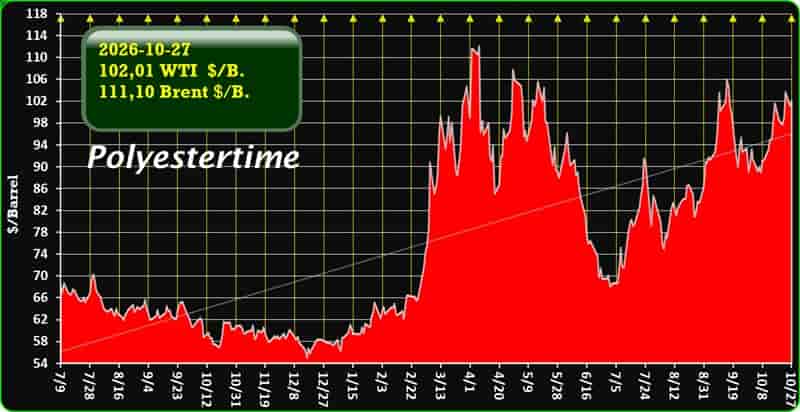
Crude Oil Prices Trend

Turkey’s Koksan Launches $710M PET Plant Project in China
Turkish plastics producer Koksan has begun construction on a major PET production facility worth $710 million in Yangkou Port, Nantong, Jiangsu province. Work started in March 2025, marking a significant step in Koksan’s global expansion.
The project includes a 1 million tonne per year PET resin capacity, made up of 800,000 t/yr virgin PET and 200,000 t/yr recycled PET (rPET).
In the first phase, two PET production lines—each with 200,000 t/yr capacity—will be developed. Plastic Pellet Pollution
Yangkou Port was strategically selected for its proximity to raw material suppliers and logistics infrastructure. Koksan will benefit from nearby access to PTA (purified terephthalic acid) supplied by Chinese chemical giant Tongkun, as well as other resources from Sinopec, Sanfangxiang, and Yadong. The location also offers cost-effective shipping options via inland river ports and bulk cargo terminals.
This setup not only ensures a steady and economical supply chain for Koksan but also supports Tongkun by creating a direct outlet for its PTA production.
According to the Nantong Municipal Government, once fully operational, the facility is projected to generate $2.1 billion in annual sales and contribute $52 million in tax revenue per year. Plastic Pellet Pollution
Koksan had been considering a move into China since mid-2024, evaluating potential sites in Dalian, Gulei, and Huizhou. After extensive analysis, Rudong county in Nantong was selected as the ideal location.
The new plant represents a key milestone in Koksan’s strategy to expand its global footprint and meet growing demand for PET and rPET in Asia.
US Researchers Develop PFAS-Free Lithium Batteries
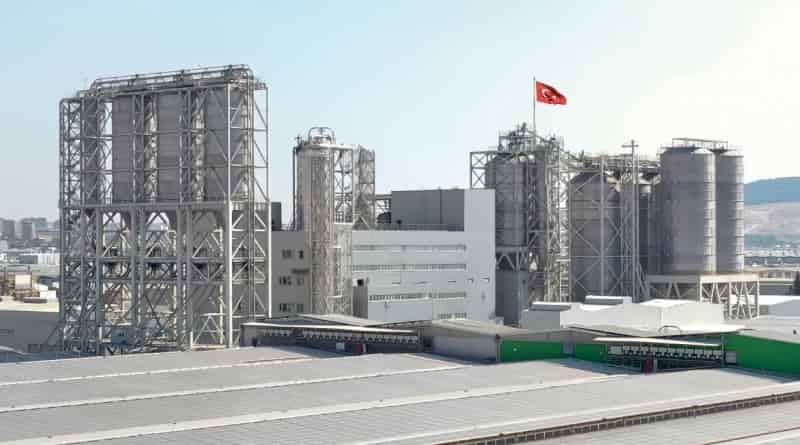
As the global demand for lithium-ion batteries surges—expected to grow from 700 GWh in 2022 to 4.7 TWh by 2030—scientists in the United States are working on a cleaner alternative. A team at the University of Chicago is developing PFAS-free batteries, aiming to eliminate the use of harmful chemicals without compromising performance.
PFAS, or per- and polyfluoroalkyl substances, are synthetic compounds commonly found in lithium battery components, especially in the cathode and electrolyte.
These “forever chemicals” do not break down easily and can accumulate in the environment and human bodies, posing serious health risks. Plastic Pellet Pollution
Professor Chibueze Amanchukwu from the University of Chicago’s Pritzker School of Molecular Engineering highlighted the growing demands on batteries—faster charging, extreme temperature tolerance, and the use of lithium metal—all while reducing environmental impact.
To meet this challenge, the research team developed a non-fluorinated solvent that replaces PFAS in the electrolyte. Initial tests delivered promising results. The PFAS-free batteries not only maintained performance but exceeded expectations in several areas: higher energy density, improved ion pairing, and stable operation across a wide temperature range, from -40°C to +15°C.
While still in the lab phase, the new technology shows that high-performing, sustainable batteries are possible. This research marks an important step toward more eco-friendly energy storage, addressing one of the major environmental issues linked to the rapid rise of electric vehicles and battery-powered devices. Plastic Pellet Pollution
If successfully scaled, PFAS-free batteries could redefine industry standards, making battery production cleaner and safer for future generations.

Ascend Enters Chapter 11 for Strategic Restructuring
Ascend Performance Materials, a leading U.S. producer of polyamide 66 based in Texas, has initiated a voluntary Chapter 11 restructuring process. Approved by the U.S. Bankruptcy Court for the Southern District of Texas, this move is aimed at reducing debt and realigning the company’s operations—without disrupting day-to-day business.
Crucially, this restructuring applies only to Ascend’s U.S. operations; all foreign subsidiaries, including its Italian branch, are excluded and remain unaffected. Plastic Pellet Pollution
Supported by its lenders, Ascend will continue to operate normally throughout the six-month restructuring process. A $250 million debtor-in-possession financing facility has been secured to maintain liquidity and ensure business continuity during this period.
President and CEO Phil McDivitt emphasized the company’s recent progress in improving efficiency and cutting costs, while maintaining high safety standards. “We’ve worked closely with our lenders to choose a path that strengthens our financial position and supports our long-term goals,” McDivitt stated. “This process will help us emerge as a more resilient company.”
The company views Chapter 11 as an opportunity to enhance its capital structure and sharpen its competitive edge. Ascend, owned by SK Capital Partners, entered the Italian market in 2020 through the acquisition of Poliblend and Esseti Plast, forming Poliblend by Ascend.
With annual revenues of approximately $3 billion, Ascend operates globally, with manufacturing sites across North America, Europe, and Asia, and is headquartered in Houston, Texas. The company remains committed to delivering high-performance, innovative material solutions worldwide. Plastic Pellet Pollution
ICS Egypt Joins Wisecap Group to Drive Growth in Egypt and Africa
ICS Egypt, formerly known as CSI Egypt, is entering a dynamic new phase by joining the Wisecap Group. This strategic partnership marks a significant step forward for the company, a leading producer of beverage closures across Egypt and Africa.
The move comes through a collaboration between the CSS Group—CSI Egypt’s previous owner—and Wisecap Group, known for its innovation and global expertise in closure solutions.
Now rebranded as Integrated Cap Solutions Egypt (ICS Egypt), the company is poised to expand its reach and capabilities.
“Joining the Wisecap Group gives ICS Egypt access to advanced technologies, a broader product portfolio, and over 40 years of commercial experience,” said Alessandro Delfanti, Chairman and CEO of Wisecap Group. Plastic Pellet Pollution
“This will empower ICS Egypt to serve its current customers even better and enter new segments, including closures for water and non-carbonated beverages.”
Miquel Batlle and Andre Bianchi, co-owners of CSS Group, emphasized the strength of the partnership, stating, “This union combines CSS’s century-long legacy in beverage closures with Wisecap’s industrial know-how, leveraging ICS Egypt’s strong regional presence.”
With over 20 years of local market leadership, ICS Egypt is well-positioned for future growth. The continuity of its trusted local team ensures consistent service, while integration with Wisecap unlocks fresh opportunities for innovation and regional expansion.
Together, ICS Egypt and Wisecap Group aim to lead the next wave of closure technology across Egypt and the African continent, building on a shared commitment to quality, sustainability, and customer satisfaction. Plastic Pellet Pollution

PCR Use Still Struggles With Cost Hurdles, Says U.S. Plastics Pact Report
The U.S. Plastics Pact is spotlighting the ongoing pricing challenges that hinder the widespread adoption of postconsumer recycled (PCR) plastics in packaging. In a new report, the organization outlines key strategies to bridge the gap and drive up PCR use in the U.S. market.
Pricing Remains a Major Roadblock
One of the primary barriers to scaling up PCR usage is the persistent cost disparity between recycled plastics and their virgin counterparts. Despite growing demand driven by sustainability goals and new regulations, PCR materials remain more expensive—making them less attractive for businesses aiming to meet recycled content targets. Plastic Pellet Pollution
The report identifies long-term contracts as one way companies can better manage the price volatility. These agreements can help stabilize purchasing and navigate the seasonal fluctuations in both virgin and recycled resin pricing.
Government Support Is Essential
Beyond corporate action, the U.S. Plastics Pact is calling for stronger government involvement. The group advocates for comprehensive extended producer responsibility (EPR) laws, which would require producers to take greater accountability for the lifecycle of plastic products. Such policies, they argue, are key to embedding PCR into a functioning circular economy. Plastic Pellet Pollution
Scaling PCR Production Requires Investment
Unlike virgin plastics, PCR production hasn’t yet achieved the scale needed to lower costs significantly. The report points to the need for major investment to boost infrastructure and bring recycled resin prices closer to parity.
One possible solution: low-cost private financing. Some investors are offering loans specifically to fund PCR-related equipment and facilities. In return, companies backing these funds may gain early access to the recycled materials produced—a win-win for both suppliers and users.
Progress Made, but Goals Shifted
The report also highlights feedback from over 100 participating companies, known as “activators,” who initially committed to reaching 30% average PCR content in plastic packaging by 2025. That goal has since been revised to 2030 in the group’s updated Roadmap 2.0. Plastic Pellet Pollution
As of the U.S. Plastics Pact’s December 2024 annual impact report, activators had reached an average of 11% PCR use—up from 9% the previous year, but still far from the original target.

New EU Rules Target Plastic Pellet Pollution
The European Union has taken a significant step toward tackling microplastic pollution by agreeing on binding rules to curb plastic pellet spills. These pellets—tiny granules used in plastic manufacturing—are responsible for up to 184,000 metric tons of pollution annually across Europe.
Under the new legislation, companies involved in the production, transport, and handling of plastic pellets will be required to prevent spills, manage risks, and report losses.
Each facility must implement a risk management plan with strict procedures for packing, loading, equipment use, and staff training. Plastic Pellet Pollution
While environmental groups have cautiously welcomed the agreement, many warn that loopholes and delays could limit its effectiveness. The Rethink Plastic alliance, which includes Greenpeace and ClientEarth, described it as a “meaningful first step” but urged stronger enforcement to ensure real impact.
Critics are especially concerned about exemptions for small businesses and delays in applying the rules to maritime transport—two factors they fear could undermine progress. Self-reporting by companies also raises questions about accountability and transparency.
Despite these concerns, campaigners acknowledge the regulation as a landmark move. “This shows EU leadership in addressing microplastic pollution,” said Amy Youngman of the Environmental Investigation Agency. “But now the law must be matched by action.”
Plastic pellet spills have made headlines recently, including a major incident off the UK coast that contaminated beaches and protected areas. Once in the sea, these pellets can persist for decades, harming wildlife and releasing toxins. Plastic Pellet Pollution
The new rules are set to take effect two years after formal adoption, covering the full supply chain from manufacturing to shipping. Supporters hope they will mark the beginning of broader global efforts to reduce plastic pollution.