The Brutal Truth Behind Plastic Recycling Technologies Performance
Plastic Recycling Technologies
The Brutal Truth Behind Plastic Recycling Technologies Performance
A recycling reactor can convert almost all of its incoming plastic waste and still fail to return usable material back into a high-value product. Across the European industrial landscape, the conversation around circular economy models is rapidly maturing beyond a simple rivalry between mechanical and chemical processes. Sorting operations strip away unsuited items long before processing begins, while complex downstream purification steps remove volatile compounds and legacy contaminants. Some output streams yield fuels, while others demand intensive chemical refining before replacing virgin polymer feedstocks. Understanding these exact boundaries reveals what genuine resource recovery actually delivers.
This reality is reinforced by recent breakthroughs across Europe. Just days ago on October 19, 2026, researchers at ETH Zurich unveiled a solvent-free chemical depolymerization method for acrylic glass using an N-hydroxyimide reagent at low temperatures, yielding up to 98% pure monomer. Meanwhile, on October 20, 2026,
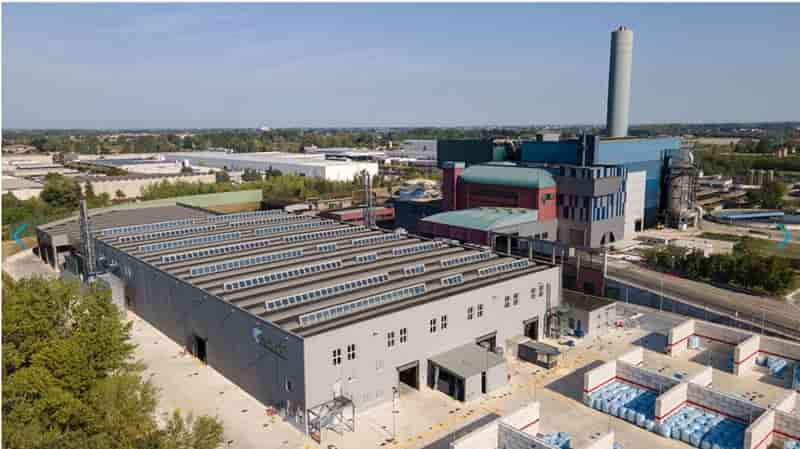
Aliplast opened its R3GID facility in Modena, Italy, dedicated to mechanical processing of post-consumer rigid plastics. These real-world developments highlight why circular strategy must match specific plastic waste fractions with the exact processing route required. Plastic Recycling Technologies
Mechanical Recycling Sets a High Efficiency Benchmark
Mechanical recycling remains the baseline against which every alternative technology is measured. Processing routes for common polymers such as polyethylene (PE), polypropylene (PP), and polyethylene terephthalate (PET) typically consume between 4.1 and 8.6 megajoules per kilogram, generating modest carbon footprints relative to energy-heavy chemical conversions. By mechanically sorting, washing, melting, and regranulating resin, the fundamental polymer chains are preserved without breaking them down into microscopic building blocks.
However, the economic viability of mechanical processing depends heavily on feedstock consistency. Recyclers producing resin pellets for high-performance applications cannot rely on variable municipal waste streams. A process featuring low energy consumption and low greenhouse gas emissions still requires an end-market capable of accepting variable secondary raw materials. When input quality fluctuates, mechanical systems struggle to deliver consistent structural or optical properties. Plastic Recycling Technologies
Increased Feedstock Collection Brings Severe Contamination
Expanding municipal recovery programs inevitably alters the quality of incoming waste bales. Material collected directly from residual municipal waste streams often contains identical target polymer percentages to separately collected packaging, yet carries far higher levels of moisture, dirt, volatile organic compounds, and halogenated additives.
Labeling incoming waste simply as “polypropylene-rich” ignores the underlying processing costs. Two waste loads with identical polymer fractions can require drastically different washing cycles, deodorization protocols, or melt filtration stages. Facilities engineered exclusively around pristine demonstration materials often experience operational failures when processing real-world municipal collection outputs. Establishing strict contractual specifications and pre-treatment standards is vital to plant operations. Plastic Recycling Technologies
Dissolution Techniques Preserve Polymer Structure
Solvent-based dissolution technologies offer a middle path by separating target polymers without destroying their backbone molecular chains. By selectively dissolving individual resins out of complex multi-layer packaging films, researchers can achieve near-complete material recovery from laminated structures that defy standard mechanical shredding and washing.
Despite its efficiency with multi-layer films, solvent extraction introduces its own operational demands. Solvents must be continually captured, purified, and recycled within closed loops to maintain economic viability and environmental standards. Furthermore, residual additives, long-chain lubricants, and antioxidants often persist alongside target polymers, preventing a single dissolution cycle from achieving virgin-grade purity across all feedstocks.
Enzymatic Depolymerization Targets Specific Chemical Bonds
Targeted chemical depolymerization provides a unique advantage for polymers like PET, where ester bonds can be cleaved to recover basic monomer building blocks. Engineered enzymatic reactions can achieve monomer yields exceeding 90% in controlled environments, providing a route to convert washed bottle flake back into pristine, food-grade resin. Plastic Recycling Technologies
The core advantage of enzymatic depolymerization—its extreme selectivity—also defines its limitations. Enzymes break down targeted polymer bonds while leaving surrounding contaminants or blended resins untouched. The overall economics rely heavily on consistent supplies of suitable PET waste and steady industrial demand for high-cost recovered monomers over lower-cost virgin alternatives.
Pyrolysis Yields Intermediate Feedstocks, Not Direct Bottles
Thermal pyrolysis converts polyolefin-rich waste streams into liquid oil in oxygen-deprived batch or continuous reactors. Operating at temperatures above 400°C under inert atmospheres, pyrolysis yields up to 78% liquid oil by mass. However, equating mass liquid yield with direct plastic-to-plastic recovery is fundamentally misleading. Plastic Recycling Technologies
Pyrolysis oil represents a complex intermediate mixture rather than a ready-to-use polymer. Before this liquid can enter standard steam crackers or synthesis units, it requires extensive hydrotreating, desulfurization, and particulate removal. Burning recovered pyrolysis oil for process heat recovers energy value, but permanently removes that carbon from the material cycle.
Matching Waste Streams to Complementary Recovery Routes
Comprehensive life cycle modeling indicates that a fully optimized circular waste strategy must prioritize mechanical recycling wherever high material purity can be preserved. Directing difficult residual waste streams toward solvent extraction, targeted depolymerization, or thermal cracking yields significant environmental benefits compared to energy recovery or incineration.
| Recycling Route | Primary Output | Key Advantage | Main Limitation |
| Mechanical | Reground Pellets | Low energy consumption & lower emissions | Sensitive to input contamination |
| Dissolution | Separated Resins | Handles multi-layer flexible packaging | Requires solvent recovery infrastructure |
| Depolymerization | Purified Monomers | Restores virgin-grade quality | Requires specific polymer feedstocks |
| Pyrolysis | Synthetic Crude / Oil | Processes mixed polyolefin waste | Requires extensive refining and upgrading |
Evaluating recovery options based on full mass balance, energy demand, and final product purity allows industrial operators to route waste streams efficiently. Modern circular infrastructure relies on aligning waste stream characteristics with appropriate processing technologies. Plastic Recycling Technologies
Revolutionary Aliplast Modena Recycling Plant Unleashes Zero-Kilometer Polymers
More…