How Revolutionary Composite Railroad Ties Are Solving America’s Synthetic Turf Crisis
How Revolutionary Composite Railroad Ties Are Solving America’s Synthetic Turf Crisis
Every year, hundreds of athletic stadiums, municipal parks, and training facilities across North America replace their aging artificial turf fields. While synthetic grass provides durable playing surfaces, its end-of-life phase has long posed a formidable environmental dilemma. Weighing dozens of tons and comprising dense mixtures of polyethylene, backing materials, sand, and rubber infill, discarded turf fields historically faced limited, expensive, or landfill-heavy disposal pathways.
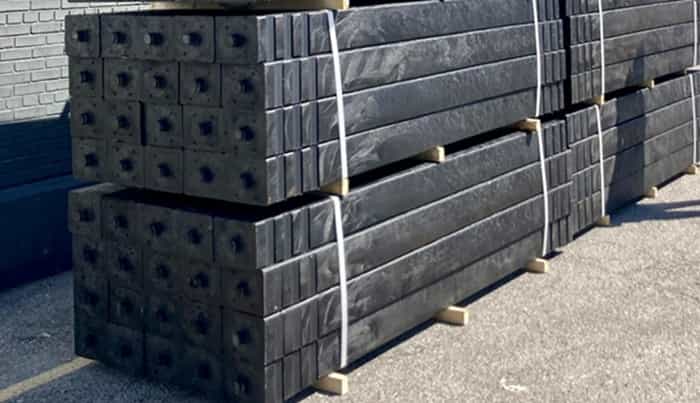
A major industrial breakthrough is shifting this paradigm. A newly announced recycling alliance between industrial materials innovator Triton Group, turf manufacturer TenCate Americas, and circular solution facilitator iSustain is turning discarded turf into high-performance composite railroad ties. By connecting heavy plastic waste directly with Class 1 railroad infrastructure demands, this initiative proves that large-scale recycling succeeds when engineered for robust end markets. composite railroad ties
The Supply-Demand Paradox in Industrial Recycling
For decades, the primary hurdle in recycling complex post-consumer plastics has not been a shortage of raw material. Millions of pounds of retired synthetic grass accumulate continuously as fields reach the end of their typical 8- to 10-year lifespan. Instead, the fundamental bottleneck has always been consistent market demand for low-grade or mixed recycled resins.
Without a commercial product that consumes massive volumes of post-consumer plastic, recovery initiatives frequently stall or rely on subsidized short-term projects.
By matching TenCate’s stream of retired turf with Triton’s heavy-duty manufacturing line, the partnership establishes a predictable, closed-loop supply chain that transforms difficult waste into long-lasting infrastructure assets. composite railroad ties
Scaling Up: Millions of Pounds Diverted from Landfills
The scale of the initiative represents one of the largest closed-loop recycling commitments in the synthetic turf industry to date. Under the five-year agreement:
-
Monthly Processing Target: Triton will build capacity to process up to 160 tonnes (approximately 350,000 pounds) of recovered turf plastic every month.
-
Five-Year Cumulative Impact: Over five years, total processing will reach up to 9,600 tonnes (21 million pounds) of recovered plastic. composite railroad ties
-
Field Diversion: This volume equals the plastic harvested from 600 to 800 full-sized synthetic turf fields.
-
Infrastructure Output: The recycled polymer will yield more than 300,000 composite railroad ties.
┌─────────────────────────────────────────────────────────┐
│                 5-YEAR IMPACT METRICS                   │
├───────────────────────────┬─────────────────────────────┤
│ Recovered Plastic Volume  │ 9,600 Tonnes (21M lbs)      │
├───────────────────────────┼─────────────────────────────┤
│ Diverted Turf Fields      │ 600 – 800 Fields            │
├───────────────────────────┼─────────────────────────────┤
│ Composite Ties Produced   │ 300,000+ Units              │
├───────────────────────────┼─────────────────────────────┤
│ Creosote Chemical Avoided │ ~3.7M Liters (1M Gallons)   │
├───────────────────────────┼─────────────────────────────┤
│ Hardwood Trees Saved      │ ~75,000 Mature Trees        │
└───────────────────────────┴─────────────────────────────┘
Clean Engineering: Pure Polyethylene, Zero Infill Contamination
A critical engineering challenge when processing retired turf is isolating the plastic blades and backing from infill materials. Synthetic fields rely on hundreds of thousands of pounds of granulated rubber and sand to provide cushioning and stability. If left unseparated, rubber particles compromise the structural integrity of molded composite ties. composite railroad ties
To guarantee performance standards, the recovery process uses a strict multi-stage decontamination workflow:
-
Field Separation: TenCate recovers fields on-site, mechanically separating the sand and rubber infill before baling the turf fibers and backing.
-
Industrial Refining: Baled turf is shipped to Triton’s facility, where proprietary equipment removes 100% of residual rubber, sand, and backing particles.
-
Resin Pelletization: The remaining clean polyethylene (PE) is processed into a high-density, post-consumer resin pellet.
-
Structural Molding: The clean resin is combined with glass fiber reinforcement to create the final Triton Tie. composite railroad ties
Dual Environmental Benefits: Eliminating Creosote and Preserving Forests
Traditional railway tracks rely on hardwood ties treated with creosote—a heavy coal-tar derivative used to prevent fungal decay and insect damage. Creosote poses long-term toxicological concerns for soil and groundwater surrounding rail lines.
Replacing 300,000 wooden ties with glass-reinforced composite ties yields major ecological benefits:
-
Chemical Reduction: Avoids the use of nearly 3.7 million liters (approximately 1 million gallons) of creosote chemical treatment.
-
Forest Conservation: Preserves roughly 75,000 mature hardwood trees that would otherwise be harvested for timber ties.
-
Operational Longevity: Composite ties do not rot, absorb moisture, or degrade under harsh weather, remaining embedded in track beds for decades. composite railroad ties
+-------------------------------------------------------------------+
|                  TRADITIONAL VS. COMPOSITE TIES                   |
+----------------──────────┬───────────────────┬────────────────────+
| Feature                  | Traditional Wood  | Triton Composite   |
+----------------──────────┼----------------───┼────────────────────+
| Preservative Required    | Toxic Creosote    | None               |
| Moisture Resistance      | Low (Decays)      | High (Impermeable) |
| Hardwood Consumption     | High (~1 tree/4)  | Zero               |
| Recycled Content         | 0%                | High Post-Consumer |
| AREMA Compliance         | Standard          | Meets or Exceeds   |
+----------------──────────┴───────────────────┴────────────────────+
Meeting AREMA Standards for Rail Networks
Railroads demand extreme mechanical durability. Ties must endure heavy axle loads, continuous vibration, severe thermal expansion, and harsh environmental exposure without warping or cracking.
Engineered as a direct one-for-one replacement for standard wood ties, the Triton Tie meets or exceeds American Railway Engineering and Maintenance-of-Way Association (AREMA) standards. Having secured approvals across major U.S. rail operators, these composite ties can be installed directly into existing rail infrastructure using standard maintenance equipment and fasteners.
The Road Ahead: Operational Timeline and Circular Future
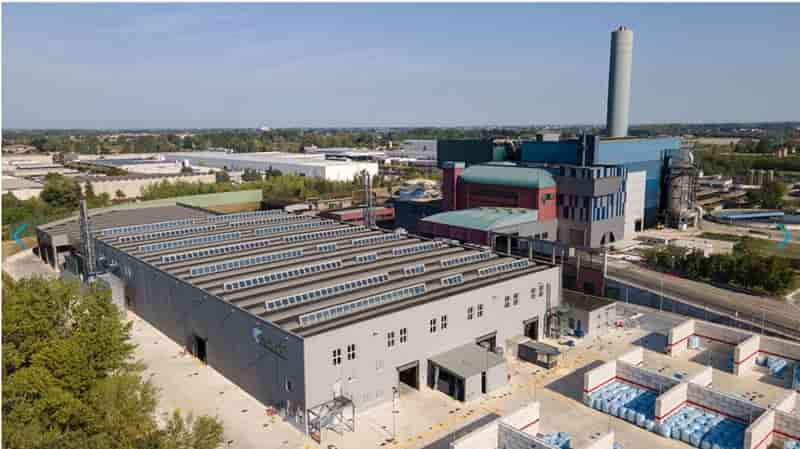
Triton is currently installing specialized processing equipment at its facility, targeting April 1, 2027, to begin commercial processing of TenCate’s recovered turf plastic.
Meanwhile, TenCate continues to expand domestic recovery pathways in North America. In addition to supplying plastic for composite ties, TenCate is actively refining methods to reuse recovered rubber infill and reincorporate recycled polymers back into next-generation turf products. composite railroad ties
By uniting materials science, turf manufacturing, and recycling logistics, this cross-industry collaboration offers a practical blueprint for turning challenging industrial waste into vital national infrastructure.
More…