Critical PVC Waste Crisis Threatens China’s 2050 Climate Goals
PVC waste recycling
Critical PVC Waste Crisis Threatens China’s 2050 Climate Goals
Managing the massive lifecycle impacts of industrial and consumer plastics remains one of the defining environmental challenges of our era. Among all common commodity polymers, polyvinyl chloride presents unique complications. Because it contains high levels of chlorine, its end-of-life pathways carry intensified ecological and human health hazards compared to alternative materials. Recent scientific modeling evaluates how regional management strategies across mainland China could fundamentally reshape these trajectories over the coming decades. PVC waste recycling
The Expanding Scale of Polyvinyl Chloride Discard Streams
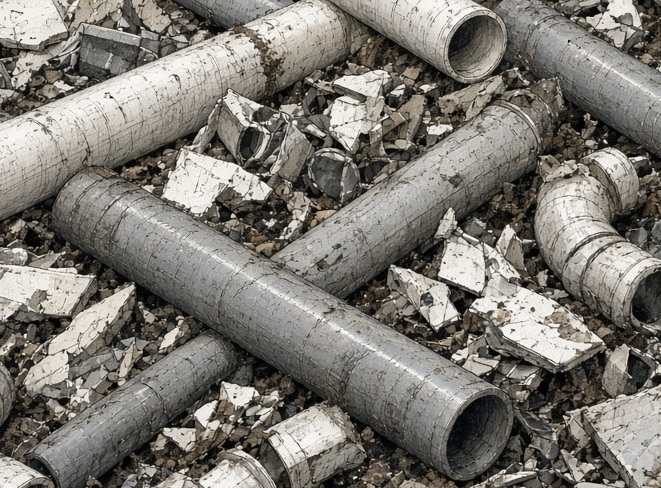
As the world’s leading producer and consumer of numerous industrial compounds, China generates immense quantities of polyvinyl chloride discarded materials. Groundbreaking integrated material flow models and life cycle assessments mapping all 31 mainland provinces reveal the sheer magnitude of the challenge. In the baseline year of 2020, the nation processed roughly 11.51 million tonnes of this waste stream. PVC waste recycling
Projections indicate that this volume will surge dramatically, reaching an estimated 20.59 million tonnes annually by 2050, compounding at an average yearly rate of 2.70 percent. A breakdown of these discards highlights distinct structural sources. Construction-related materials dominate the inventory, accounting for 51.70 percent of the total stream. Household discards follow closely at 25.83 percent, while industrial applications make up 14.30 percent. Agricultural uses and medical supplies account for the remaining 6.58 percent and 1.59 percent, respectively.
Contamination from construction sites often restricts the practicality of conventional processing methods, compounding the urgency for advanced systemic overhauls. PVC waste recycling
Strategic Shifts in Material Flows and Recovery Pathways
To address these vulnerabilities, researchers evaluated scenarios where provincial recycling and recovery rates experience massive optimization. Under the modeled projections, recovery rates for construction and household discards scale up from a meager 11.80 percent in 2020 to an ambitious 80.00 percent by 2050. Agricultural recovery targets climb even higher, moving from 80.00 percent to 96.00 percent, while medical-grade materials transition entirely toward energy-recovery incineration. PVC waste recycling
These coordinated shifts yield profound ecological impacts. Mismanaged refuse volumes drop sharply from 1.07 million tonnes down to just 0.24 million tonnes—marking a 77.53 percent reduction. Simultaneously, material leakage into open environments decreases from 9.46 million tonnes to 4.22 million tonnes. PVC waste recycling
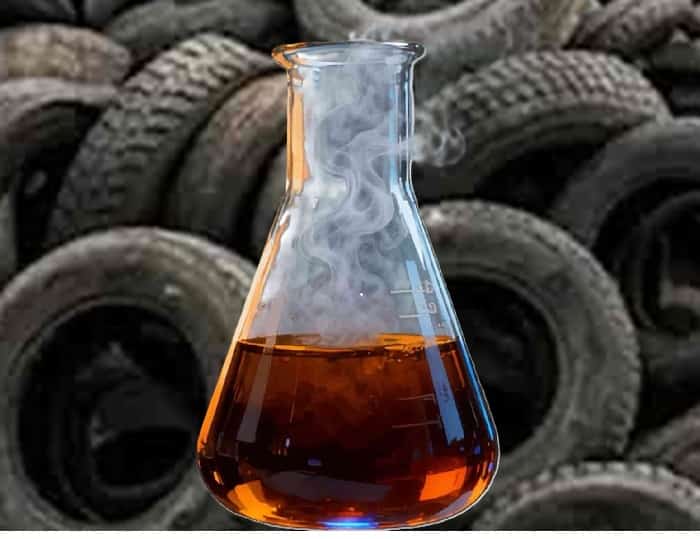
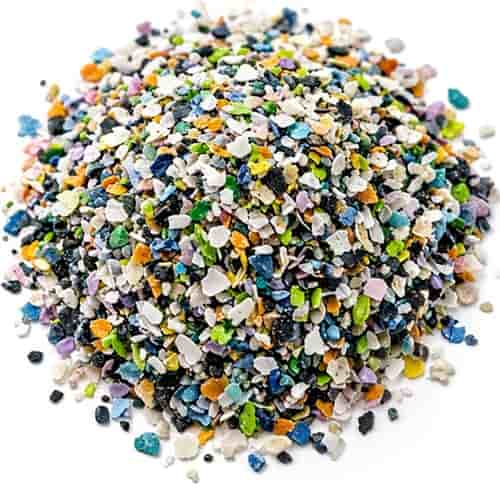
By upgrading treatment protocols, the total volume successfully converted into regenerated resources—including high-purity particles, pyrolysis oil, sodium chloride, coke, and specialized synthesis gas—jumps from 1.84 million tonnes to 16.13 million tonnes, representing a massive 778.61 percent surge. PVC waste recycling
Mechanical Versus Chemical Solutions in a Decarbonizing Grid
The assessment indicates that mechanical processing consistently delivers the lowest environmental footprint among current treatment methodologies. However, emerging chemical recycling routes are gaining viability. The overall footprint of chemical processing shrinks significantly as regional power grids transition away from fossil fuels toward cleaner energy sources. PVC waste recycling
Because provincial variations dictate local collection efficiencies, energy matrices, and infrastructure readiness, localized policy frameworks will prove essential. Tailored provincial strategies ensure that infrastructure investments match regional waste generation profiles, turning systemic vulnerabilities into vital components of a broader national circular economy. PVC waste recycling
The Brutal Truth Behind Plastic Recycling Technologies Performance
More…