Recycled polyester – Turkish yarn leader Göliplik is entering the flushable wipes market with a new Andritz neXline production line, focusing on sustainable, biodegradable nonwovens. Start-up expected in 2027. 30-04-2025 - Archive
Recycled polyester
Crude Oil Prices Trend

Low-Cost Hydrogen: Scientists Split Water Using Urea
A breakthrough in clean hydrogen production may be on the horizon, thanks to researchers at the University of Alberta (U of A) in Canada. The team has discovered a way to split water into hydrogen and oxygen using sunlight, nanowires, and an inexpensive chemical—urea. If scaled up, this innovation could help deliver a clean, portable, and energy-dense fuel for the future. Recycled polyester
Why Hydrogen Matters
Hydrogen has long been seen as a sustainable alternative to fossil fuels, poised to play a major role in the world’s energy future. However, producing hydrogen typically involves solar panels generating electricity, followed by energy-intensive water electrolysis—a costly and inefficient process.
A Simpler, More Efficient Approach
Led by Professor Karthik Shankar, the U of A team developed a direct sunlight-driven method to split water molecules, minimizing energy loss. Their process involves converting urea, a cheap and abundant chemical found in fertilizers and urine, into a material called carbon nitride. This is done through a controlled heating process called thermal condensation polymerization.
Carbon nitride excels at absorbing sunlight, energizing electrons and creating electron-hole pairs. Typically, these pairs would quickly cancel out, but by introducing titanium dioxide—another affordable material—the researchers created a junction that keeps the electrons and holes separate long enough to drive useful chemical reactions. As a result, hydrogen gas (H₂) and oxygen gas (O₂) are produced efficiently. Recycled polyester
Works Even on Cloudy Days
A major advantage of this system is its resilience in cloudy conditions. Thanks to nanowires that capture sunlight from various angles, the process maintains high efficiency even under diffuse light. Unlike traditional solar setups, it also eliminates the need for bulky batteries, as hydrogen itself acts as a natural energy storage medium.
Moreover, this method is more eco-friendly than conventional silicon solar panel production, which is energy-intensive and polluting. By using common, low-impact materials and avoiding extreme temperatures, the new system reduces environmental harm.
Future Prospects
The U of A team believes this technology could be commercially viable within three to five years. By producing hydrogen directly from sunlight, it promises significantly greater energy efficiency compared to traditional methods.
This innovation could also boost energy independence, as most of the world’s silicon currently comes from China and Russia. Countries could now use their own resources for clean energy production. Recycled polyester
Looking ahead, the team is exploring the use of melamine and even adapting the process for methanol-based hydrogen production. Their detailed findings are published in the Journal of the American Chemical Society.

UNIFI Named to Fast Company’s 2025 World’s Most Innovative Companies List
UNIFI® Inc., a global leader in sustainable textiles, has been named to Fast Company’s prestigious 2025 list of the World’s Most Innovative Companies in the Fashion and Apparel sector. This recognition celebrates UNIFI’s groundbreaking work in promoting recycled polyester and driving the circular economy in fashion.
“Being recognized as one of Fast Company’s Most Innovative Companies is a tremendous honor,” said Eddie Ingle, CEO of UNIFI. “As polyester remains the most widely used fiber worldwide, industries urgently need sustainable solutions. Through our REPREVE® brand, we aim to make recycled and circular products the standard, building a more sustainable future.” Recycled polyester
At the heart of UNIFI’s innovation is its Textile Takeback™ program, which transforms post-industrial and post-consumer fabric waste into ThermaLoop™, a revolutionary circular polyester and insulation material. This process advances sustainability in fashion by reducing the dependence on virgin materials and minimizing environmental impact.
So far, UNIFI has recycled the equivalent of 950 million T-shirts’ worth of textile and yarn waste. The company is on track to reach its ambitious goal of recycling the equivalent of 1.5 billion T-shirts by fiscal year 2030. Additionally, UNIFI plans to divert 50 billion plastic bottles from landfills by the end of 2025 and cut greenhouse gas emissions by 30% by 2030, solidifying its position as a sustainability leader in the textiles industry.
Brendan Vaughan, Fast Company’s Editor-in-Chief, highlighted the significance of this year’s honorees. “Our 2025 list features companies that are not just innovating — they are reimagining entire industries. Whether through advanced AI or bold new business models, these innovators are shaping the future.” Recycled polyester
UNIFI’s recognition as a top innovator underscores its vital role in driving sustainability and innovation within fashion and apparel. As consumers and industries demand greener alternatives, UNIFI’s commitment to sustainable manufacturing and the circular economy sets a powerful example for the future.

PP Resin Prices Hit Historic Lows Amid Sluggish Demand
Polypropylene (PP) buyers now have a prime chance to rebuild inventory at significant discounts. After months of lackluster sales, resin prices have hit their lowest levels in years, according to Resinsights Weekly, powered by the Plastics Exchange.
Throughout the week of April 14, buyer sentiment stayed negative. Both polyethylene (PE) and PP prices hovered steady or dipped slightly, with no major restocking efforts seen. A surplus of upstream resin supply brought discounted spot railcar opportunities to market, including both prime and off-grade materials. Recycled polyester
Meanwhile, international dynamics continue to pressure the resin trade. Although a 90-day tariff reprieve supports some export demand, weakening global prices and a stronger push for orders are keeping buyers cautious. A softer US dollar has slightly improved export competitiveness.
Adding to the pressure, escalating US-China tariffs—up to 245% on Chinese goods and 125% on US exports—are creating shipping delays. Backlogs at Chinese ports are expected to cause raw material shortages and logistics bottlenecks within the next 45 days, fueling further market uncertainty.
PE trading also remained muted. Most commodity grades held steady, but low-density and linear-low-density grades slipped by another half-cent, as buyers continued cautious, need-only purchasing. Recycled polyester
Amcor and Berry Global Merge: European Commission Gives Final Green Light
In a major industry breakthrough, the European Commission (EC) has granted unconditional approval for the merger of Amcor plc and Berry Global Group. This marks the final regulatory milestone for the highly anticipated deal, according to a joint statement from the companies.
With the EC’s endorsement secured, Amcor and Berry Global are now full speed ahead toward completing their merger. The companies expect to officially close the transaction on April 30, 2025, pending the final satisfaction or waiver of customary conditions.
The EC’s unconditional approval is a strong vote of confidence, confirming that the merger poses no competition concerns within the EU. This pivotal decision clears the path for two packaging powerhouses to unite, creating a global leader ready to redefine the future of packaging solutions. Recycled polyester
Amcor and Berry Global, both celebrated for their innovation, sustainability efforts, and customer-first approach, are set to combine strengths in ways that promise new opportunities across industries. Their expanded global footprint and enhanced capabilities position them to deliver even greater value to customers and shareholders alike.
This merger represents a bold step forward in the evolution of the packaging industry. With regulatory hurdles behind them, Amcor and Berry Global are ready to write the next exciting chapter — together. Recycled polyester
Stay tuned for more news as these two industry giants officially join forces and set a new standard for packaging excellence.
UpSolv Secures FDA Approval for Recycled Polystyrene in Food Packaging
Canadian recycling innovator UpSolv, formerly known as Polystyvert, has achieved a major milestone. The U.S. Food and Drug Administration (FDA) has issued a No Objection Letter (NOL) confirming that UpSolv’s proprietary recycling process is safe for producing recycled polystyrene (rPS) intended for direct food contact applications, such as yogurt cups and other types of packaging. Recycled polyester
A New Standard in Polystyrene Recycling
UpSolv’s technology relies on a unique physical recycling method: dissolving polystyrene waste in a solvent and then purifying it. This method effectively regenerates the material while maintaining its integrity. Unlike traditional recycling techniques that may degrade the quality of plastics, UpSolv’s approach ensures that the recycled polystyrene meets the high standards necessary for direct food use.
Proven at the Industrial Level
The company had already demonstrated the effectiveness of its process at an industrial scale. They successfully produced yogurt cups from polystyrene recovered from manufacturing scraps. These containers featured a single-layer structure made entirely from recycled material and passed stringent migration and challenge tests — all without relying on an ABA (virgin-recycled-virgin) layered design, a common strategy used to ensure safety in recycled plastics. Recycled polyester
A Major Boost for the Circular Economy
“This FDA recognition of our proprietary dissolution and purification process is a significant step toward the commercialization of high-quality, food-grade recycled HIPS,” said Nicolas Cottenye, Vice President of Research and Development at UpSolv. He emphasized that, with growing regulatory pressures to increase recycled content in packaging, this achievement signals to dairy supply chain partners that a closed-loop system is not just possible, but achievable today.
Advanced Contaminant Removal Capabilities
One of the standout features of UpSolv’s process is its ability to selectively remove a wide range of contaminants. These include solid residues like labels and mixed plastics, as well as soluble impurities such as colorants, pigments, odorants, and fillers. Importantly, the process also preserves the essential functional additives that are critical for high-performance applications. Recycled polyester
Looking Ahead
With FDA approval in hand, UpSolv is poised to lead the way in sustainable food packaging solutions, offering a practical, high-quality option for manufacturers looking to meet recycled content targets without compromising safety or performance.
Göliplik Invests in Andritz neXline to Produce Flushable Wipes and Sustainable Nonwovens
Leading Turkish yarn manufacturer Göliplik Şeremet Tekstil Sanayi ve Ticaret A.Ş. is stepping into the future of sustainable products. The company has announced a major investment in an Andritz neXline wetlace production line, aiming to produce flushable wipes and expand into the sustainable nonwovens market.
Göliplik’s Strategic Move Toward Eco-Friendly Hygiene Products
With its new state-of-the-art production line, Göliplik will manufacture high-quality roll goods made from natural and biodegradable fibers.
These flushable wipes not only offer excellent tensile strength but are also designed to dissolve quickly in sewage systems, making them an ideal solution for eco-friendly hygiene products. Recycled polyester
This move aligns perfectly with Göliplik’s strong focus on sustainability and innovation, reinforcing its role as a forward-thinking player in the textile and hygiene markets.
Advanced Technology for Biodegradable Wipes Production
The Andritz neXline wetlace line combines several advanced technologies, including:
- Stock preparation
- Approach flow system
- Wetlaid forming
- Hydroentanglement
- Drying technologies
This integrated system ensures efficient production of flushable, biodegradable wipes that meet rising global standards for sustainability. The new line is expected to be operational in the first half of 2027. Recycled polyester
Leadership Vision for the Future of Nonwovens
Commenting on the investment, Erdogan Seremet, owner and president of Göliplik, said:
“By investing in this new production line for flushable wipes, we are entering the promising nonwovens market. With Andritz as a leading technology supplier at our side, we are convinced that we can successfully expand our business, benefiting from Andritz’s expertise and continuous developments.”
About Göliplik: A Tradition of Quality and Innovation
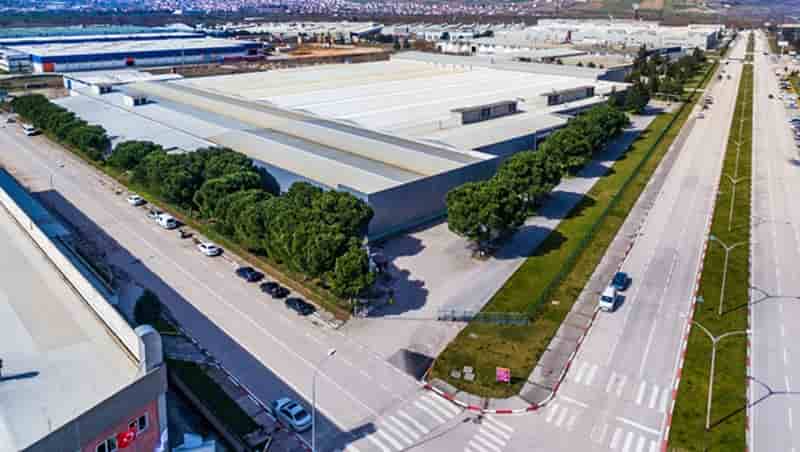
Founded in 1987 and headquartered in Bursa, Turkey, Göliplik Şeremet Tekstil Sanayi ve Ticaret A.Ş. operates four facilities specializing in blended yarns. Now, with this strategic investment, the company is diversifying into the growing market for sustainable nonwovens and eco-friendly hygiene solutions. Recycled polyester
Göliplik’s expansion marks a significant step toward offering innovative, environmentally responsible products that meet the demands of today’s conscious consumers.