Revolutionary Single-Atom Plastic Enzyme Breakthrough Shreds Global PET Waste
Revolutionary Single-Atom Plastic Enzyme Breakthrough Shreds Global PET Waste
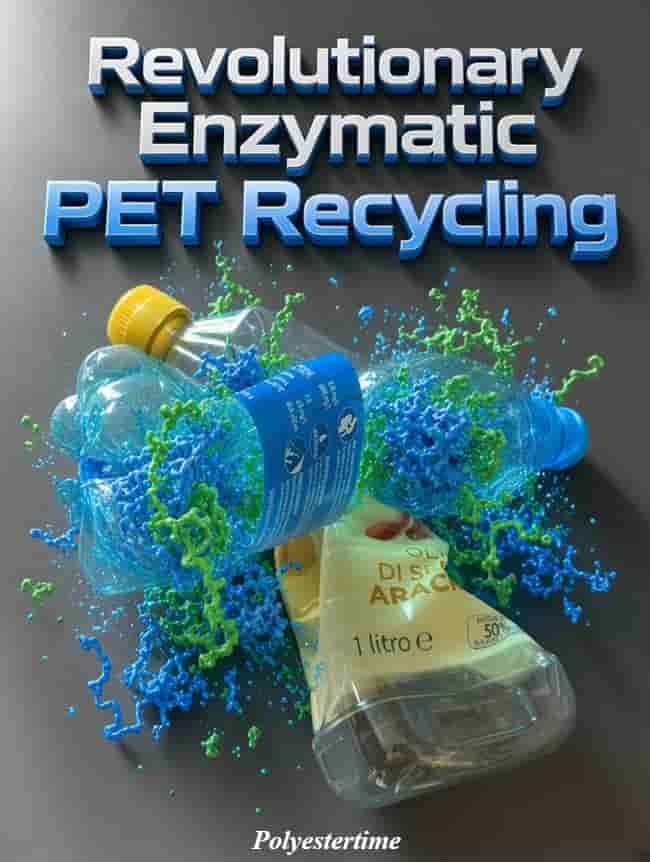
Humanity generates over 350 million tons of polyethylene terephthalate (PET) plastic waste annually. From single-use water bottles to synthetic polyester garments, PET dominates consumer manufacturing while clogging landfills, oceans, and municipal incinerators. While biological recycling using plastic-degrading enzymes—known as PETases—has long offered a green alternative, bioengineers have hit a biological brick wall for years.
That wall has officially crumbled. Researchers at The Australian National University (ANU) have introduced a precise, single-atom substitution into PET hydrolases. By altering just one atomic coordinate inside the enzyme, the team doubled the speed at which it breaks down PET plastic without making it melt under commercial recycling temperatures.
Overcoming the Catalytic Activity vs. Thermal Stability Barrier
Engineered proteins operate under strict evolutionary tradeoffs. Traditionally, if bioengineers mutated an enzyme using the standard 20 naturally occurring amino acids to make it process plastic faster, the molecule lost its structural rigidity. Conversely, making the enzyme heat-stable enough to survive industrial recycling vessels slowed its catalytic rate down so much that it became commercially unviable.
As lead researcher Dr. Elwy Abdelkader explained, protein engineers routinely hit a ceiling where increasing activity compromises stability, and vice versa. The ANU team broke through this limit by bypassing nature’s built-in building blocks.
How a Single Atom Doubles Enzyme Speed
The breakthrough lies in a technique called site-selective isosteric engineering. The researchers targeted a specific amino acid site—position 185 on the enzyme—and swapped the conventional amino acid, tryptophan, for a synthetic variant called azatryptophan.
Chemically and structurally, tryptophan and azatryptophan are nearly identical twins. The key difference sits at the atomic level: a single carbon-hydrogen (CH) pair is replaced by a single nitrogen (N) atom.
This subtle modification altered the local side-chain dynamics and solvent exposure of the enzyme without destabilizing its core framework. The resulting variant, termed an “azaPETase,” breaks down solid PET plastic in half the time of previous variants while preserving full thermal resistance.
Accelerating Testing with the PETra Fluorescent Assay
Testing solid plastic degradation in a laboratory is notoriously slow. Because solid PET resists dissolving in liquid, legacy measurement assays require hours or days to evaluate how fast an enzyme works.
To speed up their research, the ANU team created a liquid assay called PETra. PETra uses a soluble substrate that glows under fluorescence as the enzyme digests it. This innovation reduced testing timelines from days to minutes, allowing the researchers to screen large libraries of engineered enzymes rapidly and accurately predict how they will perform on real-world solid plastic. Single-Atom Plastic Enzyme
Beyond Recycling: The Future of Synthetic Biology
As co-author Professor Thomas Huber noted, expanding the genetic toolkit beyond nature’s 20 amino acids opens vast possibilities. Rather than introducing dozens of broad genetic mutations that run the risk of breaking a protein’s structure, bioengineers can now tune enzymes with atomic precision.
Because synthetic azatryptophans can be produced cheaply via enzymatic processes, scaling up these upgraded enzymes for industrial applications is economically feasible. Looking past global plastic waste management, this exact single-atom engineering strategy can be applied across green manufacturing, biofuel production, and targeted biopharmaceuticals.
More…