Breakthrough in Mixed Textile Recycling: High-Purity PET Recovery Unlocks Circular Fashion
Breakthrough in Mixed Textile Recycling: High-Purity PET Recovery Unlocks Circular Fashion
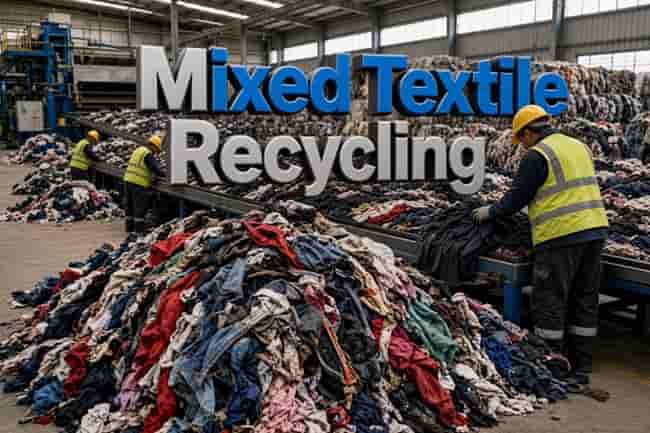
For years, mixed textile recycling has remained one of the most stubborn bottlenecks in the global circular economy. While clear polyethylene terephthalate (PET) beverage bottles are routinely washed, shredded, and spun into new fibers, post-consumer garments present a far messier reality. Modern clothing is rarely made from a single pure polymer; instead, wardrobes are filled with polyester-cotton blends, elastane-infused stretch fabrics, chemical finishes, and synthetic dyes that disrupt conventional recycling lines.
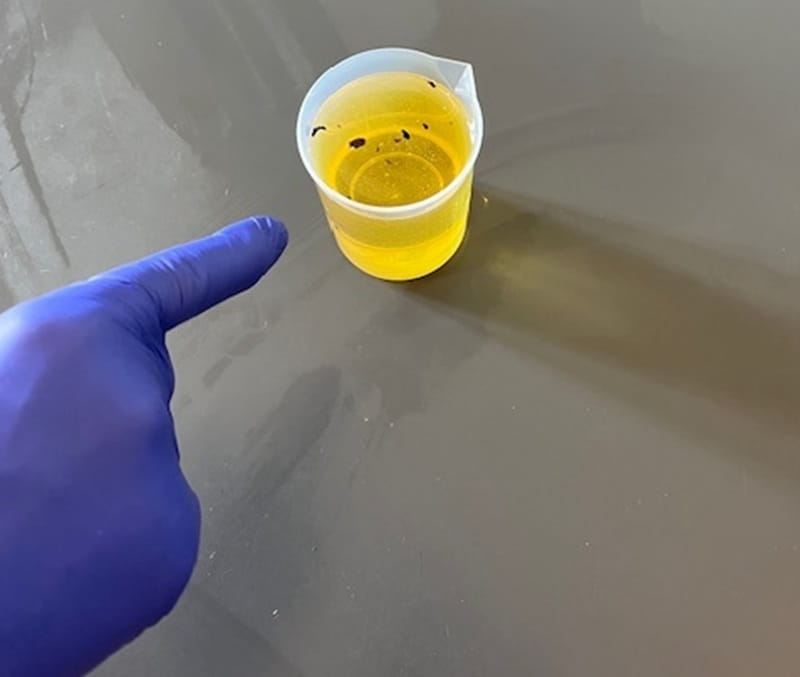
When recyclers attempt to chemically break down blended garments, non-polyester fibers often degrade alongside the synthetic fraction, creating a dark, contaminated chemical soup that is prohibitively expensive to purify. Now, advances in selective depolymerization—combining controlled thermal pretreatment with methanolysis—demonstrate how laboratories can isolate high-purity PET building blocks directly from complex fabric blends without sacrificing material quality. Mixed textile recycling
Why Are Blended Textiles So Hard to Recycle?
To understand why mixed textile recycling lags behind rigid packaging recovery, it helps to examine what happens inside a chemical reactor. Mechanical recycling—shredding fabric and melting it into pellets—rapidly shortens polymer chains and cannot separate intertwined cotton and polyester yarns. Chemical recycling solves this by breaking polymers down to their original molecular building blocks, or monomers, which can then be repolymerized into virgin-grade resin.
However, standard depolymerization processes struggle with real-world garment compositions:
-
Cross-Contamination from Natural Fibers: Cotton, wool, and viscose react under heat and chemical solvents, generating sugars, char, and organic acids that foul catalysts and discolor the recovered polyester monomer.
-
Dyes and Finishing Agents: Pigments, flame retardants, and water-repellent coatings introduce trace impurities that interfere with subsequent repolymerization.
-
Costly Downstream Separation: If a chemical reaction breaks down every component in a blended shirt simultaneously, separating the target polyester monomer from dozens of byproducts consumes excessive energy and solvents.
How Selective Thermal Pretreatment Transforms PET Methanolysis
Researchers at Zhejiang University recently demonstrated an elegant solution to this selectivity problem in an open-access Nature Communications study. Rather than forcing a single chemical reaction to digest an entire blended garment at once, the team introduced a targeted thermal pretreatment step prior to methanolysis.
During pretreatment, mixed textile waste is heated under controlled conditions that selectively alter the structure of non-PET components—such as cotton—without destroying the polyester backbone. Once the interfering fibers are stabilized and modified, the treated fabric undergoes methanolysis, a chemical process that uses methanol to cleave PET polymer chains into dimethyl terephthalate (DMT), a foundational polyester monomer. Mixed textile recycling
Under reported laboratory conditions, this two-stage sequence delivered striking performance metrics:
-
High Monomer Yield: The process recovered 91 percent of the available DMT from blended textile substrates.
-
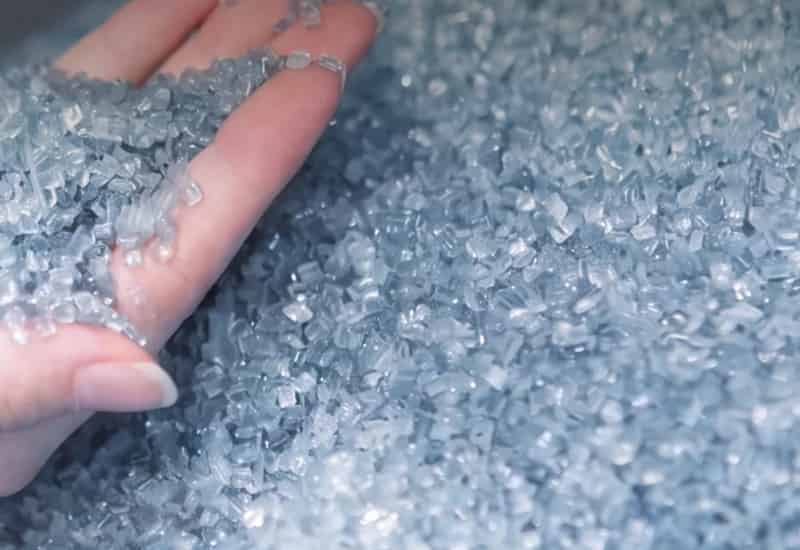
Virgin-Grade Purity: Recovered DMT achieved a purity exceeding 99.92 percent, meeting the strict chemical thresholds required to manufacture new, high-performance polyester fibers.
-
Competitive Economics: Preliminary techno-economic modeling comparing the selective route against conventional virgin production suggested the pathway could be economically viable under defined operating assumptions.
By decoupling fiber alteration from depolymerization, selectivity becomes the primary driver of feasibility—preventing complex byproduct mixtures before they ever form.
Urgent Industry Momentum: Europe’s Circular Textile Push
This laboratory progress arrives at a decisive moment for global textile policy and waste management. Across Europe, regulatory pressure and fresh waste data are forcing brands and recyclers to move rapidly beyond bottle-to-fiber downcycling toward true textile-to-textile circularity.
On November 12, 2026, Eurostat figures reported by Eunews revealed that the European Union generated 2.3 million tonnes of textile waste in 2024, with Italy leading the bloc in both total volume produced (441,736 tonnes) and materials sent for treatment and recycling (280,680 tonnes). Despite high collection volumes in leading hubs, vast quantities of blended garments still end up incinerated or landfilled due to limited chemical sorting and monomer recovery capacity.
Recognizing the widening gap between collection mandates and industrial processing, two major industry bodies—the European Apparel and Textile Confederation (Euratex) and Global Fashion Agenda (GFA)—announced a strategic alliance on November 13, 2026. The partnership aims to align European circular textile policy with real-world industrial investment, addressing structural hurdles such as predictable feedstock supply and upcoming Extended Producer Responsibility (EPR) schemes. Meanwhile, the European Commission’s Joint Research Centre (JRC) recently advanced technical proposals for EU-wide End-of-Waste criteria that explicitly recognize qualifying monomers recovered through polyester depolymerization, while sector stakeholders await the Commission’s upcoming Circular Economy Act presentation.
Together, these mid-November 2026 developments underscore a clear market reality: policy mandates alone cannot deliver circular fashion unless chemical recyclers can reliably convert messy, post-consumer fabric blends into certified monomers at scale. Mixed textile recycling
From Laboratory Validation to Commercial Scale: Key Hurdles Ahead
While achieving 99.92 percent DMT purity in a laboratory marks a major technical milestone, scaling mixed textile recycling from benchtop reactors to industrial plants requires overcoming several practical challenges:
-
Real-World Feedstock Variability: Laboratory trials often rely on well-characterized fabric blends. Commercial facilities must handle worn, soiled, multi-layered garments containing unknown ratios of elastane, nylon, buttons, zippers, and diverse dye formulations. Integrating automated near-infrared (NIR) sorting and hyperspectral fiber identification upstream will be essential to keep incoming feedstocks within optimal operating windows.
-
Solvent and Energy Recovery: Methanolysis relies on substantial volumes of methanol and thermal energy. Commercial viability depends on closed-loop solvent recovery systems that capture and reuse methanol with minimal loss, alongside heat integration between the pretreatment and depolymerization stages.
-
Valorizing Residual Fibers: Even when PET is cleanly extracted, facilities must establish profitable, low-carbon outlets for the thermally altered cotton or cellulosic residues left behind—whether as bio-based carbon materials, industrial fillers, or chemical feedstocks—to achieve full mass-balance circularity.
-
Repolymerization Verification: Beyond analytical purity numbers, yarn manufacturers require multi-cycle repolymerization trials proving that trace catalyst residues or dye fragments will not weaken tensile strength or alter dye uptake in finished garments. Mixed textile recycling
Key Takeaways for Recyclers and Sustainability Leaders
-
Selectivity Drives Economics: Treating non-PET fibers before methanolysis prevents complex degradation mixtures, dramatically lowering downstream purification costs.
-
Benchmark Lab Metrics: The Zhejiang University two-step method achieved a 91 percent DMT yield and greater than 99.92 percent monomer purity from mixed textile waste.
-
Policy Tailwinds Are Accelerating: With EU textile waste reaching 2.3 million tonnes annually and the Euratex–GFA alliance pushing for harmonized circular infrastructure, demand for scalable depolymerization technologies is rising sharply.
-
Full Mass Balance Matters: Commercial adoption hinges on closed-loop methanol recovery, automated pre-sorting, and productive uses for non-polyester fiber residues.
Frequently Asked Questions About Mixed Textile Recycling
What is dimethyl terephthalate (DMT) in polyester recycling? Dimethyl terephthalate is a core chemical building block (monomer) used to manufacture polyethylene terephthalate (PET) polyester. Recovering high-purity DMT from waste textiles allows manufacturers to produce virgin-quality polyester fibers repeatedly without degrading material strength.
How does methanolysis differ from mechanical textile recycling? Mechanical recycling physically shreds and melts textiles, which shortens polymer fibers and cannot separate blended fabrics like poly-cotton. Methanolysis uses methanol to chemically break PET down to the molecular level, removing dyes and contaminants so the resulting monomer can be rebuilt into new polymer.
Why is thermal pretreatment used before chemical recycling? Heating mixed textiles under controlled conditions modifies cotton and other non-polyester fibers first. This prevents those secondary fibers from breaking down into unwanted byproducts during methanolysis, resulting in cleaner, higher-purity PET monomer recovery. Mixed textile recycling
The Path Forward for Circular Textiles
Closing the loop on global apparel waste requires bridging the gap between academic chemistry and industrial supply chains. Selective depolymerization proves that blended garments no longer need to be treated as unrecyclable waste. As European policymakers refine End-of-Waste standards and industry alliances mobilize capital for textile-to-textile infrastructure, pairing smart pretreatment chemistry with automated fiber sorting offers a credible blueprint for turning discarded clothing back into high-value raw materials.
How Chemical Textile Recycling Innovation Unlocks Circular Performance Apparel
More…