How Norway’s Breakthrough Plastic Sorting Facility Proves Circular Recycling Works
Plastic sorting facility Norwayay
How Norway’s Breakthrough Plastic Sorting Facility Proves Circular Recycling Works
Across Europe, countries face a widening gap between ambitious recycling mandates and the physical infrastructure required to meet them. While household waste separation has become standard practice in many regions, sorting mixed plastic packaging into clean, reusable raw materials remains one of the biggest bottlenecks in the circular economy.
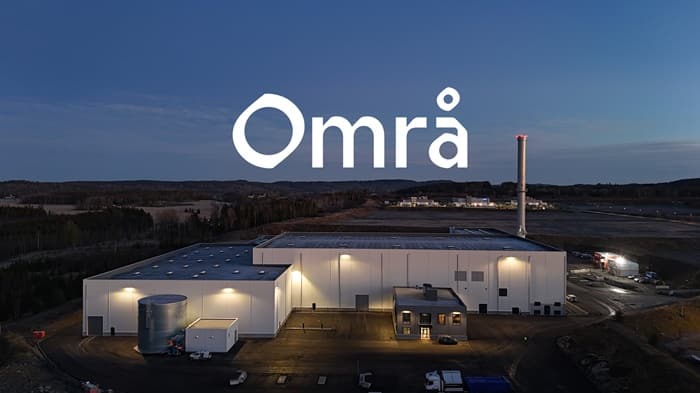
One year after launching operations in November 2025, Norway’s national plastic sorting facility—known as Områ—is proving that industrial-scale sensor sorting combined with coordinated producer responsibility can turn discarded packaging into high-grade feedstock. Developed as a joint venture between sensor-based sorting specialist TOMRA and Norwegian producer responsibility organization Plastretur, the facility has just marked its first anniversary with strong operational milestones and renewed policy momentum. plastic sorting facility Norway
Turning National Waste Streams into Ten Pure Polymer Fractions
During its first twelve months of regular operation, Områ received more than 55,000 tonnes of mixed plastic packaging waste. Spread across Norway’s population, that volume equals roughly 10 kilograms of plastic waste recovered per resident.
Rather than treating household plastics as low-value residual trash destined for energy recovery, the 13,000-square-meter facility uses advanced optical and sensor-based sorting lines to separate incoming bales from over 350 Norwegian municipalities. The system divides mixed waste into ten distinct mono-polymer fractions, including polyethylene (PE), polypropylene (PP), polyethylene terephthalate (PET), and polystyrene (PS).
Producing uniform polymer streams is critical for mechanical and chemical recyclers. When plastics are contaminated with different polymer types or food residues, the resulting recycled resin loses structural quality and cannot replace virgin plastics in demanding packaging applications. By isolating ten clean fractions at industrial scale, Områ creates reliable feedstock ready for closed-loop manufacturing. At full operating capacity across multiple shifts, the plant is engineered to handle up to 90,000 tonnes of plastic packaging every year. plastic sorting facility Norway
Bridging the Gap Between Household Bins and Mixed Waste
Despite Områ’s rapid ramp-up, Norway’s broader plastic numbers show why sorting infrastructure alone is only half the battle. According to recent national assessments from the Norwegian Environment Agency, Norway consumes at least 785,000 tonnes of plastic annually across products and packaging—roughly 141 kilograms per resident—with material recycling rates for plastic packaging hovering around 34 percent. plastic sorting facility Norway
That figure sits well below the European target of recycling 55 percent of plastic packaging by 2030. The core challenge lies upstream: currently, only about half of Norway’s consumed household plastic packaging is captured through curbside source separation. The remainder ends up in general residual waste bins, where it has historically been sent to incineration plants for energy recovery.
To capture that lost material, Områ has expanded its intake beyond source-separated municipal collections. The facility now also receives plastic fractions recovered from Norway’s two major mixed-waste sorting plants: ROAF near Oslo and IVAR near Stavanger. Integrating mixed-waste sorting with centralized polymer refinement demonstrates how countries can rescue valuable plastics even when households fail to separate every item at the bin. plastic sorting facility Norway
Industry Collaboration and Regulatory Momentum
As global brands and packaging leaders increasingly warn that systemic packaging challenges require coordinated infrastructure rather than isolated corporate pledges, Områ serves as a working model of value-chain alignment. Its ownership and operational structure brings together technology providers, producer responsibility governance, and industrial waste operators under one framework.
Throughout its inaugural year, the site has hosted roughly 60 delegations from industry, government, and international waste authorities. High-level visits—including officials from Norway’s Ministry of Climate and Environment—have focused on how centralized sorting hubs can shift plastics away from incineration and toward verifiable material circularity.
Meanwhile, European regulatory pressure continues to accelerate. With the European Commission advancing harmonized eco-design labeling standards in November 2026 under Regulation (EU) 2024/1781 alongside the Packaging and Packaging Waste Regulation (PPWR), packaging producers face strict mandates to design for recyclability and incorporate verified recycled content. Centralized facilities like Områ provide the missing link between eco-designed packaging on store shelves and high-purity recycled resins returning to manufacturers. plastic sorting facility Norway
What Områ’s First Year Means for Future Recycling Infrastructure
-
Centralized scale improves material purity: Sorting plastic packaging from over 350 municipalities in one automated hub yields ten uniform polymer streams that smaller local facilities cannot match economically.
-
Source separation needs mixed-waste backup: Relying solely on household sorting leaves nearly half of plastic packaging unrecovered; pairing curbside collection with mixed-waste sorting plants unlocks the volume needed to approach 2030 targets.
-
Value-chain partnerships de-risk investment: Aligning sorting technology specialists with producer responsibility organizations ensures steady feedstock supply on the input side and commercial offtake on the output side. plastic sorting facility Norway
More…