Ending Import Dependence: ADB Secures Powerful $50M Financing for Bangladesh Polyester Expansion
Bangladesh Polyester Industry Expansion
Ending Import Dependence: ADB Secures Powerful $50M Financing for Bangladesh Polyester Expansion
A Strategic Shift in Bangladesh’s Apparel Supply Chain
Bangladesh’s ready-made garment (RMG) sector has long served as an engine of national economic growth, driving export revenues and industrial development. However, a structural vulnerability has constrained the industry: a heavy reliance on imported synthetic raw materials. In a decisive move toward domestic self-reliance, the Asian Development Bank (ADB) signed a pivotal $50 million loan deal with Modern Syntex Limited (MSL), a key industrial unit of TK Group, to fund a major expansion of energy-efficient polyester chips manufacturing.
The financing facility directly addresses systemic bottlenecks across the country’s textile value chain. By backing MSL’s expansion, the funding allows the manufacturer to scale daily output while refinancing short-term local working capital obligations. This step represents more than a financial transaction; it marks a structural pivot toward strengthening local manufacturing ecosystems in South Asia.
Quadrupling Production at Mirsarai Economic Zone
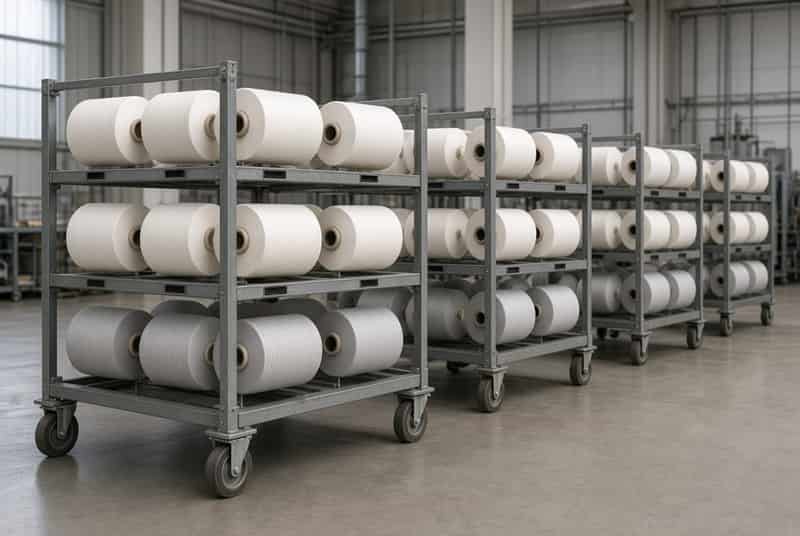
Under the expansion initiative, Modern Syntex will scale its current daily production capacity of polyester chips from 107 tonnes to an impressive 407 tonnes per day. The increased output will focus specifically on high-intrinsic viscosity (IV) polyester chips. These specialized chips are essential inputs for high-value textile and garment manufacturing, enabling local producers to supply advanced performance fabrics and synthetic apparel that previously required costly international sourcing.
The facility is strategically situated within the Mirsarai Economic Zone in Chattogram. Operating as Bangladesh’s first continuous polymerization facility, the site benefits from close proximity to primary deep-water port facilities and transport networks. This geographical positioning minimizes inland transit times and optimizes supply chain logistics for domestic textile mills operating across major manufacturing hubs. Bangladesh Polyester Industry Expansion
Strengthening Backward Linkages and Reducing Freight Pressure
According to ADB Country Director for Bangladesh Qingfeng Zhang, long-term development capital plays an indispensable role in building resilient domestic supply networks. By deepening backward linkages within the apparel ecosystem, Bangladesh can shorten order lead times for international clothing brands and decrease exposure to global ocean freight delays and currency fluctuations.
In recent years, global buyers have placed increasing emphasis on supply chain agility and speed-to-market. By replacing imported synthetic yarns and fibers with high-quality local inputs, textile mills across Chattogram and Dhaka can accelerate production cycles, increase margins, and remain competitive against regional manufacturing rivals.
Energy Efficiency and Green Building Targets
Beyond capacity expansion, the project incorporates strict environmental sustainability targets. The plant will integrate advanced, energy-efficient machinery designed to lower national energy consumption patterns. Estimates indicate the upgraded facility will save approximately 4,840 megawatt-hours (MWh) of electricity each year.
This operational efficiency translates into a reduction of roughly 2,222 tonnes of carbon dioxide equivalent emissions annually. Furthermore, Modern Syntex is actively pursuing Leadership in Energy and Environmental Design (LEED) Platinum certification for its factory infrastructure. Achieving this level of green certification aligns the facility with stringent international ESG standards demanded by global retail brands.
Socio-Economic Development and Gender-Inclusive Hiring
The capital injection extends noticeable benefits beyond industrial output. The project expects to generate approximately 100 new direct industrial jobs in the Chattogram region. Crucially, recruitment strategies emphasize inclusive hiring protocols to boost women’s participation in skilled manufacturing roles.
Modern Syntex Managing Director Abu Sufian Chowdhury underscored that incorporating green technologies alongside long-term capital builds durable value for the domestic economy. As Bangladesh prepares to transition out of Least Developed Country (LDC) status, establishing self-sustaining, energy-efficient manufacturing infrastructure becomes critical for sustaining economic momentum and safeguarding regional competitiveness.
Polyester Fiber Market Growth Faces a Sustainability Test
More…