Brilliant Breakthrough: Recycled PET Engineering Plastics Transform Automotive Design
Brilliant Breakthrough: Recycled PET Engineering Plastics Transform Automotive Design
The global automotive sector faces an unprecedented balancing act: reducing vehicle carbon footprints and meeting stringent environmental mandates while maintaining safety and durability. For decades, high-stress automotive components depended entirely on virgin polymers to achieve necessary structural rigidity. However, recent breakthroughs in material science are changing this narrative, proving that circularity and high performance can coexist in demanding applications.
A major milestone in this transition is the rollout of advanced recycled PET engineering plastics designed specifically for structural vehicle applications. Leading chemical innovator BASF recently expanded its Ultradur® portfolio with newly engineered glassfiber-reinforced PBT/PET compounds containing up to 30% post-consumer recycled (PCR) content. Known as the Ultradur® RC1 grade series, these materials offer automotive OEMs and Tier 1 suppliers a direct path toward circular manufacturing without sacrificing mechanical integrity.
Rethinking Packaging Waste for High-Value Engineering Solutions
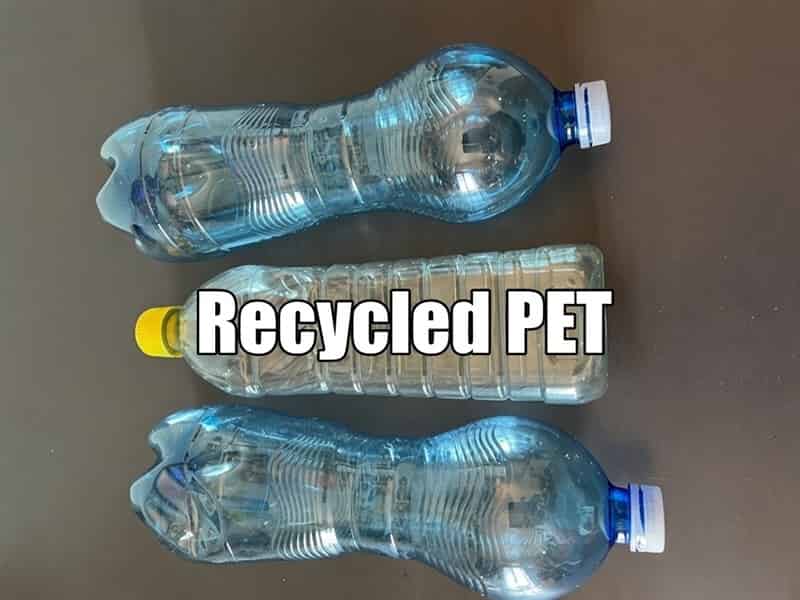
Traditional mechanical recycling in the plastics industry has long focused on closed-loop bottle-to-bottle recovery. While effective for beverage containers, this leave millions of tons of single-use post-consumer packaging waste underutilized or diverted to energy recovery incinerators. The development of high-tier recycled PET engineering plastics taps directly into these secondary packaging waste streams.
By upgrading post-consumer PET packaging waste into structural polybutylene terephthalate / polyethylene terephthalate (PBT/PET) blends, material engineers unlock high-value utility from resources previously considered low-grade. This approach prevents resource competition with established bottle recycling systems while diverting significant volumes of plastic away from landfill streams.
Patrick Wilke, Segment Manager for Transportation Engineering Plastics at BASF, highlighted the industry shift: “The automotive industry faces growing pressure to increase the use of recycled materials while continuing to meet the highest technical requirements. With Ultradur® RC1, we offer a solution that combines both: a significant share of post-consumer recycled content and a performance required for demanding engineering applications.” recycled PET engineering plastics
Technical Mastery: Matching Virgin Polymer Standards
A major obstacle in adopting recycled feedstocks within automotive manufacturing has been batch-to-batch inconsistency and degradation of mechanical strength during re-processing. Engineering components subjected to constant vibration, heat cycles, and mechanical strain demand unwavering physical traits. Standard recycled plastics often fall short in stiffness, tensile strength, or thermal stability.
The new RC1 grade portfolio overcomes this gap through specialized formulation and glassfiber reinforcement. These materials match the dimensional stability, rigidity, and processing characteristics of conventional virgin-grade PBT compounds. Engineers can implement these sustainable alternatives into existing injection molding equipment without requiring expensive tool modifications or process recalibrations.
Key Mechanical & Industrial Advantages
-
Structural Toughness: Reinforced glassfiber matrix options ensure high tensile strength for load-bearing vehicle brackets and structural housings.
-
Thermal Resistance: Superior thermal performance permits reliable operation near vehicle power systems and under-hood environments.
-
Drop-in Substitution: Matching processing rheology allows automotive molders to replace virgin polymers without compromising cycle times.
Target Applications Across Next-Gen Vehicle Architectures
The integration of recycled PET engineering plastics spans several structural and electrical components within modern internal combustion engine (ICE) vehicles and electric vehicles (EVs). As automakers migrate toward lightweight architectures and zonal electronic controls, high-grade thermoplastics are essential for housing sensitive control electronics and securing structural assemblies.
Typical application areas for these glassfiber-reinforced PBT/PET compounds include:
-
Mounting Brackets & Frames: Securing internal sensors, wiring channels, and auxiliary motors.
-
Protective Housings: Shielding electronic control units (ECUs), relays, and junction modules against environmental stressors.
-
Electrical Connectors: Offering precise dimensional control and electrical insulation across vehicle networks.
-
Structural Enclosures: Delivering lightweight rigidity for under-hood and cabin structural supports.
Decarbonization, Scope 3.1 Emissions, and Circular Compliance
Automakers are facing increasingly strict carbon reporting directives alongside regulatory frameworks requiring defined post-consumer recycled content in new vehicles. Merely optimizing exhaust emissions or battery efficiency is no longer sufficient; the manufacturing supply chain itself must decarbonize.
Incorporating PCR-PET feedstocks directly impacts Scope 3.1 emissions—which account for upstream purchased goods and services. By replacing fossil-based virgin polymers with up to 30% recycled content derived from domestic waste streams, manufacturers achieve measurable reductions in their product carbon footprint (PCF).
Furthermore, upcoming global regulations—such as the European Union’s updated End-of-Life Vehicles (ELV) directives—will mandate minimum recycled plastic thresholds in new automotive builds. Adopting verified RC1 material grades provides OEMs with a compliant pathway that simplifies regulatory reporting and accelerates broader corporate carbon neutrality targets.
The Path Ahead for Sustainable Automotive Polymers
The commercial expansion of recycled PET engineering plastics demonstrates that sustainability and high-performance engineering are no longer mutually exclusive. Advanced compounding technologies make it possible to redirect packaging waste into long-life, mission-critical automotive components.
As the automotive sector accelerates its shift toward electrified, software-defined mobility, demand for responsible material innovations will continue to rise. Solutions like BASF’s Ultradur® RC1 set a baseline for how global chemical manufacturers can close loop gaps, fulfill stringent technical criteria, and propel the industrial transition toward a circular economy.