Revolutionary Bio-Derived Hosiery Innovation Reshapes Eco Friendly Tights
Revolutionary Bio-Derived Hosiery Innovation Reshapes Eco Friendly Tights
The legacy legwear market is undergoing a fundamental structural transition toward renewable materials. Led by Italian hosiery house Oroblù—a flagship brand under the CSP International Fashion Group umbrella—the industry has achieved a significant technical milestone. By partnering with yarn innovators Fulgar and The Lycra Company, Oroblù launched its landmark Bio-Derived Sneakers Tights capsule collection, marking the first time a commercial legwear product relies on bio-based raw materials for 100% of its main structural yarns.
This development represents a major shift away from fossil-fuel reliance in technical stretch textiles. Historically, legwear production has depended heavily on petroleum-derived synthetic polymers like nylon 6,6 and standard elastane. The new capsule collection solves a long-standing supply chain challenge: replacing both the core body structure and the stretch elastane simultaneously with bio-derived alternatives, drastically lowering carbon emissions without compromising garment durability or stretch recovery.
The Engineering Behind Renewable Bio-Based Yarns
Achieving a fully renewable hosiery garment required an end-to-end multi-party collaboration across the supply chain. Traditional synthetic tights combine polyamide (nylon) for tensile strength and abrasion resistance with elastane for stretch. Up until now, sustainable market entries generally substituted only one of these components, leaving the underlying garment heavily bound to traditional petrochemical processing.
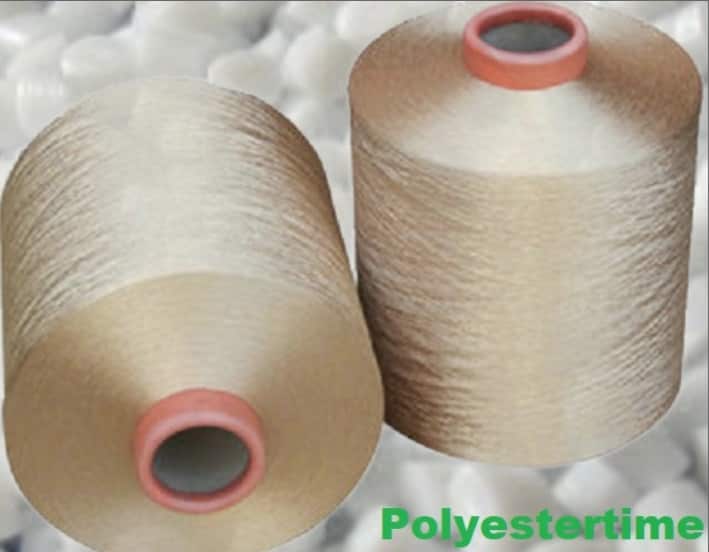
The core structural framework of the collection uses Fulgar’s Q-Geo, a bio-based polyamide engineered from industrial corn crops grown on land unsuitable for food or grain production. Approximately 40% of the harvest kernel is dedicated to extracting the renewable polymer feedstock, while the remaining 60% feeds livestock and food processing industries, maintaining agricultural efficiency.
Complementing the nylon fiber is Renewable Lycra EcoMade Fiber from The Lycra Company. Containing nearly 70% bio-derived content sourced from non-food industrial corn, this stretch fiber cuts the cradle-to-gate carbon footprint by up to 45% compared to petroleum-derived equivalents. Together, these dual materials establish a new operational benchmark for eco-conscious textile creation. bio-derived hosiery innovation
Key Technical Features of Bio-Derived Fabrics
Moving away from petrochemical bases usually raises questions regarding textile performance and durability. However, advanced biopolymer processing delivers distinct physical benefits over conventional nylon:
-
Enhanced Moisture Management: The Q-Geo yarn absorbs up to 50% more moisture than traditional synthetic polyamide, significantly elevating thermal comfort and breathability.
-
Rapid Evaporation: Rapid-drying mechanics reduce humidity retention, minimizing skin friction during long wear.
-
Inherent Flame Retardancy: Fire-resistant capabilities are engineered directly into the molecular structure without chemical treatments or topical additives.
-
High Tensile Durability: The yarn maintains the structural integrity, elasticity, and shape retention expected of luxury Italian legwear. bio-derived hosiery innovation
A Macro Trend Across Modern Textile Supply Chains
The timing of this hosiery launch coincides with broader fashion industry efforts to phase out petroleum-reliant synthetic fibers. Major international innovation collectives, such as Fashion for Good, have initiated global pilot projects to validate and scale bio-based elastane alternatives across global supply chains. Research from material development platforms highlights a surge in alternative feedstocks—ranging from agricultural byproduct sugars to plant protein derivatives—aimed at solving the synthetic microplastic issue at its source.
The collaboration between CSP International, Fulgar, and The Lycra Company illustrates how multi-tier industry alliances can bypass long R&D lead times. By combining fiber science expertise, yarn spinning facilities, and end-garment manufacturing, sustainable materials can transition from controlled lab environments directly onto store shelves.
Practical Design and Everyday Wearability
Beyond material science innovation, the capsule collection addresses modern functional footwear trends. Designed specifically to complement casual sneakers and bootie styles, the semi-opaque tights feature reinforced soles engineered to resist localized friction and premature wear.
By pairing high-level environmental performance with everyday functionality, this collection proves that renewable fashion can deliver superior everyday utility. As consumer demand for transparent supply chains continues to grow, bio-derived material integrations will quickly transition from premium capsule collections into essential baseline standards across modern legwear and activewear markets. bio-derived hosiery innovation
Frequently Asked Questions
What makes bio-derived hosiery innovation different from recycled tights?
Recycled hosiery typically uses post-industrial or post-consumer plastic waste to make recycled nylon, while still relying on conventional petroleum-based elastane. Bio-derived legwear utilizes renewable agricultural feedstocks, such as industrial non-food corn, replacing fossil fuel origins across both the structural polyamide and elastane components.
Does using corn feedstock compete with human food production?
No. The industrial corn used for fibers like Q-Geo and Renewable Lycra EcoMade is cultivated on lands designated for industrial purposes rather than human food crops like wheat or rice. Furthermore, only a portion of the crop goes into biopolymers, while the remainder is repurposed into animal feed and food industrial streams.
Are bio-based tights as durable as standard synthetic legwear?
Yes. Bio-derived polyamide maintains identical tensile strength, stretch recovery, and abrasion resistance to premium synthetic nylon, while offering superior moisture absorption and breathability for long-term wear. bio-derived hosiery innovation
More…