Revolutionary Supercritical CO2 Tech Solves the Polyester Fiber Recycling Crisis
Revolutionary Supercritical CO2 Tech Solves the Polyester Fiber Recycling Crisis
The global fashion and textile industries are facing a sustainability reckoning. Over 92 million tons of textile waste are generated worldwide every single year, yet fewer than 1% of discarded garments are recycled back into new clothing through closed-loop fiber-to-fiber systems. While polyester remains the undisputed king of synthetic textiles due to its durability, affordability, and versatility, its dark secret lies in its end-of-life processing. Traditional recycling methods struggle immensely with colored fabrics, often requiring heavy chemical stripping, vast amounts of water, and extreme energy inputs that negate the environmental benefits of recycling. polyester fiber recycling
Breaking this deadlock requires radically new chemistry. A landmark scientific breakthrough from Japan offers an elegant solution: using supercritical carbon dioxide ($scCO_2$) to rebalance and redistribute existing dyes between synthetic fibers without stripping them. By eliminating the need for toxic bleaching agents or fresh water baths, this technological leap could drastically lower the technical barriers to circular polyester fiber recycling.
The Hidden Bottleneck in Fiber-to-Fiber Recycling
To understand why this discovery matters, one must look at the mechanical and chemical bottlenecks currently clogging the global circular economy. Mandates across Europe and North America—such as mandatory separate textile collection and Extended Producer Responsibility (EPR) regulations—are forcing fashion brands to take accountability for end-of-life garments. However, turning a mountain of post-consumer garments into market-ready raw materials is fraught with complexity. polyester fiber recycling
When mixed post-consumer clothes are shredded down to their base fibers, recyclers are left with a chaotic blend of colors. Standard mechanical recycling results in a muddy, uneven gray or brown pulp that cannot be easily re-dyed into high-value pastel or vibrant shades. Chemical recycling, while more thorough, typically demands harsh solvents and massive energy expenditure to strip existing dyes down to pure white polymer building blocks. As regulatory deadlines loom, the industry urgently needs low-carbon, solvent-free methods to process pre-colored synthetic stock. polyester fiber recycling
How Supercritical CO₂ Redistributes Polyester Dyes
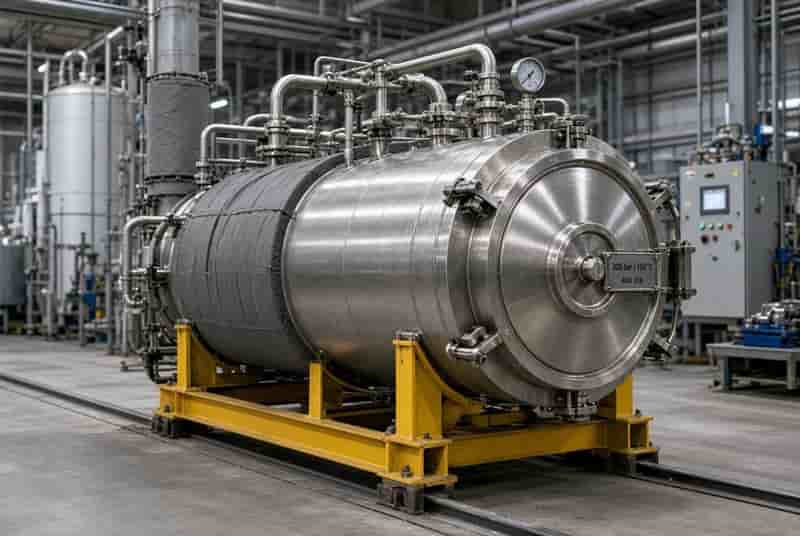
The novel method, spearheaded by Senior Assistant Professor Jianhua Ren alongside Professor Kazumasa Hirogaki and Researcher Isao Tabata at the University of Fukui, bypasses dye removal entirely. Instead of stripping colors away, the research team utilized supercritical carbon dioxide ($scCO_2$)—a state where $CO_2$ is held at a temperature and pressure above its critical point (120°C and 25 MPa in this study)—to act as a fluid solvent. polyester fiber recycling
Under these specific thermodynamic conditions, $scCO_2$ penetrates deep into the polyester fiber microstructures without degrading the polymer matrix. The fluid facilitates the migration of disperse dye molecules, causing them to move naturally from areas of high concentration to areas of low concentration across different fibers. polyester fiber recycling
-
30 Minutes: Differently colored fabrics (such as Blue BG and Yellow G combinations) begin exchanging dye molecules, producing preliminary intermediate hues.
-
60 Minutes: The dye levels across separate fabrics reach near-total equilibrium.
-
90 Minutes: The fibers achieve a completely uniform target shade—such as a vibrant green—without adding a single drop of water or new synthetic dyes.
Microscopic evaluations confirmed that the fiber surfaces remained pristine and structural integrity was preserved, proving that dyes can be harmoniously rebalanced inside closed pressure vessels.
Predictive Modeling for Precise Color Matching
Creating consistent shades from variable waste stock is one of the toughest challenges in industrial manufacturing. To ensure this process can be scaled commercially, the Fukui researchers developed a sophisticated predictive mathematical model. polyester fiber recycling
By measuring color intensity using the $Kubelka–Munk$ function ($K/S$), the team discovered that real-world color output was slightly lower than theoretical additive predictions due to subtle interactions between different dye molecules. To bridge this gap, they applied a trust region reflective algorithm to map pairwise dye interactions.
-
At 410 nm Wavelength: Standard error dropped from 0.4388 to 0.1720
-
At 530 nm Wavelength: Standard error dropped from 0.7758 to 0.2624
-
At 680 nm Wavelength: Standard error dropped from 0.4017 to 0.0540
This mathematical optimization allows technicians to precisely calculate starting fiber ratios to achieve specific target colors, turning unpredictable textile waste into a controllable, predictable raw material stream. polyester fiber recycling
What This Means for the Future of Circular Fashion
The broader textile ecosystem is rapidly evolving. With Digital Product Passports (DPP) tracking fiber composition and automated optical sorting plants expanding across global hubs, sorting post-consumer waste by fiber type is becoming faster and more reliable. Supercritical $CO_2$ dye redistribution fits into this next-generation circular ecosystem as a clean, waterless finishing step.
While the current research was demonstrated under controlled laboratory conditions using primary dye formulations, the next critical hurdle involves testing real-world complex post-consumer textile waste containing finishings and multi-dye blends. Nevertheless, by proving that existing colors can be re-blended directly inside the fiber matrix, this water-free technology marks a decisive step toward eliminating toxic wastewater and achieving scalable, truly circular polyester fiber recycling.
Revolutionary Victory: How Enzymatic Polyester Textile Recycling Is Defeating Fast Fashion Waste
Website: https://www.u-fukui.ac.jp/eng/
Sustainable Technology, Textile Innovation