Groundbreaking Enzymatic PET Recycling Tech Wins Prestigious ITMF Award
Groundbreaking Enzymatic PET Recycling Tech Wins Prestigious ITMF Award
A Critical Turning Point for Circular Textiles
The global textile industry stands at a pivotal crossroads in its search for scalable material recovery. Mechanical recycling methods, such as shredding and re-melting post-consumer garments, suffer from inherent quality loss. Synthetic fibers degrade with each thermal pass, degrading molecular integrity and locking the market into downcycling loops rather than true closed-loop reproduction.
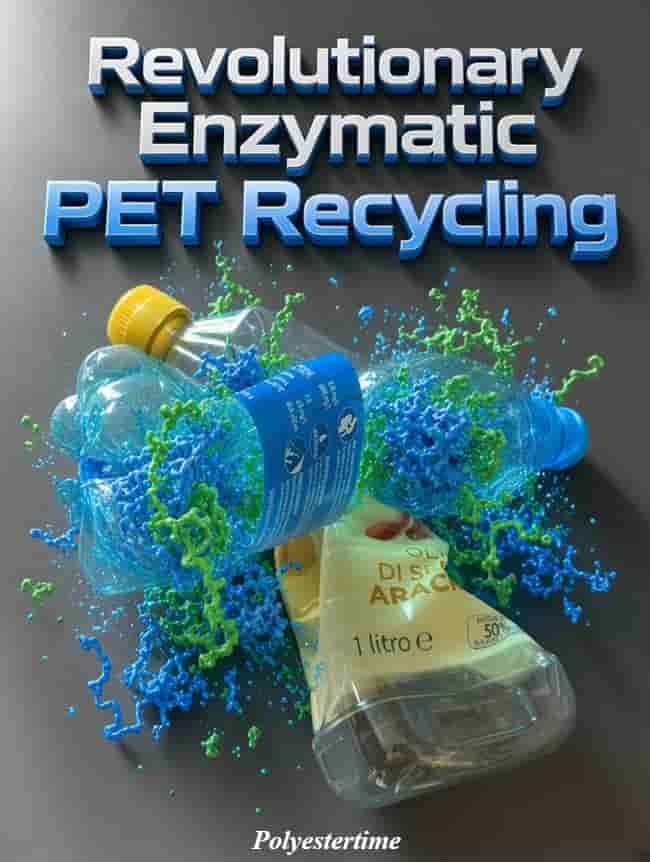
Biological depolymerization offers an innovative approach to overcoming these technical limitations. ARCHIBIO, a clean-technology firm headquartered in Tianjin, China, has achieved global recognition for its proprietary bio-based recycling platform. Enzymatic PET recycling
At the International Textile Manufacturers Federation (ITMF) Annual Conference held in Fortaleza, Brazil (October 14–15, 2026), ARCHIBIO was awarded the ITMF Start-up Award 2026. Selected as the only Chinese innovator among five global awardees chosen by an international panel, ARCHIBIO’s win underlines the growing commercial readiness of biological solutions in industrial textile recovery.
How Custom Enzymes Depolymerize Synthetic Fiber Waste
Polyethylene terephthalate (PET) serves as the synthetic core for billions of garments, technical fabrics, and plastic containers worldwide. When these fabrics are blended with natural or elastomeric fibers or infused with dark dyes and chemical finishes, conventional mechanical systems fail to process them efficiently. Enzymatic PET recycling
ARCHIBIO bypasses these constraints by deploying custom-engineered enzymes as selective catalysts. Rather than applying extreme heat or aggressive chemical solvents, these biological catalysts target the specific ester bonds within the PET molecular chain, breaking down the synthetic polymer into its original, pure building blocks:
-
Terephthalic Acid (TPA): The solid monomer extracted and purified to mirror virgin chemical feeds.
-
Ethylene Glycol (EG): The essential liquid co-monomer recovered for seamless re-polymerization.
Because the biological catalysts act strictly on PET polymer chains, complex multi-fiber compositions—including polyester-cotton and polyester-elastane blends—are processed with high efficiency. Non-target fibers are left intact for separate recovery streams, while the isolated monomers are purified back to virgin-grade standard. This allows recycled polyester (rPET) to be re-spun into high-performance yarns without loss of mechanical strength or color clarity. Enzymatic PET recycling
Scalability Milestones: Moving From Pilot Testing to Industrial Production
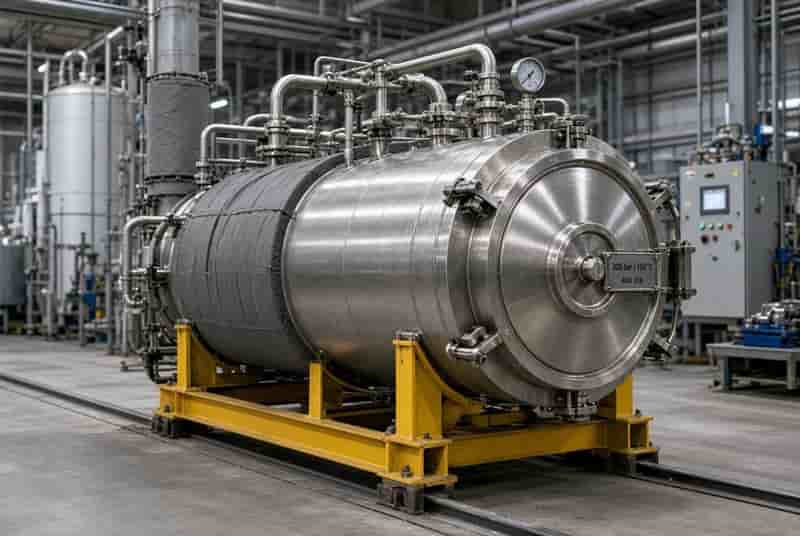
Transitioning biological recycling from laboratory trials to commercial manufacturing requires rigorous operational validation. ARCHIBIO established its engineering baseline using a dedicated pilot plant operating with an annual processing capacity of 300 metric tons. Over two years of continuous performance testing, this pilot facility verified reactor stability, enzyme survival rates, monomer yields, and purification steps under realistic operational flows.
Building upon these initial results, ARCHIBIO is constructing a full-scale commercial manufacturing line featuring an annual processing capacity of 6,500 metric tons. Scheduled to begin operations by the end of 2026, this landmark facility will convert post-industrial scrap and post-consumer apparel into virgin-equivalent recycled chips and filament yarns, providing textile manufacturers with a drop-in circular raw material. Enzymatic PET recycling
Scale Comparison: ARCHIBIO Development Pipeline
-
Pilot Scale Facility
-
Capacity: 300 metric tons per year
-
Operational Status: Active for 2+ years
-
Primary Function: Catalyst optimization, trial batch runs, process stability verification
-
-
Commercial Line
-
Capacity: 6,500 metric tons per year
-
Operational Status: Under construction (Target launch: Late 2026)
-
Primary Function: Industrial supply of purified monomers, rPET chips, and commercial filament yarns Enzymatic PET recycling
-
Global Innovations Transforming Textile Manufacturing
The ITMF Start-up Award 2026 highlighted a broader industrial shift toward zero-waste strategies, resource efficiency, and advanced material engineering. Five visionary companies were honored in Fortaleza for introducing solutions that address critical vulnerabilities across the textile supply chain:
-
Matereal (Switzerland): Combines bio-based polymer formulation with artificial intelligence to engineer low-emission textile coatings and structural materials. Enzymatic PET recycling
-
no.wasTee Soluções em Confecções Sustentáveis (Brazil): Applies a patented zero-waste design methodology at the pattern-making stage to minimize fabric waste during mass production.
-
Tellura Technologies (Brazil): Produces 100% natural yarns suited for applications ranging from high-fashion apparel to advanced aerospace biocomposites.
-
Unspun (USA): Uses 3D automated weaving technology to eliminate traditional garment assembly cut-and-sew waste, supporting on-demand apparel manufacturing.
-
Yuantian Biotechnology / ARCHIBIO (China): Scales biological depolymerization to transform complex synthetic waste into virgin-grade polyester monomers.
Together, these technologies represent an essential evolutionary leap for global manufacturing. By integrating advanced biological tools, precise manufacturing software, and automated production models, the industry is building the infrastructure needed to achieve true material circularity. Enzymatic PET recycling
Revolutionary Enzymatic PET Recycling Breakthrough Promises Game-Changing Plastic Solution
More…