Circular Economy Breakthrough 5 Key Benefits from New Caribbean Recycling Facility
Circular Economy Momentum in St. Kitts and Nevis
The circular economy St. Kitts and Nevis is gaining tangible momentum with the inauguration of an upgraded recycling facility at the Conaree Landfill. This development represents a strategic step toward modernizing waste management systems while reinforcing sustainability goals across the Caribbean nation.
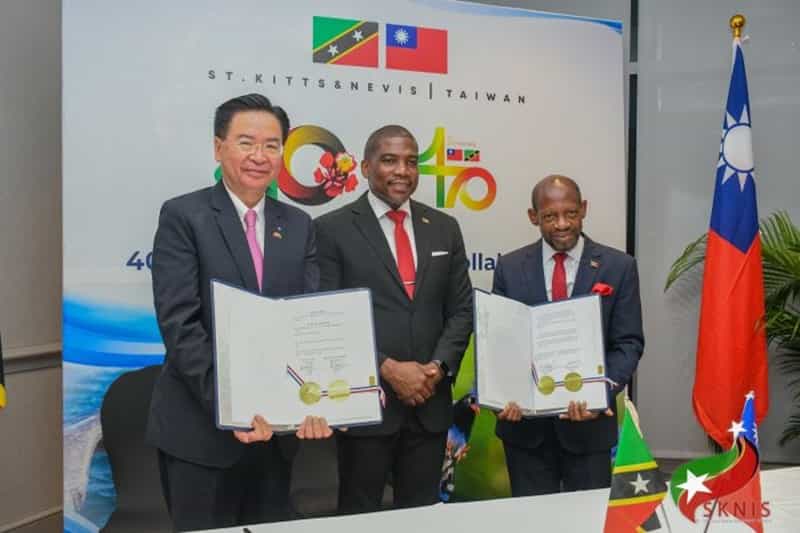
The project, officially launched on 18 March in alignment with Global Recycling Day, is part of the Solid Waste Management and Recycling Project implemented by the Taiwan Technical Mission under the Taiwan International Cooperation and Development Fund. The timing underscores the global relevance of recycling initiatives and the growing urgency to transition toward circular economic models.
Infrastructure Upgrade Driving Efficiency
At the core of this initiative is the installation of a horizontal baler, a critical piece of equipment designed to significantly improve recycling operations. By compressing recyclable materials into compact bales, the system enhances storage, transport efficiency, and processing capacity.
This upgrade directly supports the expansion of the circular economy St. Kitts and Nevis by enabling higher volumes of recyclable waste to be handled effectively. Improved efficiency reduces operational bottlenecks and creates a more scalable system capable of meeting future demand.
In practical terms, this means less waste ending up in landfills and more materials being reintegrated into the production cycle—an essential principle of circular economy models.
Strengthening International Collaboration
The circular economy St. Kitts and Nevis initiative is also a clear example of successful international cooperation. Taiwan’s involvement highlights how bilateral partnerships can accelerate environmental progress, particularly for small island developing states that face unique waste management challenges.
During the inauguration, Ambassador Tao reaffirmed Taiwan’s long-term commitment to environmental sustainability and climate resilience in the region. This collaboration goes beyond infrastructure, encompassing knowledge transfer, technical expertise, and community engagement.
Such partnerships are increasingly vital as countries seek scalable solutions to global environmental pressures, including waste accumulation and resource scarcity.
Community Engagement and Resource Circulation
A key strength of the circular economy St. Kitts and Nevis project lies in its focus on community participation. During the ceremony, Taiwan donated 32 recycling bins to expand local collection capacity, making recycling more accessible to residents.
Additionally, the distribution of 900 eco-friendly T-shirts and 400 reusable shopping bags—produced from recycled PET bottles collected locally—demonstrates a complete circular loop in action. Waste materials are not only recovered but transformed into usable products, reinforcing public awareness of recycling benefits.
This tangible demonstration of resource circulation helps build trust and encourages behavioral change, which is essential for the long-term success of any circular economy initiative.
Education and Youth Involvement
Education plays a central role in advancing the circular economy St. Kitts and Nevis. Students attending the inauguration shared firsthand experiences from visits to the recycling facility, highlighting the importance of early engagement in sustainability efforts.
By involving younger generations, the project ensures that environmental responsibility becomes embedded in future societal norms. Awareness programs and practical exposure to recycling processes foster a deeper understanding of how waste can be transformed into valuable resources.
This approach not only supports immediate project goals but also contributes to building a culture of sustainability that can endure over time.
Demonstrating the Recycling Process
Project Manager Joyce Chang presented a detailed overview of the plastic recycling process during the event, illustrating how discarded materials can be converted into new products. This transparency is crucial for reinforcing the principles of the circular economy St. Kitts and Nevis.
Understanding the lifecycle of materials—from disposal to reuse—helps stakeholders appreciate the economic and environmental value of recycling. It also highlights the potential for innovation within the recycling sector, opening opportunities for local entrepreneurship and green job creation.
Advancing Climate Resilience
Small island nations like St. Kitts and Nevis are particularly vulnerable to climate change. Strengthening waste management systems is therefore not only an environmental priority but also a resilience strategy.
The circular economy St. Kitts and Nevis contributes to climate resilience by reducing landfill emissions, minimizing pollution, and promoting efficient resource use. These measures collectively support broader sustainability goals, including reduced carbon footprints and improved environmental health.
By integrating circular economy principles into national infrastructure, the country is better positioned to adapt to environmental challenges while maintaining economic stability.
Long-Term Impact and Future Outlook
The expanded recycling facility represents more than a single infrastructure upgrade. It is a foundational step toward a more sustainable and resource-efficient future. As the circular economy St. Kitts and Nevis continues to evolve, similar initiatives are likely to emerge, further strengthening the country’s environmental framework.
The project also sets a precedent for other Caribbean nations, demonstrating how targeted investments and international cooperation can deliver measurable sustainability outcomes. Replicating this model across the region could significantly enhance waste management capabilities and accelerate the transition to circular economies.
Conclusion
The inauguration of the upgraded recycling facility at Conaree Landfill marks a pivotal moment for the circular economy St. Kitts and Nevis. By combining advanced technology, international collaboration, and strong community engagement, the initiative delivers a comprehensive approach to sustainable waste management.
As global attention increasingly turns toward circular economy solutions, this project stands as a practical example of how nations can transform environmental challenges into opportunities for growth, resilience, and innovation.
Nigeria Advances Circular Economy With 45,000-Ton rPET Recycling Plant Project
More…