Circular mattress recycling – Mattress Waste Transforms Into Opportunity as Circular Mattress Recycling Advances Sustainability, Reduces Fossil Dependence, and Reimagines the Global Bedding Industry Future with Cleaner Materials 23-01-2026
Circular mattress recycling
After an average lifespan of around ten years, most mattresses are discarded and sent to landfill or incineration. This creates a growing waste problem and results in the loss of valuable materials that could otherwise remain in use. As consumption of comfort products continues to rise globally, mattress disposal has become a visible and persistent environmental issue.
At the same time, the production of new polyurethane foam mattresses relies heavily on fossil-based raw materials, particularly crude oil. This creates a structural contradiction in the bedding industry, where usable materials are wasted while new finite resources are extracted. Circular mattress recycling addresses this inefficiency directly.
Why Circular Mattress Recycling Matters
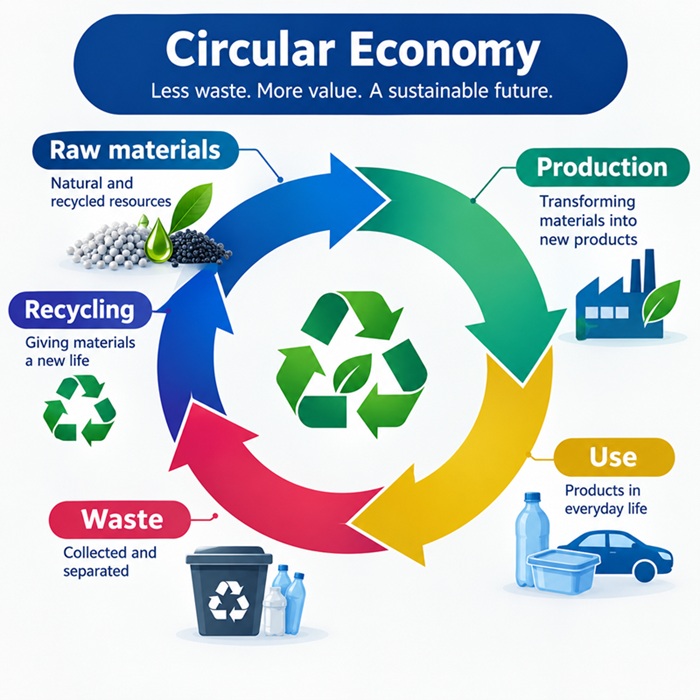
Circular mattress recycling aims to keep materials in productive use for as long as possible. Instead of following a linear take-make-dispose model, old mattresses are treated as a source of raw materials for new products. This approach reduces waste volumes and helps decouple economic growth from fossil resource consumption.
By implementing circular mattress recycling at scale, manufacturers can lower greenhouse gas emissions, stabilize supply chains, and respond to increasing regulatory and consumer pressure for sustainable products. The transition toward circular economy mattresses is therefore both an environmental and strategic necessity.
From Waste to Resource Through Chemical Recycling
One of the main challenges in mattress recycling lies in the complex structure of polyurethane foam. Traditional mechanical recycling often leads to material degradation and limited reuse. Chemical recycling provides a more effective solution by breaking polyurethane foam down into its original chemical components.
Through chemical recycling processes, polyols and isocyanates can be recovered from used mattresses and reprocessed into virgin-quality raw materials. This makes circular mattress recycling compatible with high-performance requirements and enables the production of new foams without relying on fossil feedstocks.
High-Quality Recycled Polyols Enter Practical Use
Recent advances show that circular mattress recycling has moved beyond experimental stages. High-quality polyols derived from old mattresses are now being successfully reintroduced into foam manufacturing.
These recycled polyols can achieve recycled content levels of up to 80 percent while maintaining durability, comfort, and safety standards. This demonstrates that mattress recycling can deliver materials suitable for demanding applications without compromising product quality.
Closing the Mattress Loop Through Collaboration
Scaling circular mattress recycling requires close cooperation across the value chain. Chemical producers, foam manufacturers, mattress brands, waste management companies, and end users all play a role in closing the loop.
When recycled polyols are processed into high-quality foam and used in real-world environments such as hospitality or residential settings, they validate the commercial feasibility of circular mattress recycling and encourage broader adoption.
Environmental Benefits Beyond Waste Reduction
The benefits of circular mattress recycling extend far beyond diverting waste from landfill. Replacing fossil-based raw materials with recycled alternatives significantly reduces carbon emissions and lowers dependence on volatile oil markets.
In addition, circular mattress recycling supports regional resource security by creating localized material loops. This reduces exposure to global supply chain disruptions while strengthening domestic recycling infrastructure.
Barriers to Widespread Adoption
Despite its potential, circular mattress recycling still faces economic and logistical barriers. Collection systems for used mattresses are often fragmented, and recycling capacity must expand to meet growing demand.
Standardization across the value chain and long-term investment commitments are also required. Without coordinated action, the full environmental and economic benefits of circular mattress recycling will remain limited.
The Future of Circular Economy Mattresses
The future of circular mattress recycling depends on continued technological innovation, supportive regulation, and market demand. As recycling processes mature and scale, costs are expected to decrease, making circular solutions increasingly competitive.
Circular mattress recycling offers a clear example of how complex consumer products can transition from linear waste models to regenerative systems. It shows that sustainability, industrial performance, and economic viability can align.
A Model for Circular Innovation
Beyond the bedding industry, circular mattress recycling serves as a model for other polymer-intensive sectors. Technologies developed for mattress recycling can be applied to furniture, automotive interiors, and insulation materials.
As circular economy principles gain momentum globally, circular mattress recycling stands out as a tangible demonstration of how waste can become a valuable resource, reshaping industrial systems for a more sustainable future.
More…