Engineered Materials – SUSTAInPack: Pioneering Seaweed-Based Sustainable Packaging Tackling Plastic Pollution with Innovative Biopolymer Films Plastic pollution continues to threaten our environment, with millions of tonnes of waste ending up in oceans and landfills each year 13-05-2025 - Archive
Engineered Materials
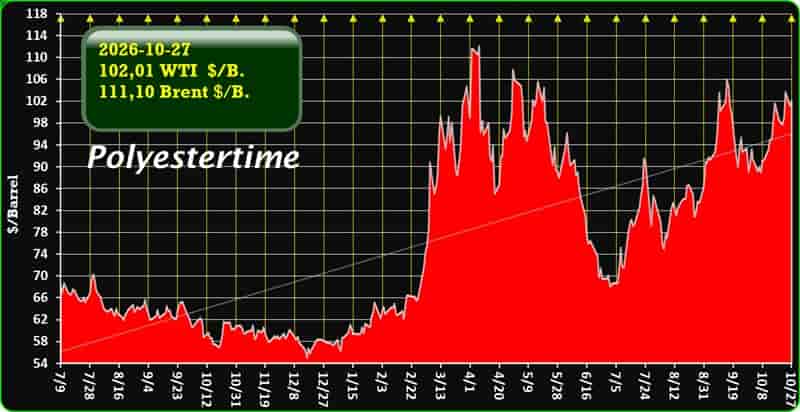
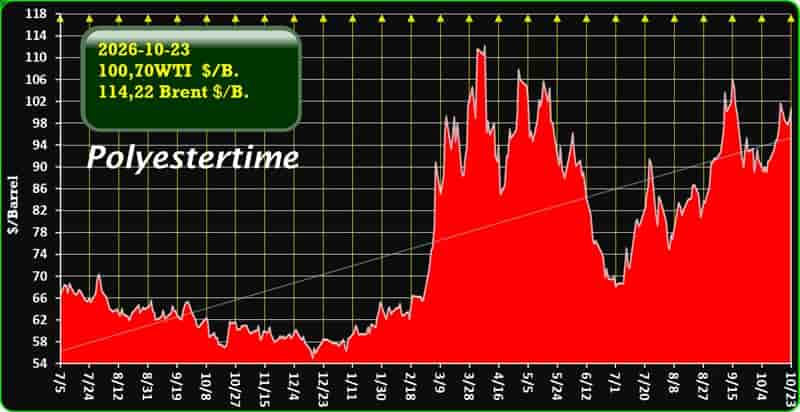
Crude Oil Prices Trend

A Promising Start to 2025 for Evonik
Stable Revenues, Stronger Margins
Despite ongoing global uncertainties and challenges facing the European chemical industry, Evonik Industries has kicked off 2025 with encouraging results. The German chemical giant reported stable revenues and improved profitability in the first quarter, a positive signal amidst a volatile macroeconomic landscape.
First Quarter Highlights
In Q1 2025, Evonik recorded revenues of €3.78 billion, holding steady compared to the same period last year. Although sales volumes rose by 2%, this was offset by a 2% decline in prices, resulting in flat overall sales. Engineered Materials
However, the real success lies in profitability. Adjusted EBITDA climbed 7% to €560 million, driven by cost efficiency, volume growth, and better-than-expected performance in specific sectors—especially Animal Nutrition.
Leadership Perspective: Optimism with Caution
“We have started the year on the right foot,”
— Christian Kullmann, CEO of Evonik
Evonik’s CEO, Christian Kullmann, expressed optimism about the company’s direction, while also voicing concern over growing geopolitical risks. He pointed out that tensions from global trade disputes and armed conflicts could pose significant threats to economic growth in the coming months. Engineered Materials
“The shadows of a global trade war and ongoing armed conflicts make the outlook more uncertain than ever. There is a real risk of an economic slowdown, particularly in the second half of the year.”
— Christian Kullmann
Echoing this sentiment, Maike Schuh, Evonik’s CFO, emphasized the importance of cost discipline and clarity in execution amid uncertainty:
“Our efficiency efforts are bearing fruit—and they are more necessary than ever in light of the renewed economic uncertainties. The more unpredictable the environment, the clearer our path must be: to deliver on our promises of improvement.”
Looking Ahead: Strategy Update on May 22
Evonik plans to shed more light on its strategic roadmap at its upcoming Capital Markets Day on May 22, where investors and analysts will hear more about the company’s growth plans and targets for the year. Engineered Materials
Performance by Business Segment
Smart Materials: Holding Ground
Evonik’s Smart Materials division maintained stability with sales of €1.098 billion. Both prices and volumes were roughly consistent with Q1 2024. Within this segment, Polymers activities showed growth, thanks to higher volumes and slightly improved pricing.
Specialty Additives: Slight Uptick
The Specialty Additives segment posted a 1% increase in sales to €923 million. While volumes were marginally higher and foreign exchange movements contributed positively, price levels were slightly below last year’s figures. Notably, there was a decline in sales for polyurethane foam additives and consumer durables, reflecting soft demand in certain markets. Engineered Materials
Nutrition & Care: Standout Growth
The Nutrition & Care segment emerged as a clear standout. Sales jumped 12% to €1.007 billion, and adjusted EBITDA soared by 35% to €197 million. This strong performance was underpinned by robust demand and pricing in the Animal Nutrition business.
Conclusion: Building Momentum Amid Challenges
Evonik’s first-quarter results show a company in control of its operations, despite macroeconomic headwinds. By prioritizing efficiency and discipline, the firm has managed to stabilize revenues and boost margins, while selectively growing in key areas like Polymers and Animal Nutrition.
As the year progresses, all eyes will be on Evonik’s next moves—especially with its Capital Markets Day approaching on May 22.
Investors will be eager to see how the company plans to navigate global uncertainty and sustain its upward momentum. Engineered Materials

Brussels Braces for Tariff Showdown with the U.S.
The European Commission is taking measured yet firm steps to prepare for a possible trade conflict with the United States. While negotiations are ongoing, the EU is drawing up a comprehensive list of potential countertariffs on a range of American goods—worth up to €95 billion.
What’s at Stake: Key Products Targeted
If no agreement is reached, the EU’s retaliatory duties will target a wide array of U.S. exports. The list includes:
- Plastics and Rubber: From raw polymers like PE, PP, and PVC to semi-finished sheets and finished items such as gloves and pens.
- Processing Machinery: Injection moulding machines, extruders, and blow moulders. Engineered Materials
- Components and Parts: Both plastic and metal elements used in machinery.
This strategic move follows U.S. threats to impose their own set of tariffs—initially announced in early April but currently suspended for a 90-day review.
EU Considers Export Restrictions Too
In addition to countermeasures, the EU is also considering restrictions on certain European exports to the U.S., including:
- Ferrous scrap metals
- Chemical compounds
These would impact approximately €4.4 billion worth of goods, adding further tension to transatlantic trade relations.
A Closer Look at Affected Categories
To provide clarity, here are key examples of the goods under review:
Plastics
- Polymers: PE, PP, PVC, polyamides, PUR, PC, epoxy resins.
- Semi-Finished Products: Films, sheets, tapes.
- Finished Items: Plastic gloves, pens, furniture, apparel.
- Waste: Offcuts of polyethylene and PVC. Engineered Materials
Rubber
- Natural & Synthetic: SBR, NBR, EPDM.
- Processed Goods: Vulcanized rubber, seals, gaskets, sanitary items.
- Tyres & Belts: Retreaded tires, conveyor belts.
Machinery & Equipment
- Rubber & Plastic Processing: Extruders, injection and blow moulders, thermoformers.
- Components: Machine parts in metal or plastic.
A full product list is available for download, allowing manufacturers and industry players to evaluate the potential impact.
Public Consultation Open Until June 10
To ensure transparency and inclusiveness, the Commission has opened a public consultation (deadline: June 10). This initiative invites input from industry stakeholders, trade groups, and businesses likely to be affected by the new tariffs. Engineered Materials
Parallel WTO Complaint Filed
On another front, the EU has officially submitted a request for consultations at the World Trade Organization (WTO), challenging the U.S. on its universal tariffs—particularly those affecting automobiles and automotive parts.
This marks a firm stance by Brussels, emphasizing that trade measures must be based on established international rules, not unilateral actions.
Looking Ahead: Diversifying and Strengthening
While the EU prepares for all possible outcomes, it continues to pursue diplomatic and strategic options:
- Diversifying suppliers and markets
- Reducing trade barriers
- Strengthening the EU Single Market
These efforts aim to protect European industry and ensure long-term resilience against global trade uncertainties.
“Negotiation First, But Prepared for Anything”
“Tariffs are already having a negative impact on the global economy,” stated Commission President Ursula von der Leyen.
“The EU remains fully committed to finding negotiated solutions with the United States. We believe that good agreements can be reached in the interests of consumers and businesses on both sides of the Atlantic. At the same time, we are preparing for every scenario.” Engineered Materials
This dual strategy—engaging diplomatically while preparing defensively—signals that the EU is taking a pragmatic and united approach to safeguarding its economic interests.

Celanese to Raise Prices on Engineered Materials Across EMEA Starting June 2025
Celanese Corporation has announced that it will increase prices on a broad range of engineered materials in the EMEA (Europe, Middle East, and Africa) region, effective June 1, 2025, or as current contracts allow. The decision stems from escalating costs related to logistics, operations, regulatory compliance, and raw materials.
What’s Behind the Price Hikes?
The company cites ongoing inflationary pressures and supply chain challenges as key drivers behind the pricing adjustment. Celanese emphasized that the move is necessary to continue delivering high-performance materials while maintaining service quality and innovation. Engineered Materials
“These adjustments reflect continued cost increases across our value chain,” the company stated. “We remain committed to supporting our customers through reliable supply and technical expertise.”
Affected Product Families and Specific Increases
The upcoming price increases will apply to several key product lines used across industries such as automotive, electronics, and consumer goods. Notably affected materials include PA6, PA66, LCP/PCT, PPS, LCPA, HTN, TPV, and TPC.
Key Price Adjustments Include:
- PPS (Fortron®): +€0.35/kg
- PA66 Polymers (Zytel®): +€0.22/kg
- PA6/PA66 Compounds: +€0.09/kg
- TPV (Santoprene®): +€0.18 to €1.10/kg, depending on grade
- LCP/PCT (Vectra®, Zenite®): +€0.22/kg
- HTN (Selar®, Zytel HTN®): +€0.35/kg
Celanese also warned that some product grades could see even higher increases, depending on specific formulations and supply constraints. Engineered Materials
What Customers Should Do Now
Celanese recommends that customers review their inventory plans and future material needs to mitigate the impact of the price changes. Procurement and supply chain teams should communicate with their Celanese representatives to ensure they have the latest updates and guidance.
Stay Ahead: For companies relying on Celanese’s engineered materials, early planning and open dialogue will be key in navigating these changes smoothly.

DOMO Chemicals Boosts Mumbai Production to Meet Rising Demand
Supporting India’s High-Growth Sectors
DOMO Chemicals has significantly expanded its compounding capacity in Mumbai, a strategic move aimed at meeting the surging demand for high-performance polyamide-based plastics across India. This expansion addresses the country’s fast-growing needs in sectors such as e-mobility, electronics, and automotive, where advanced materials are essential for innovation and efficiency.
Localized Production for Faster Delivery
By strengthening its local production capabilities, DOMO is poised to deliver quicker and more responsive service to customers not only in India but across the broader Asia-Pacific region. The expansion ensures that Indian manufacturers can access top-tier polyamide solutions with reduced lead times, enhancing their agility and global competitiveness. Engineered Materials
Innovation and R&D at the Forefront
With the new capacity comes enhanced research and development (R&D) support, enabling DOMO to better collaborate with regional clients on tailor-made material solutions. The facility will support innovation in lightweighting, thermal management, and durability — all critical factors for modern industrial applications.
Embracing Sustainable Manufacturing
A standout feature of the Mumbai expansion is the integration of sustainable practices, including the production of recycled polyamides under the company’s TECHNYL® 4EARTH® product line.
This aligns with DOMO’s global commitment to environmental responsibility and provides eco-friendly alternatives without compromising performance. Engineered Materials
Reinforcing DOMO’s Leadership in India
This investment solidifies DOMO Chemicals’ role as a trusted, locally embedded supplier of advanced polyamide solutions. By ramping up its capabilities in India, the company reinforces its strategic focus on the region, bringing high-quality, sustainable innovation closer to key customers and partners.
Recycling Statistics: How It Impacts Our Planet ?
The Environmental Benefits of Recycling
Recycling isn’t just a buzzword — it’s a powerful tool in the fight against climate change. According to recent data, recycling could prevent between 5.5 and 6.02 gigatons of CO₂ emissions between 2020 and 2050. That’s the same as taking over one billion cars off the road for an entire year. Engineered Materials
Alarming Waste Facts
Despite its benefits, recycling is still underused. Each year, 100,000 tonnes of recyclable waste in the UK are rejected due to contamination. Globally, only 9% of plastic waste and less than 25% of electronic waste (e-waste) is recycled. The rest ends up in landfills or the ocean, contributing to pollution and climate change.
A Growing Waste Crisis
The world generates 2.01 billion tonnes of waste annually, and this is expected to increase by 73% by 2050. Poor waste management, overconsumption, and limited public education are worsening the situation. Shockingly, around 20% of methane emissions — a potent greenhouse gas — come from the waste industry alone. Engineered Materials
Solutions on the Horizon
Governments are stepping in with initiatives like deposit return schemes, which encourage consumers to recycle more by offering small financial incentives. These programs are proving effective, but there’s still a long way to go.
Why Recycling Matters
Recycling helps reduce greenhouse gas emissions, conserves natural resources, and decreases our reliance on landfills. It’s a simple yet impactful way individuals and communities can contribute to a healthier planet. Engineered Materials

SUSTAInPack: Pioneering Seaweed-Based Sustainable Packaging
Tackling Plastic Pollution with Innovative Biopolymer Films
Plastic pollution continues to threaten our environment, with millions of tonnes of waste ending up in oceans and landfills each year. In response, Maltese materials research company Natural Edge is spearheading the SUSTAInPack project — an initiative aimed at creating biodegradable, seaweed-based packaging films that serve as practical alternatives to plastic.
Why Seaweed?
Seaweed offers a sustainable and eco-friendly raw material source. Unlike conventional crops, it requires no fresh water, fertilizers, or arable land, making it ideal for scalable, green packaging solutions. Engineered Materials
Advancing Biopolymer Performance
SUSTAInPack’s mission is to develop compostable, high-performance biofilms for food and industrial packaging. Traditional biodegradable materials often fall short — they may lack durability or water resistance, and some even contain synthetic additives that hinder compostability.
Natural Edge focuses on enhancing the mechanical and barrier properties of seaweed-derived biopolymers to match or exceed the performance of common plastics like clingfilm.
Key Performance Goals
- Transparency – Essential for food packaging visibility.
- Mechanical Strength – Ensures durability and usability.
- Water Resistance – Protects contents from moisture and spoilage.
Through iterative testing and formulation refinement, the team has developed proprietary biofilm blends that strike the right balance between performance and sustainability. Engineered Materials
From Lab to Market
One of the toughest challenges has been achieving water resistance while maintaining compostability — a hurdle now overcome by Natural Edge’s custom material blends.
With promising results in hand, the company is now focusing on scaling up production to bring this innovation to the global market. Natural Edge is also actively seeking investment partners to support commercialisation and accelerate adoption.