High-Quality Plastic Recycling: Site Zero Shows Europe’s Circular Future
High-Quality Plastic Recycling: Why Site Zero Matters for Europe’s Raw Material Future
Europe’s plastic packaging sector is entering a decisive phase. By 2030, recycled content will no longer be only a sustainability ambition for packaging producers. It will become a regulatory, industrial and supply-chain requirement.
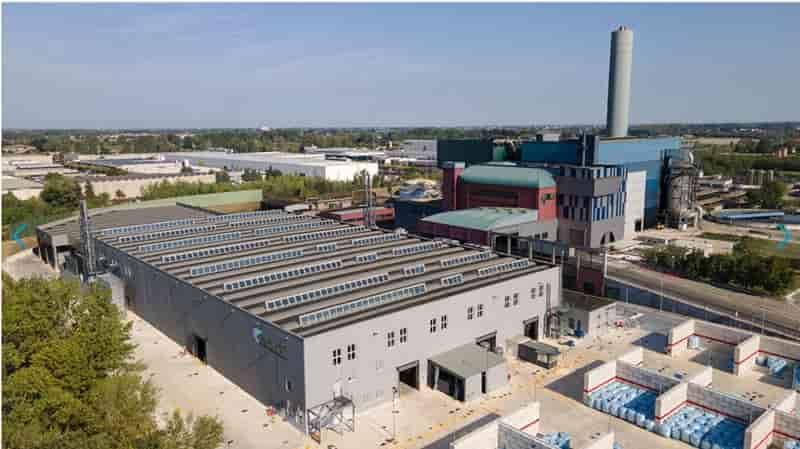
That is why the latest traceability results from Site Zero in Motala, Sweden, deserve attention well beyond the recycling industry. According to Svensk Plaståtervinning, 86% of the plastic packaging sorted at the facility is now recycled at the European Union’s highest quality standard. In practical terms, this means the material can replace virgin fossil-based plastic in products of the same or equivalent quality.
This is not just a technical achievement. It is a signal that Europe can build a more reliable domestic supply of recycled plastic feedstock, provided that sorting, traceability and end-market demand are aligned.
Why high-quality plastic recycling is becoming strategic
For years, plastic recycling has often been measured by volume. The more material diverted from incineration or landfill, the better the result appeared. But the next stage of Europe’s circular economy will be judged by a more demanding question: what does the recycled plastic become?
If plastic packaging is recycled into low-value products that cannot be recycled again, the material loop remains weak. If, instead, it is turned into packaging or equivalent high-quality plastic applications, it can directly reduce the need for virgin fossil raw materials.
This distinction is becoming crucial under the EU Packaging and Packaging Waste Regulation, known as the PPWR. The regulation is designed to make packaging more recyclable, reduce unnecessary waste and increase the use of recycled content in plastic packaging. For producers, retailers and brands, this means that access to verified, high-quality recycled feedstock will become increasingly important.
Site Zero’s result therefore arrives at the right time. It shows that high-quality plastic recycling is not a distant concept. It can already be achieved at industrial scale when advanced sorting technology is combined with certified recycling partners and transparent material tracking.
What Site Zero’s 86% result actually means
The 86% figure refers to plastic packaging sorted at Site Zero and then recycled into products that meet the EU definition of high-quality recycling. This includes recycled material used in new packaging, other plastic packaging and durable plastic products that replace virgin fossil-based material.
A smaller share, around 7%, became new food-contact-approved packaging. This is particularly important because food-contact applications are among the most demanding uses for recycled plastic. They require strict safety, certification and quality controls.
Another 18% was converted into other plastic packaging, while 61% became high-quality plastic products such as larger containers, cleaning equipment and luggage. These applications may not always be packaging, but they still preserve material value by replacing virgin plastic.
The remaining 14% was recycled into lower-quality applications, including products such as pallets and construction materials. These uses can still provide environmental value, but they usually do not offer the same circular benefit as recycling plastic back into equivalent plastic applications.
The key lesson is clear: the future of recycling is not only about collecting more plastic. It is about sorting it accurately, preserving polymer quality and ensuring that the recycled output goes into applications where it has the highest possible value.
Traceability is becoming a competitive advantage
One of the most important aspects of Site Zero’s model is traceability. In a market where recycled-content claims are increasingly scrutinized, companies need to prove where recycled material comes from, how it was processed and what it became.
This matters for several reasons.
First, traceability helps prevent greenwashing. Brands that claim to use recycled plastic will need more than general sustainability language. They will need verifiable data.
Second, traceability supports regulatory compliance. As PPWR requirements become more detailed, packaging producers will need reliable documentation for recycled content, recyclability and material origin.
Third, traceability strengthens trust across the value chain. Recyclers, converters, brands, regulators and consumers all benefit when material flows are transparent and auditable.
Svensk Plaståtervinning’s approach shows that traceability is not only an administrative tool. It can become part of the quality infrastructure that allows recycled plastic to compete with virgin material.
Europe needs more domestic recycled feedstock
The timing is significant. Europe is trying to reduce its dependence on fossil raw materials while also improving industrial resilience. Plastic packaging is deeply connected to both issues.
Virgin plastic production depends heavily on fossil feedstock. When energy and fossil raw material prices fluctuate, packaging producers face cost and supply risks. A stronger European recycled plastics market can reduce some of that exposure.
At the same time, Europe’s circular plastics economy faces competitive pressure. Recent industry analysis has warned that Europe’s circular plastics transition is slowing, while imported circular plastics and recycling outside Europe remain important parts of the current system.
This creates a strategic challenge. If Europe sets ambitious recycled-content targets but lacks sufficient high-quality recycled feedstock within its own market, companies may face compliance pressure, price volatility and supply uncertainty.
Facilities such as Site Zero show one possible answer: build advanced sorting and recycling ecosystems inside Europe, with reliable quality standards and transparent material flows.
Why mono-fraction sorting matters
Plastic packaging is not one single material. It includes PET, HDPE, PP, PE, PS and many other combinations, often mixed with labels, barriers, additives and residues. The more mixed the stream, the harder it becomes to recycle the material into high-quality applications.
Site Zero’s model is built around sorting plastic packaging into mono-fractions. This means separating materials into cleaner, more specific streams that can be processed more effectively by recycling partners.
This is a prerequisite for higher-value recycling. A clean PET stream, for example, has very different recycling potential from a mixed plastic stream. The same applies to polypropylene, polyethylene or polystyrene.
In simple terms, better sorting creates better raw material. Better raw material creates better recycling outcomes. Better outcomes make it easier for packaging producers to use recycled content without compromising performance, safety or regulatory compliance.
The demand gap: packaging could use more recycled plastic
One of the most interesting details in the Site Zero mapping is that a large share of high-quality recycled plastic currently goes into durable plastic products rather than back into packaging.
This does not necessarily mean the material is unsuitable for packaging. In many cases, it reflects current demand patterns. Packaging producers may not yet be absorbing all available recycled feedstock, especially where technical specifications, certification needs, price dynamics or procurement habits slow adoption.
That gap is likely to narrow as 2030 approaches. Once recycled-content requirements become more pressing, demand for high-quality recycled plastic suitable for packaging will increase.
Companies that prepare early will have an advantage. They will be better positioned to secure supply, validate material quality, adapt packaging design and avoid last-minute compliance costs.
What packaging producers should learn from Site Zero
The Site Zero example offers several lessons for packaging producers and brand owners.
Design for recyclability must start earlier. Packaging that is difficult to sort or contains incompatible materials will struggle to become high-quality recycled feedstock.
Recycled-content strategies need verified supply chains. Buying recycled material will not be enough if companies cannot document origin, quality and compliance.
Mechanical recycling still has a central role. While chemical recycling receives attention, high-quality mechanical recycling can already deliver strong results when supported by advanced sorting and clean material streams.
Domestic European capacity matters. Keeping more sorting and recycling inside the EU can improve transparency, reduce supply risks and support industrial competitiveness.
Quality is more important than headline recycling rates. A lower-value recycling route may divert waste, but it does not deliver the same circular-economy benefit as recycling that replaces virgin plastic in equivalent applications. high-quality plastic recycling
A practical model for Europe’s circular economy
Site Zero is not a complete solution to Europe’s plastic challenge. Packaging reduction, reuse systems, better product design and consumer sorting all remain essential.
But the Swedish facility provides a practical model for one of the most difficult parts of the circular economy: turning complex post-consumer plastic packaging into reliable, high-quality recycled raw material.
That is exactly the kind of infrastructure Europe will need as PPWR rules reshape the packaging market and the forthcoming Circular Economy Act strengthens the policy framework for secondary raw materials.
The broader message is simple. Europe does not only need more recycling. It needs better recycling, with traceable material flows, higher-quality outputs and stronger links between waste collection, sorting, recyclers and packaging manufacturers.
If 86% of plastic packaging sorted at Site Zero can meet the EU’s highest recycling standard, the question for Europe is no longer whether high-quality plastic recycling is possible. The question is how quickly similar systems can be scaled, replicated and connected to real market demand.
For packaging producers, the clock is already ticking. The winners of the next phase will be the companies that treat recycled plastic not as a compliance burden, but as a strategic raw material.
More…