Breakthrough Black Plastic Sorting Enters Real-World Trials
Breakthrough Black Plastic Sorting Enters Real-World Trials
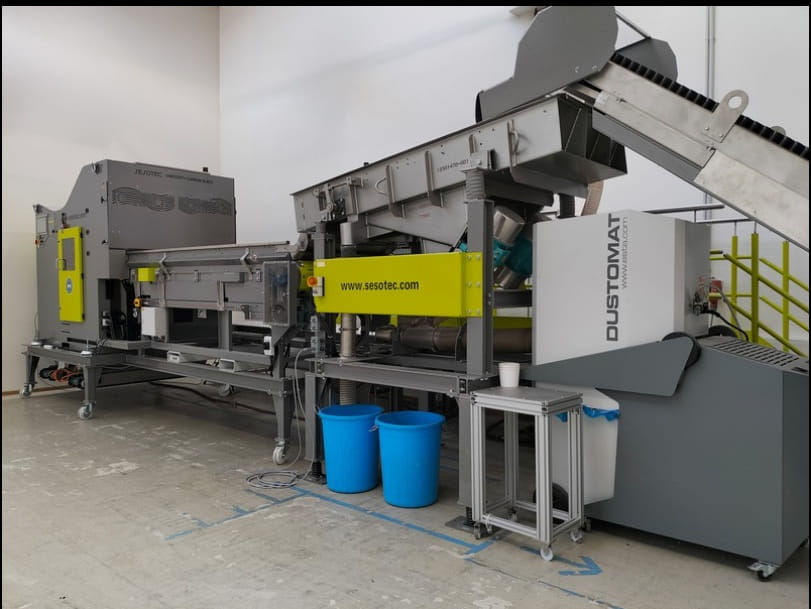
Sesotec has moved its VARISORT+ CARBON BLACK system into practical testing, marking a potentially important advance in black plastic sorting.
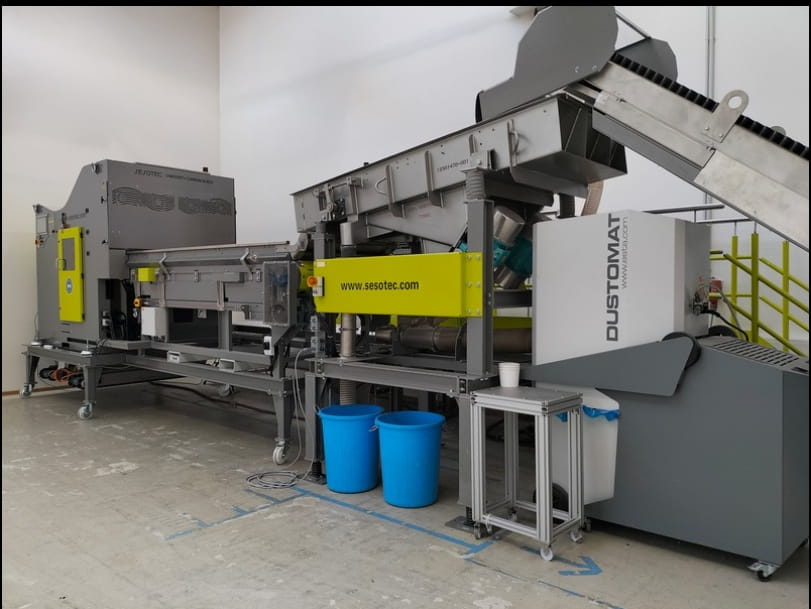
The equipment is being evaluated at the German manufacturer’s technical center using material streams supplied for customer applications. Its purpose is to identify and separate carbon-black plastics after pre-shredding but before they are reduced to fine granulate.
That earlier intervention could make recycling lines more efficient. However, the system remains in the trial and optimization phase, and Sesotec has not publicly disclosed independently verified figures for throughput, purity, recovery rate or operating cost.
Why black plastics are difficult to sort
Most conventional optical sorting systems use visible-light or near-infrared sensors to distinguish one polymer from another.
Carbon-black pigment absorbs much of this radiation. As a result, a dark plastic object may produce too little usable information for a conventional near-infrared system to classify it reliably.
This problem can cause recyclable items to be rejected, sent into mixed fractions or identified only after additional size reduction. It is especially relevant when processors need to separate polymers such as polyethylene, polypropylene and acrylonitrile butadiene styrene.
How Sesotec’s system approaches the problem
VARISORT+ CARBON BLACK uses mid-wave infrared, commonly abbreviated as MWIR. In this wavelength range, highly absorbing black plastics can exhibit material-specific spectral characteristics that are unavailable to standard visible-light and near-infrared systems.
The system illuminates the pre-shredded material and records its spectral response with an MWIR sensor. Software then analyzes those measurements to classify the polymer and direct the sorting process.
According to Sesotec, the combination can distinguish materials including PE, PP and ABS, even when they contain carbon-black pigment. The company also says the new sensor technology has been incorporated into its existing sorting platform, allowing established algorithms and machine-learning models to remain part of the workflow.
Research into mid-wave infrared imaging provides a scientific basis for this approach. Fraunhofer researchers have previously investigated MWIR hyperspectral imaging as a method for identifying black plastics that are difficult to recognize with conventional optical techniques. black plastic sorting
Earlier separation could simplify processing
The position of the sorting stage is one of the system’s most notable features.
Instead of waiting until material has been ground into small granules, VARISORT+ CARBON BLACK is intended to classify relatively coarse pieces following pre-shredding. Removing unwanted polymer types at this point may reduce the amount of mixed material passing through later processing stages.
Potential benefits include fewer unnecessary grinding operations, cleaner feedstock for subsequent treatment and improved control over individual polymer fractions. Their scale will depend on trial results and on variables such as particle size, contamination, conveyor speed and the composition of each waste stream.
Customer-material trials are now underway
Sesotec says the first system was transferred from production to its technical center at the end of June. Customers can now submit their own material for application-specific testing.
These trials should help the company establish suitable configurations and examine how the equipment performs with real waste rather than carefully prepared samples. Sesotec plans to use the resulting data to refine the system before installations under customer operating conditions.
Tobias Eder, Sesotec’s head of Technologies Sorting and Plastics, described the transfer to the technical center as an important milestone. He said industry feedback had demonstrated demand for a dependable method of separating black plastics earlier in the recycling process.
What recyclers still need to know
The start of practical testing is significant, but it is not equivalent to proof of commercial performance across every recycling plant.
Processors will need application-specific evidence covering recovery rate, output purity, false-ejection levels, energy consumption, maintenance requirements and compatibility with their existing lines. Performance may also vary considerably between post-consumer packaging, automotive plastics and waste electrical or electronic equipment.
For now, the development is best described as a promising technical step rather than a fully validated solution to every black-plastic recycling problem.
If the trials confirm reliable classification at industrial speeds, MWIR sorting could help recover material that has historically been difficult to return to high-quality recycling streams.
Key facts
- Developer: Sesotec GmbH
- System: VARISORT+ CARBON BLACK
- Technology: Mid-wave infrared sensing with software-assisted classification
- Target material: Carbon-black-containing plastic
- Polymers cited by Sesotec: PE, PP and ABS
- Process position: After pre-shredding and before fine grinding
- Current status: Technical-center trials using customer material
- Unreported data: Independently verified throughput, purity, recovery and operating costs
Sources
- Sesotec: VARISORT+ CARBON BLACK system
- Recycling Product News, August 13, 2026
- Fraunhofer research on MWIR identification of black plastics