Techtextil Innovation Breakthrough: Barmag High-Performance Yarns Redefine Automotive Safety, Geotextile Durability and Energy-Efficient Industrial Filament Yarn Production Worldwide 23-02-2026
Techtextil Innovation Breakthrough: Barmag High-Performance Yarns Redefine Automotive Safety, Geotextile Durability and Energy-Efficient Industrial Filament Yarn Production Worldwide
At Techtextil in Frankfurt, Barmag is presenting a comprehensive portfolio of industrial filament yarn technologies designed to meet the evolving requirements of mobility and infrastructure. Exhibiting at the VDMA joint stand in Hall 12, the company is focusing on high-performance yarns that enhance vehicle safety, increase durability, and improve production efficiency.
As global mobility systems demand lighter materials, stricter safety compliance, and longer service life, industrial filament yarn production has become a strategic pillar of automotive engineering and civil infrastructure. Barmag’s technologies address these demands through precision engineering, process stability, and energy optimization.
High-Performance Filament Yarns for Automotive Safety
Modern vehicles incorporate between 30 and 35 kilograms of industrial filament yarns. A large proportion of these materials is used in safety-critical components such as airbags and seat belts. The performance requirements are uncompromising: materials must withstand extreme mechanical loads, temperature variations, and long-term environmental exposure.
For airbag systems, polyamide remains a dominant material, with polyester filament yarns gaining increasing importance. These yarns must maintain structural integrity throughout the vehicle’s entire lifecycle, regardless of climate or operational stress.
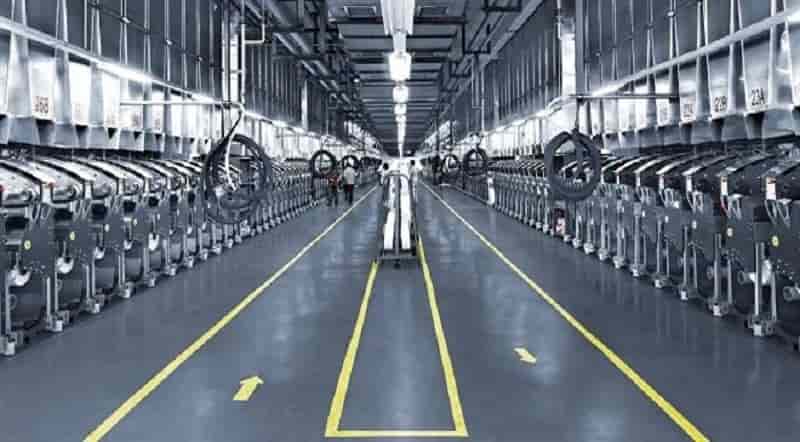
Barmag’s industrial filament yarn production systems are engineered for energy efficiency and high productivity while ensuring consistent yarn quality. Stable spinning processes, precise filament control, and optimized take-up systems allow manufacturers to meet stringent international safety standards. The emphasis is not only on tensile strength but also on reliability under dynamic deployment conditions.
This integrated approach strengthens the role of industrial filament yarn production in automotive safety engineering and supports manufacturers seeking scalable, globally compliant solutions.
Seat Belts: Precision in High-Tenacity Yarn Engineering
Seat belts represent one of the most demanding applications for high-tenacity filament yarns. A single seat belt is composed of approximately 300 high-tenacity filament yarns. Each filament must absorb tensile forces exceeding three tons during a collision while maintaining controlled elongation characteristics.
The balance between strength and elasticity is critical. Excess rigidity can increase injury risk, while excessive stretch compromises restraint performance. This precision requirement places significant demands on industrial filament yarn production technology.
Barmag’s patented Single Filament Layer technology introduces a particularly gentle and highly controlled process for manufacturing high-tenacity yarns. By optimizing filament guidance and tension management, the system reduces stress during spinning and drawing. The result is uniform filament structure, predictable mechanical properties, and enhanced long-term durability.
In a global automotive market increasingly focused on occupant protection standards and lightweight design, precision-driven industrial filament yarn production plays a decisive role.
Beyond Mobility: Geotextiles for Infrastructure Stability
Industrial filament yarn applications extend well beyond vehicle manufacturing. In road construction and civil engineering, geotextiles provide structural reinforcement, soil stabilization, and load distribution.
Geogrids positioned beneath asphalt layers must withstand substantial mechanical stress while maintaining dimensional stability over decades. These applications require extremely high yarn titers, reaching up to 24,000 denier.
Barmag systems efficiently produce three filament yarns of 6,000 denier each, which can be combined in a cost-effective manner to achieve higher overall titers. This modular production strategy enables manufacturers to maintain flexibility while optimizing material costs and throughput.
Such solutions highlight the importance of scalable industrial filament yarn production in infrastructure development, where durability, cost control, and performance reliability are critical.
Neumag Spunbond Technologies: Efficiency Meets Performance
Complementing its filament spinning systems, Barmag integrates Neumag spunbond technologies for polyester and polypropylene geotextiles. These systems are designed for high output rates combined with reduced energy consumption, aligning with industry-wide sustainability objectives.
Neumag’s PP inline technology sets new performance benchmarks in geotextile applications. The system is capable of producing fibers with strengths exceeding 6 cN/dtex while maintaining high residual elongation. This significantly surpasses previously established parameters for polypropylene staple fiber in infrastructure applications.
The successful commissioning of the first production plant using this advanced spinning concept in Asia underscores growing global demand for high-performance industrial filament yarn production and fiber technologies.
Process Innovation: EvoDuct and EvE-2 Systems
Energy efficiency and fiber homogeneity are central to competitive yarn manufacturing. Neumag’s EvoDuct air ducting system improves airflow distribution within the spinning process, reducing energy consumption while enhancing fiber uniformity.
In parallel, the optimized EvE-2 monomer and hot air suction system minimizes turbulence in the spinning zone and increases overall spinning performance. Reduced airflow instability translates into improved filament consistency and higher process reliability.
These technological refinements demonstrate how incremental process optimization significantly enhances industrial filament yarn production outcomes, particularly in large-scale, energy-intensive manufacturing environments.
Strategic Implications for Global Manufacturing
The developments showcased at Techtextil illustrate a broader industry shift. Automotive and infrastructure sectors are simultaneously pursuing safety enhancement, lightweight construction, and sustainability targets. High-performance yarn systems must therefore deliver:
-
Superior mechanical properties
-
Long-term environmental resistance
-
Energy-efficient production
-
Scalable global compliance
Industrial filament yarn production has evolved from a specialized materials segment into a strategic enabler of advanced engineering solutions.
By integrating process stability, energy optimization, and material innovation, Barmag positions itself at the intersection of performance and sustainability. As mobility systems become more complex and infrastructure requirements intensify, the demand for advanced industrial filament yarn production technologies is expected to accelerate.
More…