Barmag China Innovation Connects the Textile Value Chain
Barmag China Innovation Connects Fibre Technology, Sustainability and Local Service
Barmag has placed integrated fibre production, sustainability and closer customer collaboration at the centre of its latest industry event in China.
The German textile machinery specialist brought together nearly 100 invited customers in Fuzhou for a Customer Day focused on the future of man-made fibre manufacturing.
Held under the theme “A New Era. Powered by Innovation,” the event presented technologies covering the production chain from polymer melt to finished yarn.
It also offered an early indication of how Barmag’s position inside the Rieter Group could create a more extensive machinery and service portfolio for textile producers.
Key takeaways
Barmag presented integrated production solutions for man-made fibres to customers from Fujian and Guangdong.
The programme addressed spinning, winding, texturing, project execution and after-sales support.
Sustainability and production efficiency were recurring themes throughout the event.
Representatives from other Rieter businesses also participated, highlighting the group’s ambition to cover more of the textile production chain.
Rieter’s latest financial update says the integration of Barmag remains on track following the completion of the acquisition in February 2026.
A strategic event in China’s polyamide heartland
Barmag held the Fuzhou Customer Day on June 28, with the company publishing details of the gathering on July 16.
The location was commercially significant. Fujian and Guangdong are important centres for China’s polyamide and chemical-fibre industries, making them priority markets for machinery suppliers, technology developers and service providers.
Barmag said the gathering was designed to strengthen communication with leading regional customers and explore the industry’s transition towards higher-value and more sustainable production.
The event was attended by Barmag Group CEO Georg Stausberg, Chief Technology Officer Jochen Adler and Chief Sales Officer Wolfgang Ernst. They were joined by company teams working in management, sales, research and development, project delivery and after-sales service. Barmag China innovation
From polymer melt to finished yarn
A central feature of the programme was Barmag’s ability to address multiple stages of man-made fibre production rather than supplying a single isolated machine.
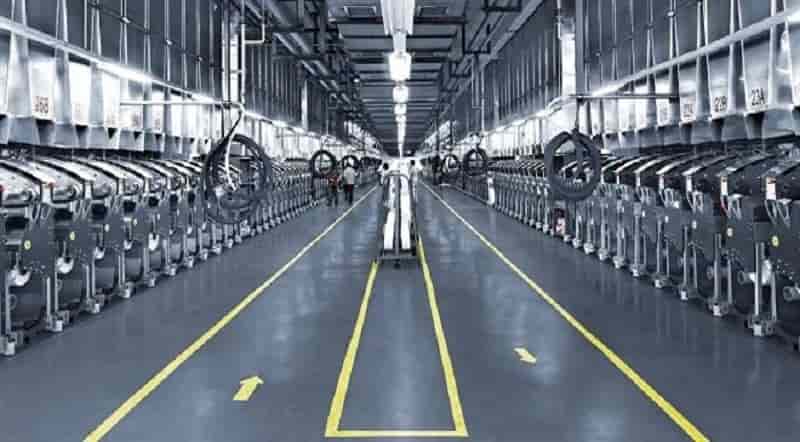
Company specialists presented technologies covering processes from polymer melt to filament yarn. These included spinning, winding and texturing, together with the engineering, project and service capabilities needed to operate complete production systems.
This end-to-end approach is increasingly relevant to textile manufacturers seeking to reduce production interruptions and coordinate machinery, software, maintenance and process optimisation through fewer technology partners.
For customers, the potential advantage is not merely the purchase of new equipment. A more integrated system can make it easier to align energy consumption, production speed, yarn quality and maintenance requirements.
The actual gains will still depend on the configuration of each factory, its raw materials and operating conditions. Integrated technology should therefore be evaluated against measurable indicators rather than treated as an automatic guarantee of lower costs. Barmag China innovation
Sustainability moves closer to production economics
Sustainability featured prominently in Barmag’s presentation.
In textile machinery, sustainability is increasingly connected to practical operating factors such as energy efficiency, material use, waste rates, machine longevity and the ability to process recycled or alternative feedstocks.
That distinction is important. Textile producers are under pressure to reduce their environmental footprint, but they must also maintain output, quality and commercial competitiveness.
Machinery manufacturers consequently need to demonstrate that environmental improvements can be incorporated into stable industrial processes.
Barmag said it integrates sustainability considerations into its research and development activities. Its message in Fuzhou positioned efficient production and more responsible resource use as parts of the same technology strategy. Barmag China innovation
Local support remains a competitive factor
The event also highlighted Barmag’s service infrastructure in China.
For large fibre plants, equipment performance depends on more than the initial machine specification. Installation, commissioning, spare-parts availability, operator training, maintenance and rapid technical support can all influence total production costs.
Barmag operates from several Chinese locations and provides services including upgrades, modernisation, repairs, spare parts and remote or on-site support.
Its Fuzhou programme brought together personnel from Beijing, Suzhou, Shanghai and Yangzhou, demonstrating the role of local teams in supporting regional customers.
A strong local service network can be particularly valuable when manufacturers are expanding capacity or introducing new fibre specifications. It can shorten communication lines and help suppliers adapt systems to local operating requirements. Barmag China innovation
Rieter integration broadens the commercial story
The Customer Day was also notable because it followed Rieter’s acquisition of Barmag.
Rieter completed the transaction on February 2, 2026, and established Barmag as its Man-Made Fiber Division. The group says the acquisition has extended its position from machinery for natural and short-staple fibres into the growing man-made fibre segment.
Representatives from SSM and Temco, which also operate within the Rieter Group, participated in the Fuzhou event.
Their presence suggested that Rieter wants customers to view the combined organisation as more than a collection of individual machinery brands. The broader objective is to offer technologies and components across a larger portion of the textile value chain.
This could allow the group to develop more coordinated solutions involving fibre preparation, yarn manufacturing, winding, texturing and specialist components.
However, the value of that expanded portfolio will ultimately depend on how effectively the businesses integrate their engineering, sales and service operations.
Rieter says Barmag integration is progressing
Rieter provided a further update on the integration on July 17.
The Swiss group said Barmag’s addition had strengthened its position in man-made fibres and expanded its presence in Asia. Rieter described the transaction as the largest acquisition in its history and said the integration was proceeding according to plan.
For the first half of 2026, Rieter reported order intake of CHF 554.1 million and sales of CHF 576.7 million. The company noted that the Man-Made Fiber Division contributed only five months to the reporting period because the acquisition was completed in early February.
Rieter also said initial savings had already been achieved in material and operating costs. These are company-reported results and should not yet be interpreted as proof that all longer-term integration targets will be achieved.
Nevertheless, the update adds context to the Fuzhou event. Barmag’s expanded customer proposition is being developed while Rieter simultaneously works to combine the newly acquired operation with its existing businesses. Barmag China innovation
Factory visit reinforces the customer partnership message
During the afternoon programme, participants visited the production facility of Fujian Yongrong Jinjiang.
Barmag describes the company as its largest polyamide customer worldwide and a long-standing strategic partner.
The plant visit gave attendees an opportunity to examine fibre-production operations in an industrial setting rather than considering the technologies only through presentations.
It also reinforced the event’s customer-oriented positioning. Demonstrating equipment in an operating facility can provide a more useful basis for technical discussions about output, automation, maintenance and product quality. Barmag China innovation
Why China remains central to Barmag’s strategy
China is an essential market for producers of man-made fibres and the companies that supply their machinery.
Barmag’s decision to organise the Customer Day around customers in Fujian and Guangdong reflects the importance of maintaining close relationships with manufacturers in established chemical-fibre clusters.
These companies are not only assessing new production capacity. They are also considering upgrades that can improve efficiency, enable different yarn types or support more sustainable manufacturing methods.
This creates demand for machinery suppliers capable of combining global research and development with local engineering and after-sales support.
Barmag’s strategy appears designed around that combination: international technology resources supported by teams based close to major customers.
What the event means for textile manufacturers
For fibre producers, the most significant message from Fuzhou was the increasing convergence of machinery, process expertise and lifecycle service.
A textile machinery supplier is no longer evaluated solely on the speed of an individual production line. Customers also examine energy use, waste, automation, reliability, maintenance costs and the ability to adapt production to changing market requirements.
Barmag’s integrated model aims to address those considerations across more of the manufacturing process.
Rieter’s ownership may further broaden the available technology base, but customers will expect tangible operational benefits. These could include better coordination between systems, faster support, reduced energy consumption or more flexible production.
The coming phases of the integration will show whether Rieter and Barmag can translate their expanded portfolio into these measurable improvements.
A platform for Barmag’s next phase in Asia
The Fuzhou Customer Day was more than a product presentation.
It linked Barmag’s established position in man-made fibre machinery with Rieter’s broader textile technology strategy. It also placed sustainability, local service and integrated production at the centre of the company’s message to Chinese customers.
The event does not by itself establish how quickly the combined group will gain market share or how extensively customers will adopt its integrated systems.
It does, however, show the direction of travel.
Barmag China innovation is increasingly being presented as a combination of advanced machinery, complete process knowledge and long-term technical support.
For manufacturers in China’s major fibre-producing regions, the commercial test will be whether that combination delivers verifiable improvements in efficiency, quality, flexibility and environmental performance. Barmag China innovation
More…