“Mexico’s rPET Boom Elevates Latin America’s Leadership, Reshaping Global Circular Plastics, Sustainable Packaging, and Polymer Price Trends.” 09-02-2026
Mexico rPET – Full price table (02/02/2026 →09/02/2026)
| ITEM | 02/02/2026 | 09/02/2026 | +/− |
|---|---|---|---|
| Bottle grade PET chips domestic market | 6,230 yuan/ton | 6,250 yuan/ton | +20 |
| Chinese bottle-grade PET chips FOB export price | 847 $/ton | 835 $/ton | -12 |
| LDPE CFR Est China | 1,020 $/ton | 1,020 $/ton | – |
| PET Semidull — Fiber chips | 5,920 yuan/ton | 5,900 yuan/ton | -20 |
| PET Bright — Fiber chips | 5,950 yuan/ton | 5,930 yuan/ton | -20 |
| Pure Terephthalic Acid PTA domestic market | 5,180 yuan/ton | 5,110 yuan/ton | -70 |
| Pure Terephthalic Acid PTA FOB China | 670 $/ton | 660 $/ton | -10 |
| Monoethyleneglycol (MEG) South China | 3,910 yuan/ton | 3,800 yuan/ton | -110 |
| Monoethyleneglycol (MEG) CFR China | 459 $/ton | 442 $/ton | -17 |
| Paraxylene PX FOB Taiwan market | 890 $/ton | 874 $/ton | -16 |
| Paraxylene PX FOB South-Korea market | 891 $/ton | 875 $/ton | -16 |
| Paraxylene PX FOB EU market | 891 $/ton | 876 $/ton | -15 |
| Polyester filament POY 150D/48F domestic market | 7,100 yuan/ton | 7,050 yuan/ton | -50 |
| Recycled Polyester filament POY domestic market | 6,050 yuan/ton | 6,050 yuan/ton | – |
| Polyester filament DTY 150D/48F domestic market | 8,200 yuan/ton | 8,100 yuan/ton | -50 |
| Polyester filament FDY 68D/24F | 8,000 yuan/ton | 7,950 yuan/ton | -50 |
| Polyester filament FDY 150D/96F domestic market | 7,300 yuan/ton | 7,250 yuan/ton | -50 |
| Polyester staple fiber 1.4D 38mm domestic market | 6,620 yuan/ton | 6,620 yuan/ton | – |
| Caprolactam (CPL) domestic market | 9,625 yuan/ton | 9,850 yuan/ton | +225 |
| Caprolactam (CPL) CFR China | 1,100 $/ton | 1,100 $/ton | – |
| Nylon 6 chips overseas market | North America ~ $2.47 /kg – $2.93 /kg
Europe ~0 $2.36 /kg Northeast Asia ~ $1.42 /kg – $1.74 /kg Southeast Asia ~ $1.62 /kg – $1.81 /kg Middle East ~ $1.50 /kg – $1.88 /kg |
North America 2.51 $/kgEurope 2.41 $/kg
Southeast Asia 1.66 $/kg Middle East 1.60 $/kg Northeast Asia 1.45 $/kg
|
– |
| Nylon 6 chips conventional spinning domestic market | 10,300 yuan/ton | 10,350 yuan/ton | +50 |
| Nylon 6 chips high speed spinning domestic market | 10,600 yuan/ton | 10,600 yuan/ton | – |
| Nylon 6.6 chips domestic market | 15,100 yuan/ton | 15,400 yuan/ton | +300 |
| Nylon6 Filament POY 86D/24F domestic market | 11,500 yuan/ton | 11,900 yuan/ton | +400 |
| Nylon6 Filament DTY 70D/24F domestic market | 13,800 yuan/ton | 14,200 yuan/ton | +400 |
| Nylon6 Filament FDY 70D/24F | 12,200 yuan/ton | 12,700 yuan/ton | +500 |
| Spandex 20D domestic market | 26,700 yuan/ton | 26,700 yuan/ton | – |
| Spandex 30D domestic market | 26,200 yuan/ton | 26,200 yuan/ton | – |
| Spandex 40D domestic market | 23,000 yuan/ton | 23,000 yuan/ton | – |
| Adipic Acid China domestic market | 8,050 yuan/ton | 8,050 yuan/ton | – |
| Adipic Acid Europe market | 1,990 $/ton | 1,820 $/ton | -170 |
| Benzene domestic market East China | 6,200 yuan/ton | 6,200 yuan/ton | – |
| Benzene CFR China | 763 $/ton | 765 $/ton | +2 |
| Ethylene South East market | 685 $/ton | 675 $/ton | -10 |
| Ethylene NWE market CIF | 755 $/ton | 745 $/ton | -10 |
| Acrylonitrile (ACN) domestic market | 7,750 yuan/ton | 7,500 yuan/ton | -250 |
| Acrylonitrile ACN Southeast Asia | 1,110 $/ton | 1,050 $/ton | -60 |
| Acrylic staple fiber (ASF) CFR China | 13,160 yuan/ton | 13,160 yuan/ton | – |
| VSF viscose staple fiber | 12,650 yuan/ton | 12,650 yuan/ton | – |
| PP Powder domestic market | 7,000 yuan/ton | 6,650 yuan/ton | -350 |
| Naphtha overseas market | 561 $/ton | 550 $/ton | -11 |
| Phenol domestic market (Jinan Dezheng / Yanshan Petrochemical, Shandong) | 6,450 yuan/ton | 6,400 yuan/ton | -50 |
| Recycled PET | 4,150 yuan/ton | 4,150 yuan/ton | – |
Mexico’s Mexico rPET
Boom Cements Latin American Dominance, Redefining Global Circular Plastics Leadership and Reshaping Sustainable Packaging Markets and Polymer Price Dynamics Worldwide
Mexico rPET sets a new standard in Latin America
Mexico rPET is rapidly becoming the most advanced and influential model in Latin America, positioning the country as a regional benchmark for circular plastics and sustainable packaging systems. With strong collection rates, expanding industrial capacity, and growing alignment between industry and policy, Mexico is redefining how post-consumer plastic can be reintegrated into the economy. Mexico rPET
The momentum behind Mexico rPET was recently reinforced by the expansion of activities from the Association of Plastic Recyclers APR. The organization, which represents hundreds of companies across the global plastics recycling value chain, has identified Mexico as a strategic logistics and production hub capable of supporting both regional and international recycling markets. Mexico rPET
This recognition is not symbolic. It is grounded in measurable performance, industrial maturity, and long-term strategic planning that sets Mexico apart from its regional peers.
rPET performance well above international averages
At the heart of Mexico PET recycling leadership is its exceptional post-consumer PET recovery rate. At 63 percent, Mexico surpasses not only the Latin American average but also outperforms the United States, where PET recycling remains near 29 percent. Even the broader North American average of 37.8 percent falls significantly below Mexico’s current performance. Mexico rPET
According to data from ECOCE, Mexico’s apparent national consumption of PET packaging reaches approximately 860,000 tonnes per year. This material stream is processed through a network of 27 recycling plants with the technical capacity to recover up to 81 percent of consumed PET. Mexico rPET
This combination of high collection rates and industrial capacity provides Mexico with a rare advantage in the global recycled plastics market, where supply consistency remains one of the most critical constraints.
Infrastructure scale supports long-term recycling targets
Mexico PET recycling infrastructure is already aligned with ambitious future targets. By 2030, the country aims to achieve an 80 percent PET recycling rate, a level that would place it among the most advanced recycling economies worldwide. Mexico rPET
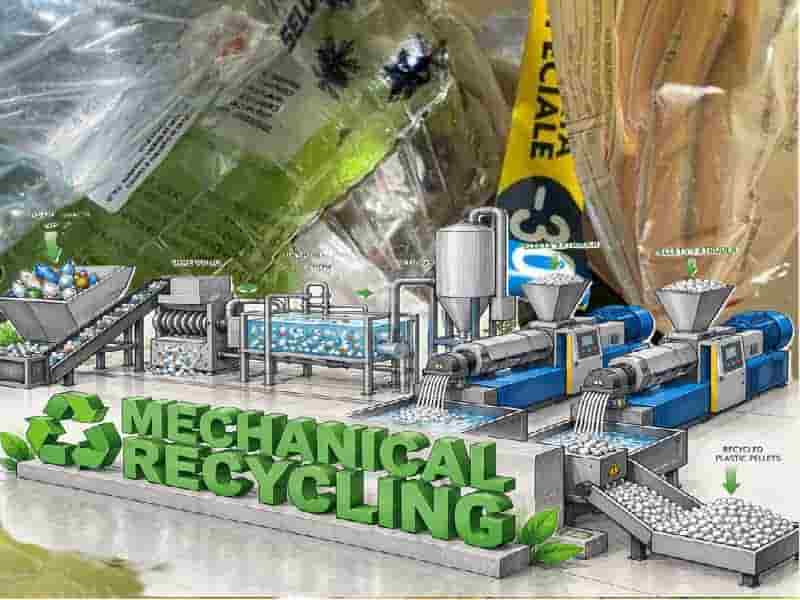
This progress has been enabled by decades of investment in mechanical recycling, logistics optimization, and informal sector integration. Unlike many markets where recycling relies heavily on municipal systems alone, Mexico benefits from a hybrid collection ecosystem that includes waste pickers, private operators, and industrial recyclers working in parallel.
As a result, PET bottles and packaging are more likely to be captured, sorted, and delivered to recycling facilities in commercially viable volumes. Mexico rPET
Structural challenges remain despite strong PET recycling results
Despite its leadership, Mexico rPET still faces structural challenges that must be addressed to sustain growth. One of the most critical issues lies in packaging design. Many plastic products placed on the market remain incompatible with existing recycling systems due to complex materials, additives, or multi-layer structures.
Another major constraint is the development of robust markets for post-consumer resin PCR. While demand for recycled PET is rising, price volatility and inconsistent quality continue to limit broader adoption, particularly in high-value applications. Mexico rPET
Addressing these challenges requires coordinated action among industry associations, manufacturers, policymakers, and consumers. APR has emphasized that recycling performance can only improve if design, collection, processing, and end-market demand evolve together. Mexico rPET
Design for recycling becomes the primary lever
Within the Mexico PET recycling strategy, packaging design has emerged as the most effective starting point for systemic improvement. APR leadership has repeatedly highlighted that products must be designed for recycling from the outset, rather than retrofitted into existing systems. Mexico rPET
This shift represents a fundamental change in how packaging success is measured. Instead of prioritizing shelf impact or marketing differentiation alone, manufacturers are increasingly expected to ensure compatibility with recycling infrastructure. Mexico rPET
By embedding design guidelines directly into production standards, Mexico has the opportunity to ensure that all locally manufactured packaging is fully recyclable, supporting both domestic recovery and export markets.
Certification strengthens confidence in recycled content
Another pillar of Mexico PET recycling leadership is the push toward certification of recycled content. Certified PCR provides manufacturers with assurance that recycled materials meet international quality, safety, and traceability standards. Mexico rPET
This is particularly important for food-grade and high-performance applications, where regulatory compliance and brand risk considerations are paramount. Certification also enables Mexican recycled plastics to compete in global markets, supporting exports to North America and beyond. Mexico rPET
As certification adoption increases, recycled PET becomes a more reliable substitute for virgin resin, helping stabilize demand and accelerate circularity across the plastics value chain. Mexico rPET
Supply chain improvements drive material quality
Mexico PET recycling performance also depends on continuous improvement in collection, sorting, and pre-processing. Material quality at the recycling plant gate directly determines yield, efficiency, and end-product performance.
APR has identified supply chain optimization as a strategic priority, focusing on better separation at source, improved bale quality, and reduced contamination. These measures not only increase recycling efficiency but also lower processing costs and energy consumption. Mexico rPET
Ensuring that materials reach recycling facilities in optimal condition is essential for maintaining Mexico’s competitive advantage as recycling volumes scale.
Trade integration amplifies Mexico’s recycling role
Mexico PET recycling benefits significantly from the country’s proximity and trade integration with the United States and Canada under the USMCA framework. This relationship facilitates the exchange of recycled materials, processing technologies, and technical expertise. Mexico rPET
As sustainability requirements tighten across North American supply chains, Mexico is well positioned to serve as both a processing hub and a source of high-quality recycled resin. This role is expected to expand as multinational brands increase recycled content commitments across their packaging portfolios.
Trade alignment also accelerates the transfer of best practices, helping Mexico remain aligned with evolving international standards.
Expansion beyond PET toward other polymers
While PET remains the flagship success story, Mexico PET recycling leadership is increasingly being leveraged to support recycling of other polymers. Polyethylene and polypropylene are emerging as key targets for expansion, driven by rising corporate commitments and regulatory pressure.
Applying the same principles of design for recycling, certification, and supply chain optimization could unlock similar progress for these materials. Success in this area would significantly expand the environmental and economic impact of Mexico’s circular plastics ecosystem.
Corporate and policy alignment accelerates circular plastics
Corporate engagement plays a central role in sustaining Mexico PET recycling growth. Both domestic and international companies are integrating recycled resins into their packaging, driven by ESG strategies, consumer expectations, and regulatory requirements.
Government action has also contributed by supporting recycling initiatives and signaling long-term policy direction. However, continued progress depends on collaboration across sectors. Recycling systems function most effectively when public policy, industrial capability, and consumer behavior are aligned.
This collective approach strengthens resilience and ensures that recycling gains are not reversed by market volatility.
Global recycling context highlights Mexico’s leadership
Globally, plastic recycling rates remain extremely low. Only around 9 to 9.5 percent of all plastic produced worldwide is currently recycled, with most waste ending up in landfills, incineration, or unmanaged environments.
Against this backdrop, Mexico PET recycling performance stands out as a rare example of scalable success. While global recycling rates have stagnated, Mexico demonstrates that targeted investment and systemic coordination can deliver meaningful results.
OECD policy scenarios suggest that recycled content targets could reach around 30 percent globally by 2040 under ambitious frameworks. Some regions, including the European Union, Japan, and Korea, are already targeting recycling rates of 60 percent by 2030, with longer-term ambitions approaching 80 percent.
Mexico’s trajectory aligns closely with these leading economies.
Recycled plastics market growth reinforces momentum
Industry forecasts indicate strong growth for the recycled plastics market over the coming decade. Some estimates value the global recycled plastics sector at more than 100 billion US dollars by 2033, driven primarily by packaging applications.
Mexico PET recycling is positioned to capture a significant share of this growth, supported by scale, quality, and geographic advantage. As demand for post-consumer recycled material continues to rise, Mexico’s established infrastructure provides a platform for long-term competitiveness.
Mexico PET recycling as a model for Latin America
Mexico PET recycling has moved beyond pilot projects and incremental gains. It now represents a mature, export-ready, and strategically integrated system capable of influencing recycling outcomes across Latin America.
By focusing on design, certification, supply chain quality, and cross-border collaboration, Mexico has created a blueprint that other countries can adapt to local conditions.
As global pressure mounts to address plastic waste, Mexico’s experience demonstrates that circular plastics are not only achievable but economically viable at scale.
More…