Breakthrough Paper Water Bottle Accelerates Shift Away From Single-Use Plastics
Breakthrough Paper Water Bottle Accelerates Shift Away From Single-Use Plastics
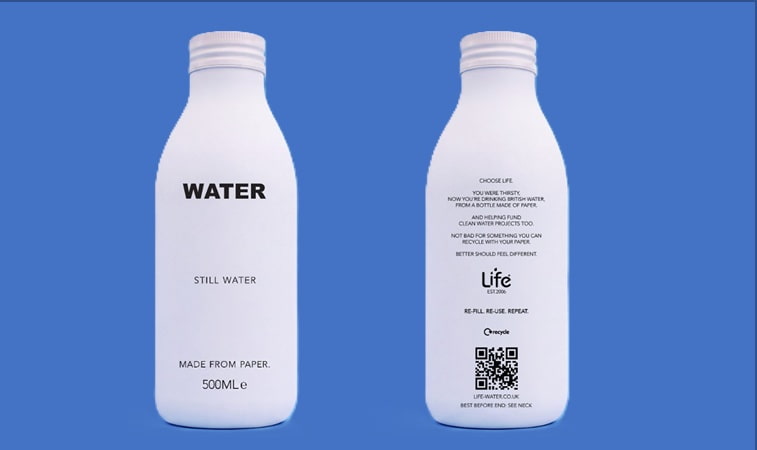
The global beverage industry is witnessing a decisive pivot toward fibre-based containers as Life Water and British packaging technology pioneer Pulpex introduce a 500ml recyclable paper water bottle. Designed for still water across hospitality, foodservice, retail, travel, and live events, the new format replaces conventional fossil-based polymers and heavy glass with sustainably sourced wood fibre engineered to enter standard paper and cardboard recycling streams. paper water bottle
This commercial rollout coincides with major industrial momentum behind fibre bottle manufacturing. On November 20, 2026, the UK National Wealth Fund announced a £19.6 million (approximately €23.4 million) investment into Pulpex to support its new large-scale manufacturing facility in Glasgow, reinforcing domestic supply chains for fibre-based liquid packaging. Together, product commercialization and capital expansion signal that moulded-fibre bottles are transitioning from pilot trials into scalable alternatives for everyday beverages.
How Does Moulded-Fibre Technology Work for Liquid Packaging?
Historically, paper-based drink cartons relied on multi-layer composites containing thin polyethylene linings or aluminum foils to prevent liquid saturation. While effective at holding fluids, composite structures complicate sorting and require specialized pulping facilities to separate the plastic film from the cellulose fibres. paper water bottle
Pulpex’s proprietary technology takes a different engineering route. Using precision moulded-fibre processing, sustainably sourced wood pulp—certified under established forestry standards such as FSC or PEFC—is formed into a rigid, three-dimensional bottle shape. Rather than inserting a hidden plastic liner, the interior surface is treated with a specialized food-safe, water-resistant barrier architecture engineered to hold still liquids without altering taste or odour.
Key functional characteristics of the 500ml paper water bottle include:
-
Established Recycling Compatibility: Because the bottle body avoids synthetic plastic liners, it is designed to be processed directly alongside household and commercial paper and cardboard waste streams.
-
Tactile Brand Differentiation: The container retains a natural, subtly textured finish with crisp embossing and minimalist exterior printing, giving hospitality operators and retailers an unmistakable visual cue of sustainability at the point of sale.
-
Lower Carbon Footprint: Utilizing renewable wood pulp sourced from managed forests reduces dependence on virgin petrochemical feedstocks and lowers cradle-to-gate greenhouse gas emissions compared to traditional single-use containers. paper water bottle
Prisha Barua, Director of Communications and Sustainability at Life Water, noted that the collaboration reflects a long-term ambition to challenge conventional beverage packaging. Founded in 2006, Life Water previously introduced recycled-plastic formats and aluminum water cans to the UK market in 2017 while linking product sales to clean-water infrastructure projects via its charitable partner Drop4Drop.
Why Are Beverage Brands Accelerating Paperization in Late 2026?
The arrival of a commercial paper water bottle aligns with a broader structural transformation across international packaging markets. According to market intelligence published on November 20, 2026, by Data Bridge Market Research, the global paper bottle packaging market—valued at $1.20 billion in 2025—is projected to reach $2.01 billion by 2033, expanding at a compound annual growth rate of 6.70%.
Three primary forces are driving this rapid shift toward fibre-based packaging:
-
Tightening Regulatory Frameworks: Across Europe, the Packaging and Packaging Waste Regulation (Regulation (EU) 2025/40), which entered application in August 2026, mandates strict eco-design criteria, waste reduction targets, and economic recyclability across all packaging formats by 2030. Additionally, on November 21, 2026, new EU Waste Shipment Regulation rules entered into force prohibiting exports of plastic waste to non-OECD countries, placing intense domestic pressure on brands to replace hard-to-recycle plastics with materials supported by mature local recovery systems.
-
Superior Paper Recovery Infrastructure: Paper and cardboard benefit from the highest collection and recycling rates in the packaging sector. European industry data indicates that paper-based packaging achieves an approximate 87% recycling rate, significantly outperforming plastic packaging recovery rates and making fibre an attractive compliance pathway for consumer goods companies.
-
Corporate Decarbonization Targets: Major food, beverage, and spirits brands are activility. paper water bottle
-
ely seeking packaging formats that cut Scope 3 supply chain emissions without compromising shelf appeal or distribution durab
Commercial Opportunities and Technical Realities for Buyers
For procurement teams in hotels, restaurants, travel hubs, and live event venues, the 500ml paper water bottle offers a compelling alternative to glass—which carries high transport weight and breakage risks—and single-use PET bottles, which face growing consumer pushback in eco-conscious settings.
However, packaging analysts emphasize that successful adoption depends on rigorous operational evaluation. While the moulded-fibre body is engineered for standard paper recycling, procurement managers must still verify end-of-life handling for closures and caps, ensure clear disposal signage at event venues, and account for local municipal sorting rules. Conducting full lifecycle assessments comparing moisture barrier performance, shelf-life stability, and regional recycling yields remains essential when transitioning from legacy materials to fibre-based formats. paper water bottle
The Future of Moulded-Fibre Beverage Containers
With the National Wealth Fund’s £19.6 million backing accelerating Pulpex’s Glasgow production capacity and Life Water demonstrating commercial readiness in the 500ml still water segment, fibre-based bottles are poised to expand rapidly across beverage categories. As barrier coatings advance toward fully fluoro-free and
bio-based chemistries, moulded-fibre packaging is steadily evolving from a niche sustainability statement into a mainstream pillar of the circular economy. paper water bottle
Revolutionizing Tactile PET Bottle Packaging: The Sustainable HDPE Feel Solution
More…